Buildings are being renovated all over downtown Washington D.C., and as they rise so does the city's tax revenue.


"Walk around downtown, and you will see construction cranes towering over well-located but dated buildings that are being gutted and renovated. New facades are being applied to denuded structural frames, changing substantially the character of buildings designed and constructed only 30 or 40 years ago."
"Unseen is the economic impact of such transformations."
"A building redo entails enormous costs. To justify the investment, rents must be considerably higher after renovation. Consequently, the supply of expensive, well located, class-A office space in the city is rising, along with real estate assessments and tax revenue."
"New office buildings are still being developed, either on downtown's few remaining surface parking lots or on cleared sites previously occupied by buildings so obsolescent that they justified demolition. But development of new buildings from the ground up will be increasingly eclipsed in years to come by makeovers."
"Of course, the makeover trend is predicated on sustained demand, relative to supply, for prime downtown office space because a makeover depends on tenants willing to pay class-A rents. "
Read the full story: Bringing Downtown Buildings Into the 21st Century

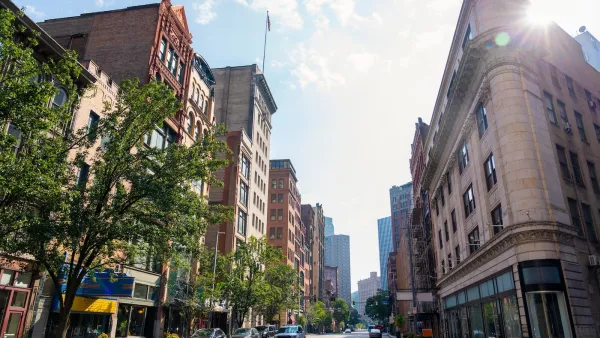
Pittsburgh downtown tax diversion plan draws criticism for lack of transparency
A proposed new development tax faces opposition from transit advocates.
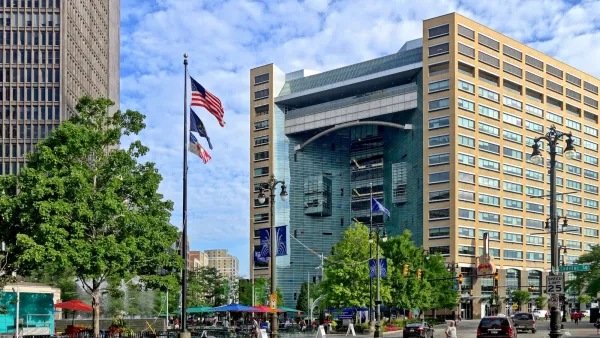
The nation's 10 'stickiest' downtowns
How often do residents visit your downtown?

Small 'maker' businesses are good for downtowns — and data proves it
Small-scale manufacturers tend to be more engaged in the local supply chain, contributing to economic revitalization.

Planetizen Federal Action Tracker
A weekly monitor of how Trump’s orders and actions are impacting planners and planning in America.

‘Going backwards:’ Baltimore mayor, students rally against state's transit funding plan
Maryland's proposed six-year plan provides no funding for Baltimore’s BMORE bus program and reduces its road maintenance funding.

Detroit to transform waterfront with $2.2 billion investment
Developers will convert about 18 acres of unused parking lot space into civic spaces.

85-year-old ranch is Texas’ newest state park
The 650 acre ranch is one of the largest parcels of land along Lake Palestine.

MIT to create AI-powered hub for public transportation companies
Google awarded the project, titled the Public Transit Intelligence Hub, $2.1 million in funding.

A 3D concrete printer may solve Virginia’s housing crisis
The printer is able to build concrete walls much faster than humans, and can do so directly at job sites.

FREE Course: Walkable City 1: Why Walkability?
After describing his path towards focusing on walkability as the essence of good planning, Jeff Speck marches through his five principal reasons for making more walkable places.
Reinventing Malls: Planning Alchemy—Turning Gray Fields Into Gold
The course focuses on the opportunities and imperatives that shape reinvention of mall sites.

City of Thousand Oaks
City of Wisconsin Rapids
Harvard University Graduate School of Design
The Architects Foundation
University of Cincinnati Online
Northern Illinois Transit Authority (NITA)
The Pocatello Development Authority
The Urban Renewal Agency of the City of Pocatello