A recent ruling that upholds the right of local communities to control overbuilding may prove to increase the crackdown on McMansions -- and demand for design professionals and architects.


"One market that could benefit from curbs on super-sized houses is the design profession. Ordinances that steer developers and individuals away from cookie-cutter McMansions, or that require homebuilders to finesse smaller footprints on oddly shaped lots and expand existing houses more tastefully, could increase demand for the services of an architect."
"'I have worked on projects where I've been hired because the zoning is too complex for the homeowner to work through and going for a variance is too big a risk to take,' says Frank Shirley, a residential architect based in Cambridge, Massachusetts. 'There's no perfect zoning bylaws, but they do more good than bad.'"
"Other observers caution that it takes more than regulations to encourage quality architecture. 'It's not really about size, it's about design,' says Jeremiah Eck, FAIA, a partner at Boston-based Eck | MacNeely Architects. 'It has to be about artful decisions based in the craft of architecture with full participation by homeowners, designers-I didn't say just architects-and builders. Until we come to see our homes in that way, they will continue to be nothing more than speculative commodities.'"
Thanks to ArchNewsNow
Read the full story: Will Downsizing McMansions Fatten Architects’ Wallets?

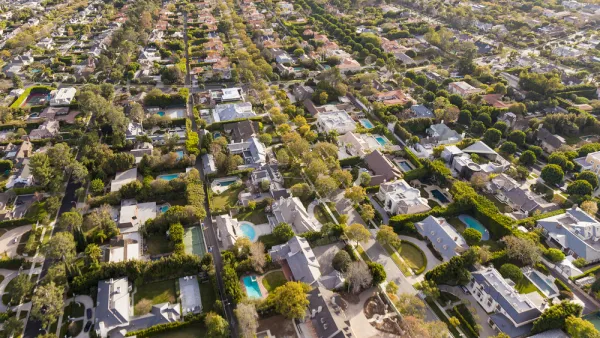
L.A.'s Crackdown on McMansions Hasn't Stopped Them from Going Up
Legislation to stop construction of McMansions is being undermined by a zoning loophole.
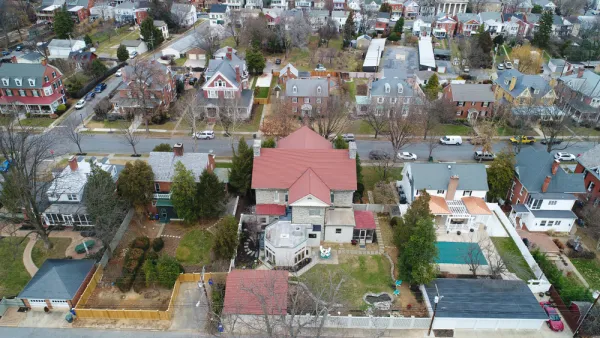
McMimpact Fee Proposed
Should there be an extra fee for property owners who tear down an existing single-family home and replace it with a much larger, more expensive single-family home?
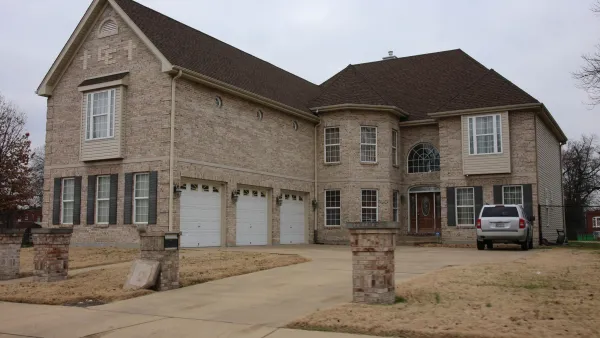
Behind America's Fixation on Big Houses
McMansion or not, the American home is a good 600 to 800 square feet larger than the average in most other countries. Possible reasons run the gamut from policy to culture to personal economics.

Planetizen Federal Action Tracker
A weekly monitor of how Trump’s orders and actions are impacting planners and planning in America.

The state-sanctioned urbicide of Austin
People don’t kill cities. Freeways do.

Colorado’s Largest Data Center Could Rise Next to Homes — Without a Public Hearing
The proposed campus would consume 11 times the power of Denver International Airport; as it has across the country, opposition mounts.

Data centers are consuming nearly 25% of Oregon’s power
The state has 111 data centers, with 32 more either planned or under construction.

A third of Texas cities must update their zoning codes to comply with new housing law
Texas municipalities are now required to allow manufactured housing in at least one residential zoning district.

Nation's most wind-powered state turns to coal as data centers increase energy demand
For the first time in decades, Iowa has increased its generation of coal power.

FREE Course: Walkable City 1: Why Walkability?
After describing his path towards focusing on walkability as the essence of good planning, Jeff Speck marches through his five principal reasons for making more walkable places.
Reinventing Malls: Planning Alchemy—Turning Gray Fields Into Gold
The course focuses on the opportunities and imperatives that shape reinvention of mall sites.

Greater Baltimore Committee
Eagle County Government
Harvard University Graduate School of Design
The Architects Foundation
University of Cincinnati Online
The Pocatello Development Authority
The Urban Renewal Agency of the City of Pocatello
Journal of the American Planning Association