The age of the suburbs may be coming to an end in America, and conditions in Canada are even more ripe for this transition to urban density.


"Having remade the face of North America, the tide now seems to be turning against the 'burbs. The downfall won't be quick, but already the unthinkable is starting to happen."
"As Christopher Leinberger argues in an article in the current Atlantic, 'a structural change is underway in the housing market.'"
"Canada has not experienced a subprime catastrophe, so perhaps we are an even better example of the city's new popularity. There are objective reasons – escalating cost of gasoline, heating oil and natural gas – but there's more."
"Looking back at the postwar conditions that unleashed the explosion of suburbia, it's clear the growth was inspired as much as anything by a desire to escape from the city. Density, associated with danger, disease and decay, was the enemy."
"Sixty years later, beset by gridlock, shoddy construction and environmental degradation that can no longer be ignored, density has started to look good again."
"The response has been to make the suburban more urban."
Read the full story: Downtown density will prevail over slums of suburbia

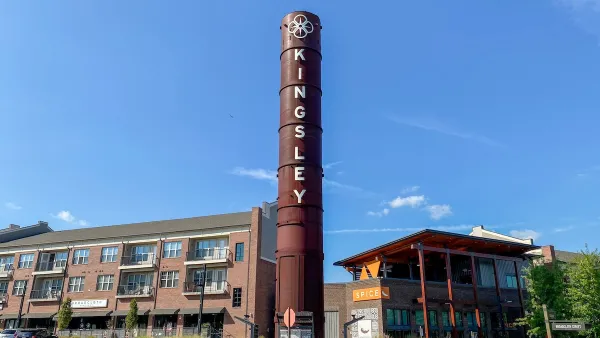
Rethinking Suburban Development: New Trends in Creating Livable Communities
Discover new trends in suburban development focused on creating more livable, sustainable communities for future growth.
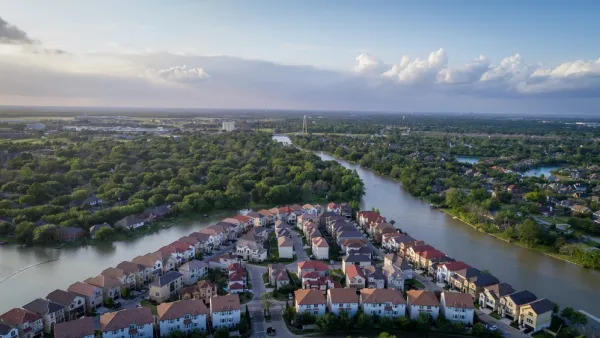
A Rapidly Urbanizing Texas County Gets in Touch With its Agricultural Roots
Developers in Fort Bend County are drawing inspiration from ‘agrihoods’ to build car-light communities in one of the nation’s fastest-growing areas.
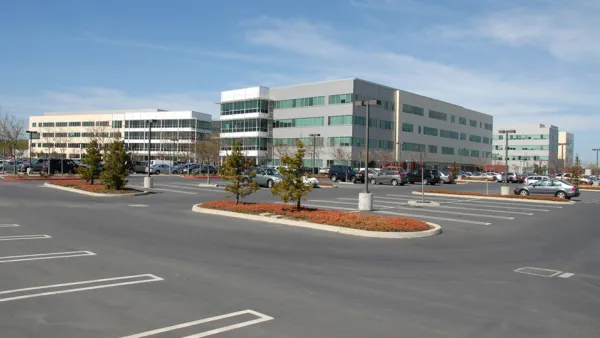
A New Life for the Suburban Office Park?
With more and more employers downsizing and moving to areas with more urban amenities, large suburban office parks offer an opportunity for increased density and mixed-use development.

Planetizen Federal Action Tracker
A weekly monitor of how Trump’s orders and actions are impacting planners and planning in America.

‘Going backwards:’ Baltimore mayor, students rally against state's transit funding plan
Maryland's proposed six-year plan provides no funding for Baltimore’s BMORE bus program and reduces its road maintenance funding.

Detroit to transform waterfront with $2.2 billion investment
Developers will convert about 18 acres of unused parking lot space into civic spaces.

Californians can now transform balconies into power generators
Gov. Gavin Newsom has legalized plug-in solar technology, which allows residents to plug solar panels directly into their outlets

85-year-old ranch is Texas’ newest state park
The 650 acre ranch is one of the largest parcels of land along Lake Palestine.

MIT to create AI-powered hub for public transportation companies
Google awarded the project, titled the Public Transit Intelligence Hub, $2.1 million in funding.

FREE Course: Walkable City 1: Why Walkability?
After describing his path towards focusing on walkability as the essence of good planning, Jeff Speck marches through his five principal reasons for making more walkable places.
Reinventing Malls: Planning Alchemy—Turning Gray Fields Into Gold
The course focuses on the opportunities and imperatives that shape reinvention of mall sites.

City of Thousand Oaks
City of Wisconsin Rapids
Harvard University Graduate School of Design
The Architects Foundation
University of Cincinnati Online
Northern Illinois Transit Authority (NITA)
The Pocatello Development Authority
The Urban Renewal Agency of the City of Pocatello