This article from the LA Weekly looks at efforts by the city planning department and key politicians to increase the density of the city.


"With little debate, a trio of new "density enabling" ordinances (a real mouthful, known as the Downtown Ordinance, the Parking Reduction Ordinance and the Senate Bill 1818 Implementation Ordinance) has rolled through Goldberg's Planning Department and ended up in the ornate council chambers on City Hall's second floor."
"The first two were easily approved, and the SB 1818 Implementation Ordinance passed on February 20, with only council members Dennis Zine, Janice Hahn, Bill Rosendahl and Tom LaBonge opposed. On paper, the three ordinances will let developers bypass the city's fundamental zoning protections - and profoundly alter the livability, look and essence of L.A."
"The agendas of builders, land speculators, the chambers of commerce, the Planning Department and elected leaders have produced a virtually nondebated tectonic shift since the residential real estate turnaround of 2002, much increased under Villaraigosa. The shift is pushing L.A. from its suburban model of single-family homes with gardens or pools - the reason many come here - toward an urban template of shrinking green patches and multistory buildings of mostly renters."
Read the full story: City Hall's "Density Hawks" Are Changing L.A.'s DNA
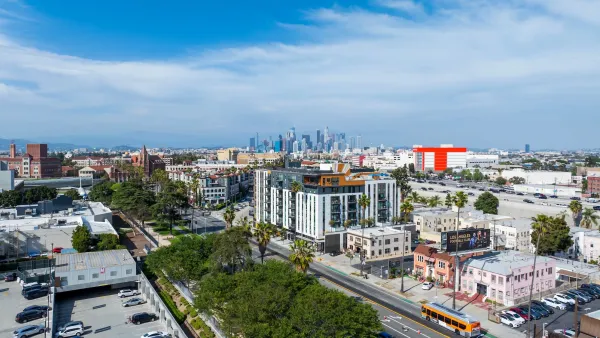
LA delays state housing mandate with 'low-rise ordinance'
The new ordinance allows the city to delay implementing SB 79, a state law requiring more density near transit.

LA Metro Opposes TOD Law, Fearing Backlash to Transit Expansion
Metro wants an exemption from California’s new housing law, despite the law’s potential to increase ridership by putting more housing near transit stations.
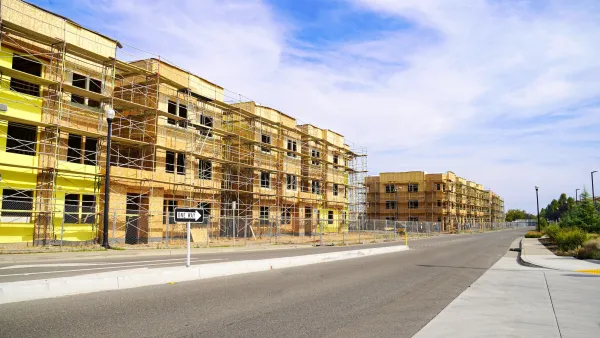
2025 Brought Seismic Changes to California Housing Laws
New state laws and policies created in reaction to devastating wildfires could spell massive changes for Southern California’s housing landscape.

Planetizen Federal Action Tracker
A weekly monitor of how Trump’s orders and actions are impacting planners and planning in America.

California plans to bury El Niño’s downpour
If the state plays its cards right, it may be able to store a billion acre-feet of El Niño’s water in aquifers.

Desperate measures: Advocates weigh draining Lake Powell to fill Colorado River
Draining the reservoir could reduce evaporation losses by a couple hundred thousand acre-feet.

Voters choose public transit, approve $31 billion in funding
Approved projects include $101,000 for reduced-cost transit in a Michigan town and $14 billion for regional transit in the San Francisco Bay Area.

Study reveals best places in the U.S. for cycling, walking
New research from Streetlight Data examines bicycle and pedestrian miles per capita in the 100 largest U.S. cities by population.

Los Angeles just elected an urban planner as its mayor
Transportation analysts are optimistic that Raman will be more aggressive in addressing transit issues than Bass.

FREE Course: Walkable City 1: Why Walkability?
After describing his path towards focusing on walkability as the essence of good planning, Jeff Speck marches through his five principal reasons for making more walkable places.
Reinventing Malls: Planning Alchemy—Turning Gray Fields Into Gold
The course focuses on the opportunities and imperatives that shape reinvention of mall sites.

City of Rosemead
Rutgers University, Edward J. Bloustein School of Planning and Public Policy
One Hundred Miles
University of Michigan School for Environment and Sustainability (SEAS)
Hunter College, City University of New York (CUNY)
The Architects Foundation
City of Cambridge
Montrose County
The Pocatello Development Authority