Harris Steinberg, director of PennPraxis, outlines one important lesson from the Central Delaware Waterfront Planning Process, which his organization is charged with leading. He describes the importance of open space as a catalyst for development.


"Cities around the world understand that public investment in parks, streets and boulevards should be guided by smart planning and land-use regulations. They understand the relationship between first-rate public design and quality of life."
"What's more, from New York's 19th-century Central Park to Chicago's recent Millennium Park, we can see how targeted public investment in open space and infrastructure attracts private investment - more than paying for itself in the long run."
"If Philadelphia is going to compete with New York, Chicago, Boston, Seattle and San Francisco for jobs, people, tax revenues and economic innovation, we must build public/private partnerships to invest in high-quality public spaces and infrastructure."
"The Delaware riverfront is one of the key places where that needs to happen..."
Thanks to Andrew Goodman
Read the full story: On the riverfront


Planetizen Federal Action Tracker
A weekly monitor of how Trump’s orders and actions are impacting planners and planning in America.

Data reveals that NYC’s bet on congestion pricing has paid off
After almost two years of the program, reports show positive impacts on traffic and air quality and no disruptions to parking.
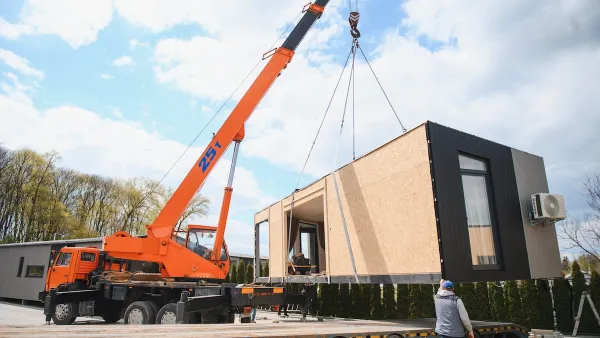
HUD modernizes 50-year-old manufactured housing framework
The Next Generation Manufactured Housing Action Plan establishes new energy-efficiency standards for manufactured homes, and new guidelines for anchoring them.

California voters weigh $11.25 billion housing bond
Prop. 1, combined with other funding, would support over 40,000 new rental units in California.

Connecticut is turning landfills into green infrastructure
Twenty-nine solar arrays have been built, or approved to be built, on top of Connecticut landfills.

Trump guts ‘win-win’ solar energy program for rural farmers
The U.S. Department of Agriculture’s changes have made virtually all solar power ineligible for funding through the Rural Energy for America Program.

FREE Course: Walkable City 1: Why Walkability?
After describing his path towards focusing on walkability as the essence of good planning, Jeff Speck marches through his five principal reasons for making more walkable places.
Reinventing Malls: Planning Alchemy—Turning Gray Fields Into Gold
The course focuses on the opportunities and imperatives that shape reinvention of mall sites.

One Hundred Miles
County of Mendocino
planning NEXT
The Architects Foundation
University of Cincinnati Online
Montrose County
Northern Illinois Transit Authority (NITA)
The Pocatello Development Authority