With one of the nation's most forlorn downtowns, Dallas plans to convert most of the glass-and-steel downtown business district into an upscale residential neighborhood.


"...Lots of cities are trying to piggyback on the nation's new taste for condominiums and urban living. Atlanta, Denver, Los Angeles and others have encouraged developers to recycle old downtown buildings into chic residences while continuing to promote themselves as prime office locations.
But no city comes close to Dallas in residential zeal. Dallas, a city of 1.2 million, has given out some $160 million in grants and tax abatements with the goal of creating a residential haven for those seeking to escape the hundreds of square miles of sprawl that surround it.
...Today, the streets of Dallas's 1.3-square-mile downtown are largely deserted apart from homeless people toting backpacks and commuters darting between their cars and their offices. There are almost no stores, and some 20 vacant high-rises. About 160 acres of surface parking lots sit across downtown, many of them covering the ground where buildings once stood."
[Editor's note: The link below is available to nonsubscribers for a period of 7 das.]
Read the full story: Still Struggling After '80s Bust, Downtown Tries to Woo Families


Planetizen Federal Action Tracker
A weekly monitor of how Trump’s orders and actions are impacting planners and planning in America.

The state-sanctioned urbicide of Austin
People don’t kill cities. Freeways do.
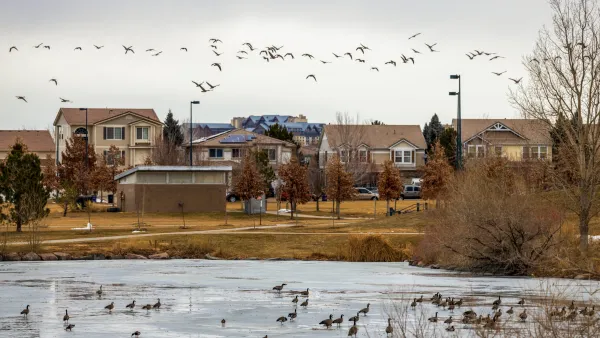
Colorado’s Largest Data Center Could Rise Next to Homes — Without a Public Hearing
The proposed campus would consume 11 times the power of Denver International Airport; as it has across the country, opposition mounts.

Nation's most wind-powered state turns to coal as data centers increase energy demand
For the first time in decades, Iowa has increased its generation of coal power.

NYC cools commuters with city's first rain garden above a bus stop
New York City officials say the plants in the rain garden can absorb 16 gallons of rainwater during heavy storms.

Brightline West’s future may rely on $6 billion federal loan
The company has until Nov. 2 to make a $400 million equity investment into its proposed high-speed rail line.

FREE Course: Walkable City 1: Why Walkability?
After describing his path towards focusing on walkability as the essence of good planning, Jeff Speck marches through his five principal reasons for making more walkable places.
Reinventing Malls: Planning Alchemy—Turning Gray Fields Into Gold
The course focuses on the opportunities and imperatives that shape reinvention of mall sites.

Greater Baltimore Committee
Eagle County Government
Harvard University Graduate School of Design
The Architects Foundation
University of Cincinnati Online
The Pocatello Development Authority
The Urban Renewal Agency of the City of Pocatello
Journal of the American Planning Association