Famous for its oil wealth and the "prosperity cheques" being handed out to every resident, the Canadian Province of Alberta is actually a classic example of rapacious growth, dangerously poor planning and poor performance on social development indicators.


"The Alberta Genuine Progress Indicator, just published by the Pembina Institute (a non-profit energy watchdog), says if that everyone spent their natural capital [as liberally as Alberta], 'five planets would be needed to meet global consumption demands.'
"The province has systemically looted one landscape after another. Forty years ago, Alberta's boreal forest was a wilderness; today, provincial records show that 90 per cent has been seriously fragmented by roads, well sites, seismic lines, pipelines and power lines, and looks like an industrial park. What isn't being drilled is being logged.
"In Drayton Valley, southwest of Edmonton, the government allows companies to build highly toxic sour-gas wells so close to people's homes that many Albertans live in what's known as 'emergency response zones' (in the event of a leak or accident, they would die or suffer permanent brain damage if not evacuated in time). There are as many as 52 such zones; to be located inside one devalues a home by an average of $6,000. But property devaluation is par for the course in Alberta."
Read the full story: If Ralph's a friend, who needs enemies?


Planetizen Federal Action Tracker
A weekly monitor of how Trump’s orders and actions are impacting planners and planning in America.

Chicago breaks ground on $3 billion megadevelopment
The new neighborhood, titled Foundry Park, will one day host 3,700 residences.
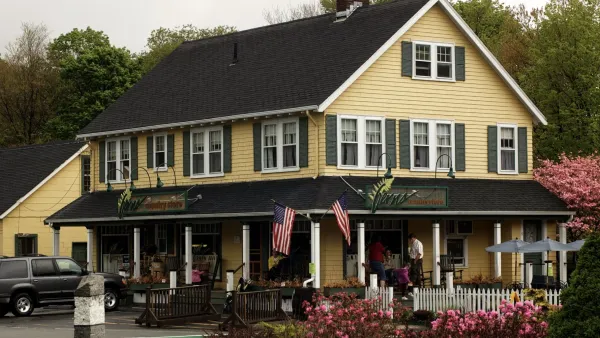
This MA town is drowning in its own sewage — and residents like it that way
Susan Murcott, a waste water expert, said if Carlisle didn't address their leaking sewage, the problem could turn “deadly.”

Iowa taxpayers are paying thousands to clean manure out of their water
While the Clean Water Act makes states responsible for regulating factory farms that discharge pollutants, Iowa has turned a blind eye to the polluting farms.

Amtrak cuts ribbon on Seattle Airo maintenance facility
The $250 million, nearly 100,000-square-foot building can house an entire Cascades Airo trainset.

To power data centers, Google seeks autonomous control of thousands of homes’ electricity
The tech company has signed a deal to indirectly pay Mid-Atlantic residents to reduce their power demand when the grid is strained.

FREE Course: Walkable City 1: Why Walkability?
After describing his path towards focusing on walkability as the essence of good planning, Jeff Speck marches through his five principal reasons for making more walkable places.
Reinventing Malls: Planning Alchemy—Turning Gray Fields Into Gold
The course focuses on the opportunities and imperatives that shape reinvention of mall sites.

City of Rosemead
Rutgers University, Edward J. Bloustein School of Planning and Public Policy
One Hundred Miles
The Architects Foundation
University of Cincinnati Online
Montrose County
The Pocatello Development Authority
The Urban Renewal Agency of the City of Pocatello