A professor from England visiting Arizona wonders if America's dangerous exurban growth will find its way to the UK.


"What hits one first about exurbia is its ugliness. Laid out by competing developers, disparate 'cookie-cutter' housing developments (often christened with faux Wild West prefixes such as Vale, Ranch or Stable) wander into the distance, devoid of any master-plan. Self-contained behind electronic gates, each house seamlessly resembles the others in a conveyor belt of McMansions. Behind the walls, uniformity is enforced by a strict system of covenants, conditions and restrictions that outlaw individual alterations to homes and gardens.
...Over 90 per cent of office space built in America during the Nineties was thrown up along the edgeless cities that cling to interstate highways. Thanks to IT, many of these 'technoburbs' are capable of operating entirely independently of the central business district. Detached socially, physically and economically from the city, they resemble amoeba-like commercial agglomerations rather than any recognisable urban form.
...But, my time in Phoenix has shown the United States pursuing a model we desperately need to avoid: depopulating downtowns, ravaged countryside, unsustainable energy consumption, social and racial segmentation and a sprawling exurbia that is retreating unrelentingly into the future."
Thanks to Metropolitan Institute
Read the full story: Nowhere land


Planetizen Federal Action Tracker
A weekly monitor of how Trump’s orders and actions are impacting planners and planning in America.

Colorado’s Largest Data Center Could Rise Next to Homes — Without a Public Hearing
The proposed campus would consume 11 times the power of Denver International Airport; as it has across the country, opposition mounts.

US to reduce Colorado River water deliveries to Mexico
A new Colorado Treaty amendment reduces Mexico’s Colorado River water allocation by 250,000 acre feet.
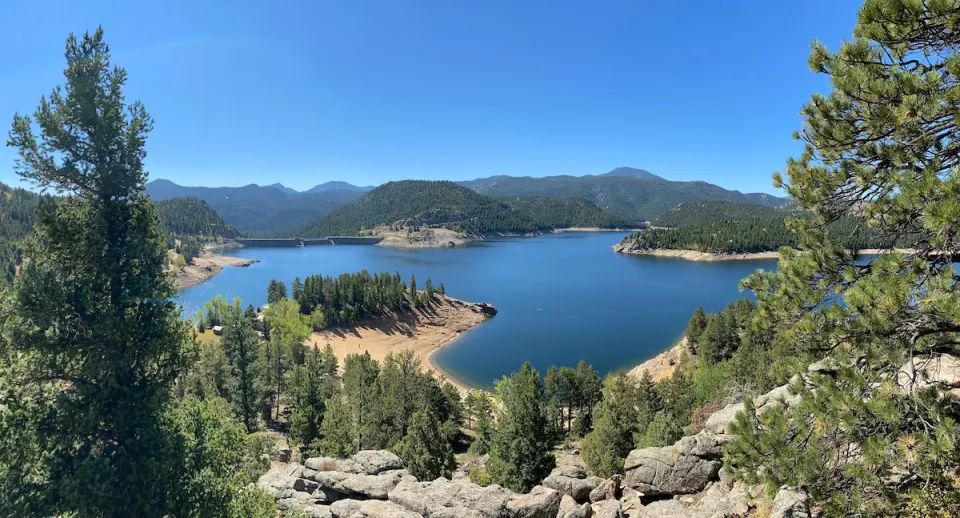
Judges permit Denver to divert 77,000 acre feet from the Colorado River for reservoir expansion
Overuse and climate change have caused the Colorado River’s water levels to plummet.

Amtrak, CN end decades-long dispute with eight-year agreement
The new operating agreement establishes an updated framework for the companies to work together, including processes to resolve disputes.

Raised interest rates may kill financially vulnerable construction projects
The chief economist at ConstructConnect warns that if construction project owners are negatively impacted by the raised rates, it could result in delayed payments to contractors.

FREE Course: Walkable City 1: Why Walkability?
After describing his path towards focusing on walkability as the essence of good planning, Jeff Speck marches through his five principal reasons for making more walkable places.
Reinventing Malls: Planning Alchemy—Turning Gray Fields Into Gold
The course focuses on the opportunities and imperatives that shape reinvention of mall sites.

KFH Group Inc.
Greater Baltimore Committee
Eagle County Government
The Architects Foundation
University of Cincinnati Online
The Pocatello Development Authority
The Urban Renewal Agency of the City of Pocatello