A green housing project in Oregon actually generates more power than it needs.


The Portland Tribune showcases the City of Portland's 'Rose House' (1.8 MB PDF) project, which is part of the Office of Sustainable Development and Oregon Department of Energy's plan to encourage sustainable, energy-producing, environmentally-friendly housing for the future, a plan which is gaining national and international attention.
The Rose House, at only 800 square feet (approx. 244 sq. meters), is equipped with solar panels and incorporates technologies that recapture lost heat and energy during normal appliance operation, such as ventilation. During peak hours -- when power is at highest demand -- the Rose House can produce surplus energy, feeding kilowatt hours back to the power grid, and 'rolling back' the meter -- the power authority's way of purchasing the surplus energy and lessening the burden on comparatively 'dirty' power plants. (Thanks to Slashdot for the summary.)
Thanks to Slashdot
Read the full story: The greenest house on the block


Planetizen Federal Action Tracker
A weekly monitor of how Trump’s orders and actions are impacting planners and planning in America.

‘Going backwards:’ Baltimore mayor, students rally against state's transit funding plan
Maryland's proposed six-year plan provides no funding for Baltimore’s BMORE bus program and reduces its road maintenance funding.
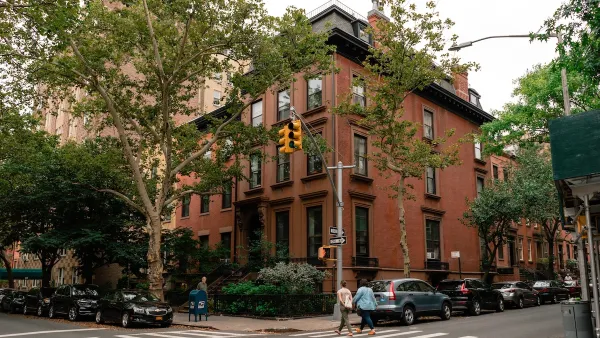
Mamdani sent nearly 6,000 pied-à-terre tax warnings to homes that didn’t qualify
A judge has ordered the administration to cancel thousands of pied-à-terre tax notices after it sent 35% of them erroneously.

Newsom vetoes high-speed rail supervision bill after agency receives condemnatory audit
The audit found the CHSRA approved almost $600,000 in unallowable travel expenses.

Nation sees first electric plane-boat hybrid take off in public demo
The Viceroy Seaglider can fly at speeds of 180mph for up to 180 miles.

One of nation’s poorest counties to receive $6 billion data center
The developers estimate the project will create 200 permanent jobs and 1,000 temporary construction jobs.

FREE Course: Walkable City 1: Why Walkability?
After describing his path towards focusing on walkability as the essence of good planning, Jeff Speck marches through his five principal reasons for making more walkable places.
Reinventing Malls: Planning Alchemy—Turning Gray Fields Into Gold
The course focuses on the opportunities and imperatives that shape reinvention of mall sites.

City of Thousand Oaks
City of Wisconsin Rapids
Harvard University Graduate School of Design
The Architects Foundation
University of Cincinnati Online
Northern Illinois Transit Authority (NITA)
The Pocatello Development Authority
The Urban Renewal Agency of the City of Pocatello