The academy will train scientists, officers and astronauts for the U.S. Space Force.


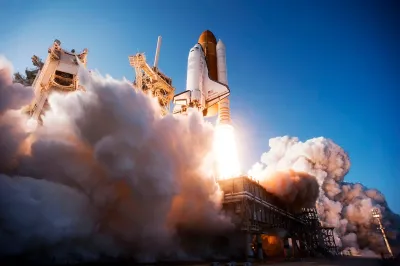
Twenty-five states, 15 of which various sources have publicly identified, submitted applications to be the home of the U.S. Space Academy, which looks to train the next generation of “civically grounded leaders prepared to advance American interests within the space domain,” according to a White House proclamation.
The academy will train scientists, officers and astronauts for the U.S. Space Force. The states’ deadline to apply to host the academy was Nov. 16. Many of the applications tout “the involvement of state universities in the development of any space academy,” Luke Lukert writes for Maryland Matters.
States who have applied so far include Virginia, West Virginia, Pennsylvania, Maryland, Florida, Texas, Alabama, Louisiana, Nevada, California and Ohio. Virginia pitched the NASA Langley Research Center in Hampton as the best location, and Pennsylvania suggested 300 acres of publicly-owned land near the Pittsburgh International Airport. Maryland proposed the University of Maryland, College Park as a temporary home for the academy.
Read the full story: Maryland, Virginia join other states hoping to land new Space Academy

Evidence-based planning in a time of information overload
The field of academic publishing has become complex and crowded. What does it mean for urban planners?

San Diego State intergenerational housing project will bring 250 homes for older adults to campus
The project is part of the university's Mission Valley campus that includes 4,600 housing units.
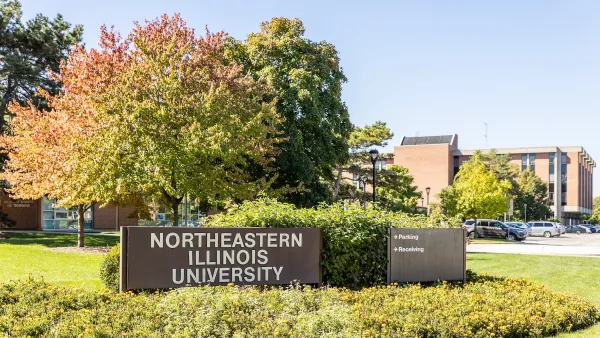
This university-owned city block in Chicago has languished for over a decade. Neighbors say it's time to let go
The university never built its planned student housing, letting a row of storefronts sit vacant for years.

Planetizen Federal Action Tracker
A weekly monitor of how Trump’s orders and actions are impacting planners and planning in America.

Washington state to charge fee to drivers with fuel-efficient cars
Revenue from the fee will go towards supporting the state’s highways.

Illinois considers spending $1 billion in taxpayer money on data center
A quantum computing campus and data center are currently under construction in Chicago.

25 states cast bids to be the home of U.S. Space Academy
The academy will train scientists, officers and astronauts for the U.S. Space Force.

Trump’s emergency orders to resuscitate coal plants cost ratepayers $593 million
Keeping coal plants on life support in Florida has cost ratepayers there $25.6 million.

Corpus Christi drilled wells at 'lightning speed,' leaving neighbors fearing for their water supply
Underground water became a critical fix through the worst of Corpus Christi’s drought. But experts warn against depending on wells for too long.

FREE Course: Walkable City 1: Why Walkability?
After describing his path towards focusing on walkability as the essence of good planning, Jeff Speck marches through his five principal reasons for making more walkable places.
Reinventing Malls: Planning Alchemy—Turning Gray Fields Into Gold
The course focuses on the opportunities and imperatives that shape reinvention of mall sites.

City of Charlotte
City of Rosemead
Rutgers University, Edward J. Bloustein School of Planning and Public Policy
University of Michigan School for Environment and Sustainability (SEAS)
Hunter College, City University of New York (CUNY)
The Architects Foundation
University District Partnership