The three states have spent years under Republican or divided control.


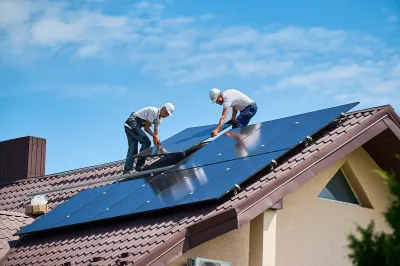
The Democrats victory on Nov. 3 could usher in a clean energy revolution in Arizona, Pennsylvania and Wisconsin. The three states have spent years under Republican or divided control, and have now elected democrats to their respective legislative chambers and governor’s mansions.
Erik Kanter, the policy director for the nonprofit Clean Wisconsin, believes Democratic control will allow the state to pass a bill requiring data centers to source their energy from clean sources, and push utilities to invest in clean energy sources rather than extend the lifespan of coal and gas plants. Over in Arizona, legislators also hope to nudge their utilities toward clean energy, and pass a bill to regulate groundwater pumping, Jake Bittle writes for Grist.
Finally, in Pennsylvania, legislators hope to pass a bill to establish water and energy efficiency standards for appliances and create new laws to allow community and warehouse rooftop solar. Grist reports: “You don’t want to let yourself fully imagine what it can be, because you’ve been let down in the past,” said Lindsey Williams, a state senator who represents a swath of the Pittsburgh metro area. “Now we’re in that moment of, wow, there’s so many things that we can accomplish.”
Read the full story: How the midterms could unleash a new era for clean energy in these 3 states
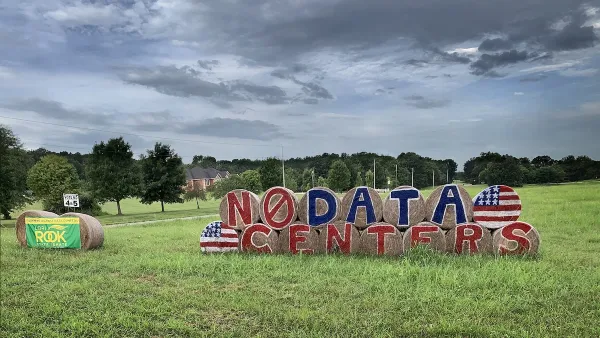
Voters across the country reject data centers
Dozens of communities voted on measures to restrict the buildout of data centers.
Ratepayers Could Be on the Hook for Data Centers’ Energy Use
Without regulatory changes, data centers’ high demand for energy would be subsidized by taxpayers, according to a new study.
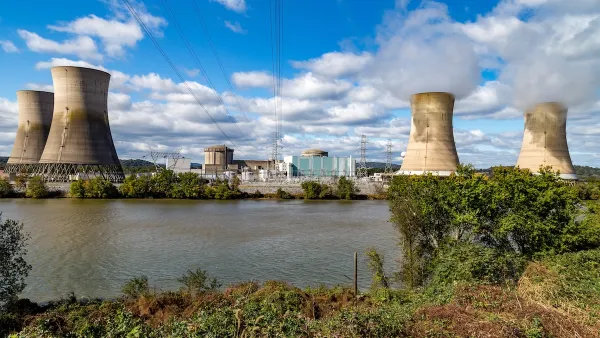
Three Mile Island Nuclear Plant Could Power Microsoft Data Centers
The proposal to restart one unit of the infamous plant, which suffered a partial meltdown in 1979, still requires federal, state, and local approvals.

Planetizen Federal Action Tracker
A weekly monitor of how Trump’s orders and actions are impacting planners and planning in America.

California plans to bury El Niño’s downpour
If the state plays its cards right, it may be able to store a billion acre-feet of El Niño’s water in aquifers.

Desperate measures: Advocates weigh draining Lake Powell to fill Colorado River
Draining the reservoir could reduce evaporation losses by a couple hundred thousand acre-feet.

Arizona, Wisconsin, Pennsylvania hope to finally advance climate goals post-midterms
The three states have spent years under Republican or divided control.

Democrats’ victory may threaten act to expedite energy projects
Democrats may decide to vote against the Bipartisan American Affordability and Jobs Act, and negotiate a more favorable bill once the 120th Congress begins.

Voters choose public transit, approve $31 billion in funding
Approved projects include $101,000 for reduced-cost transit in a Michigan town and $14 billion for regional transit in the San Francisco Bay Area.

FREE Course: Walkable City 1: Why Walkability?
After describing his path towards focusing on walkability as the essence of good planning, Jeff Speck marches through his five principal reasons for making more walkable places.
Reinventing Malls: Planning Alchemy—Turning Gray Fields Into Gold
The course focuses on the opportunities and imperatives that shape reinvention of mall sites.

City of Rosemead
Rutgers University, Edward J. Bloustein School of Planning and Public Policy
One Hundred Miles
University of Michigan School for Environment and Sustainability (SEAS)
Hunter College, City University of New York (CUNY)
The Architects Foundation
City of Cambridge
Montrose County
The Pocatello Development Authority