The project spanned five presidential administrations and a standoff with a U.S. military base.


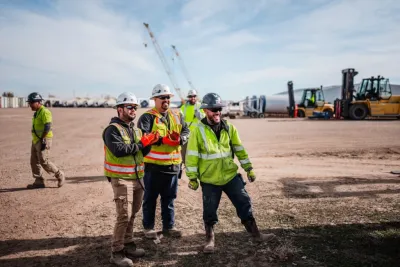
North America’s largest wind farm spun to life this spring in New Mexico. The farm is almost as large as Chicago and able to bring energy to homes as far away as California. However, it nearly didn’t come to fruition: “[SunZia] spanned five presidential administrations, an ownership change, a major reroute, and a standoff with a U.S. military base,” Sara Herschander writes for Grist. Now, the project serves as a poster child for permitting reform, and in an energy-hungry nation, could serve as a blueprint for future clean energy projects.
After gaining approval in 2006, “for the next 17 years, SunZia flailed, never even breaking ground. It ping-ponged between financial and regulatory purgatories that most commentators have attributed to endless permitting delays. There were, for example, a few state-level permitting debacles, with New Mexico rejecting SunZia’s initial transmission route in 2018. Even after such interstate power lines get federal approval, they often need to wait years longer for approvals from every state in which their project passes,” Grist reports.
Refusing to give up, SunZia applied for a new federal permit and won approval within two years. After earning $11 billion in funding, and spending a few years constructing the farm, developers finally switched on the turbines. The project has a mixed relationship with the surrounding area: During construction, developer Pattern Energy moved power lines to reserve airspace for migratory birds. However, it did not change the power lines’ route through sacred Indigenous land in New Mexico, a lawsuit regarding which remains pending.
Read the full story: How the biggest renewable energy project in US history finally got built

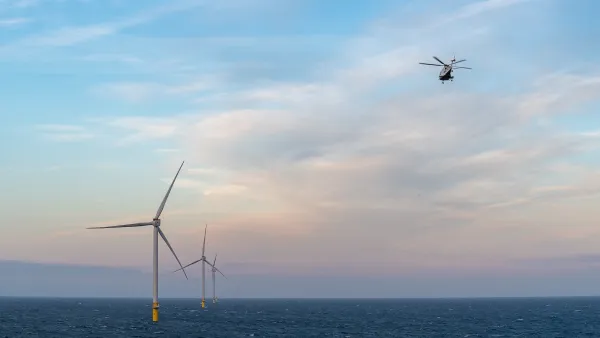
California presses forward on offshore wind
The state is taking steps to prepare its grid and port infrastructure for offshore wind projects despite the federal government's pushback on the technology.
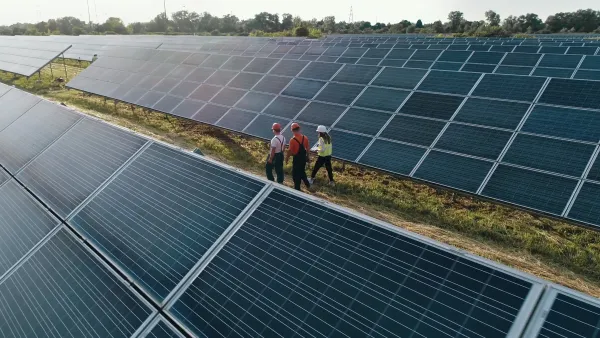
Study: States approved 90% of renewable energy projects between 2018 and 2024
Ohio had the highest rejection rate for wind and solar proposals.
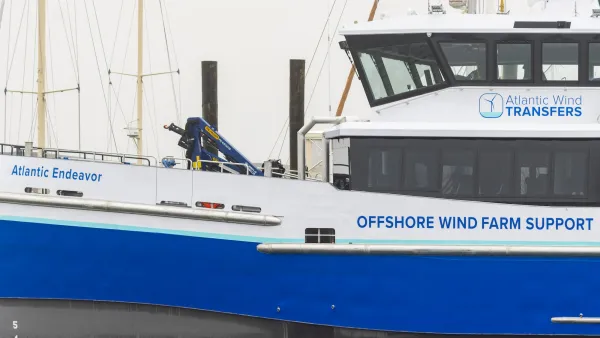
Nation’s Largest Offshore Wind Project, Suspended by Trump, Restarts Construction
A judge issued a temporary restraining order against the Trump administration’s suspension of five East Coast offshore wind projects.

Planetizen Federal Action Tracker
A weekly monitor of how Trump’s orders and actions are impacting planners and planning in America.

California plans to bury El Niño’s downpour
If the state plays its cards right, it may be able to store a billion acre-feet of El Niño’s water in aquifers.

Desperate measures: Advocates weigh draining Lake Powell to fill Colorado River
Draining the reservoir could reduce evaporation losses by a couple hundred thousand acre-feet.

In Texas, data centers are swallowing promised parkland
Residents who moved to Taylor, Texas for a rural community now have to contend with three data centers in their backyard.

How a Chicago-sized wind farm beat the odds and powered on
The project spanned five presidential administrations and a standoff with a U.S. military base.

MTA gives itself 30 days to transform pit into basketball court
The site has been under construction since 2022; the city originally estimated it would finish the court in 2024.

FREE Course: Walkable City 1: Why Walkability?
After describing his path towards focusing on walkability as the essence of good planning, Jeff Speck marches through his five principal reasons for making more walkable places.
Reinventing Malls: Planning Alchemy—Turning Gray Fields Into Gold
The course focuses on the opportunities and imperatives that shape reinvention of mall sites.

City of Rosemead
Rutgers University, Edward J. Bloustein School of Planning and Public Policy
One Hundred Miles
Hunter College, City University of New York (CUNY)
The Architects Foundation
University of Cincinnati Online
City of Cambridge
Montrose County
The Pocatello Development Authority