A judge issued a temporary restraining order against the Trump administration’s suspension of five East Coast offshore wind projects.


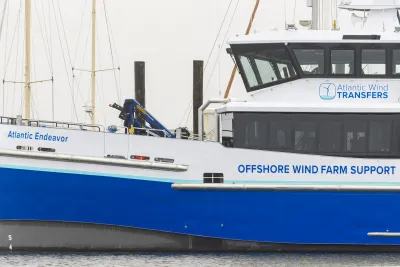
The Coastal Virginia Offshore Wind project, the largest in the United States, is resuming work after a federal judge temporarily lifted a suspension by the Department of the Interior.
According to an article by Spencer Kimball for CNBC, “Coastal Virginia Offshore Wind is a 176-turbine project that would provide enough power for more than 600,000 homes, according to Dominion. It is scheduled to start dispatching power by the end of the first quarter of 2026.”
The Trump administration halted five East Coast wind projects in December, citing national security concerns. “Dominion said in December that ‘stopping CVOW for any length of time will threaten grid reliability for some of the nation’s most important war fighting, AI and civilian assets.’” Dominion says it will now focus on safely restarting work as the legal challenge proceeds.
FULL STORY: Biggest offshore wind project in U.S. to resume construction after judge lifts Trump suspension


California presses forward on offshore wind
The state is taking steps to prepare its grid and port infrastructure for offshore wind projects despite the federal government's pushback on the technology.
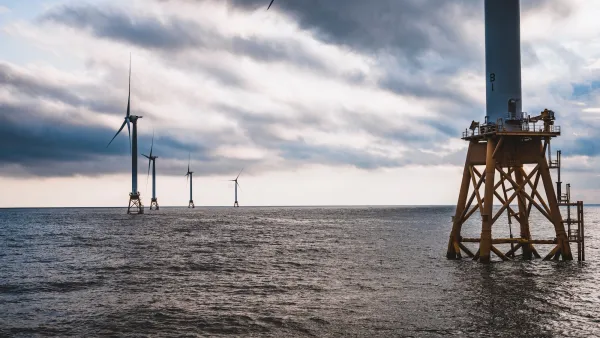
Trump Administration to Pay Energy Firm $1 Billion to Kill Wind Farms in Favor of Fossil Fuel Projects
TotalEnergies will forfeit its lease on two proposed wind energy projects off the coasts of New York and North Carolina.
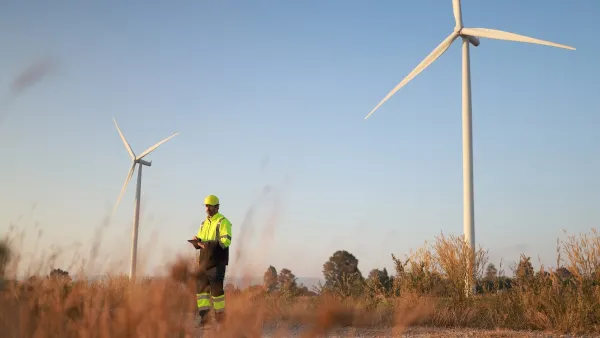
Feds Terminate $7.56 Billion for Clean Energy Projects
The Department of Energy canceled awards to over 200 renewable energy projects.

The state-sanctioned urbicide of Austin
People don’t kill cities. Freeways do.

US to reduce Colorado River water deliveries to Mexico
A new Colorado Treaty amendment reduces Mexico’s Colorado River water allocation by 250,000 acre feet.

New Jersey’s second-largest city bans standalone data centers
Jersey City will continue to allow co-location facilities, such as those meant for research institutions that store their own data.

Amtrak not solely to blame for New Jersey commuter rail's unreliability, report finds
A new study from the Garden State Initiative found that NJ Transit’s budget grew 20% across a 4 year period, but reliability declined significantly over the same period.

EPA erases limits on planet-warming pollution from power plants
Under Monday’s plan, power plants would still have some limits on how much mercury, arsenic and other contaminants they can emit.

Phoenix announces new on-demand transit service, more frequent RAPID buses
Both new services will launch in October, and are part of Phoenix's Project Effective Access Solutions for Easing Congestion.

FREE Course: Walkable City 1: Why Walkability?
After describing his path towards focusing on walkability as the essence of good planning, Jeff Speck marches through his five principal reasons for making more walkable places.
Reinventing Malls: Planning Alchemy—Turning Gray Fields Into Gold
The course focuses on the opportunities and imperatives that shape reinvention of mall sites.

Eagle County Government
Harvard University Graduate School of Design
Nashville Planning Department
The Architects Foundation
University of Cincinnati Online
The Pocatello Development Authority
The Urban Renewal Agency of the City of Pocatello
Journal of the American Planning Association