If approved, the projects will take years to implement and face financial and technical hurdles.


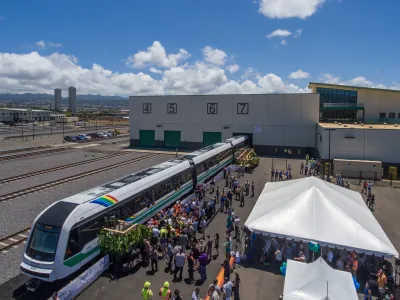
As robotaxis take the lead on automated transportation, leaders in Washington, D.C. and Los Angeles are exploring ways to automate their transit systems. Los Angeles is overseeing an environmental review for an automated track that would slice through the Santa Monica Mountains, and the nation’s capital is looking to automate its Red Line.
“The Washington and LA projects, which would take years to implement and still face financial and technical hurdles, come amid an already fierce debate over the safety risks and benefits of automated trains and whether the substantial upfront expense is worth the long-term savings in labor costs,” Jeff McMurray writes for the Associated Press.
In Hawaii, commuters can already ride on the most expansive automated transit system in the United States. When complete, its elevated, driverless line will stretch 19 miles.
Read the full story: Some US transit systems weigh whether to run trains without a human at the controls

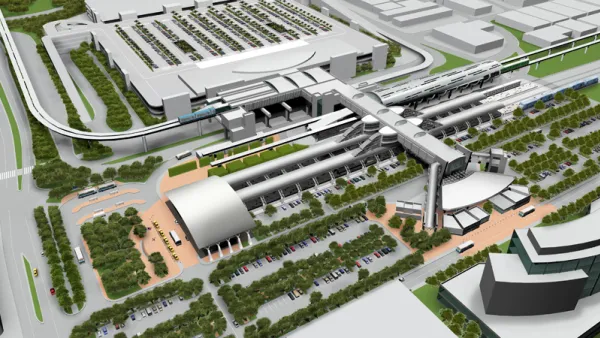
A Preview of the Year Ahead in U.S. Transit Projects
Dozens of transit expansion projects will start, continue, or complete construction this year across America. Yonah Freemark delivers a thorough rundown of the exciting year ahead in transit construction and makes note of a dark cloud on the horizon.
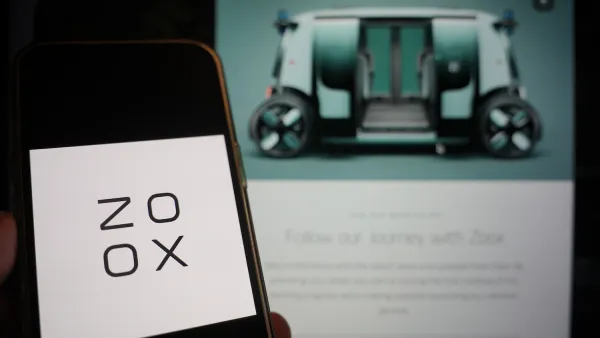
Amazon-Owned Robotaxis to Begin Testing in LA
Los Angeles will become the sixth city where Zoox is testing its autonomous vehicle technology.
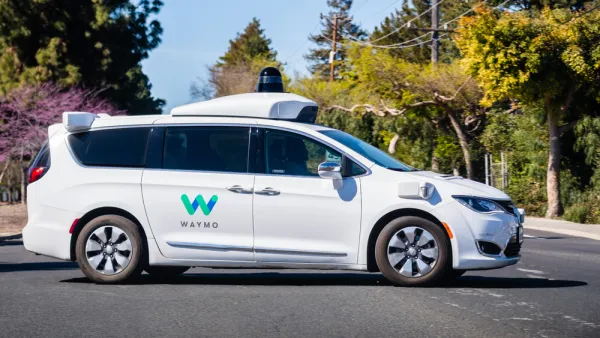
Waymo Wants to Bring ‘Robot Taxis’ To L.A.
After launching pilot programs in San Francisco and Phoenix, the company says it is ready to begin deploying its autonomous vehicles on Los Angeles streets.

Planetizen Federal Action Tracker
A weekly monitor of how Trump’s orders and actions are impacting planners and planning in America.

Chicago breaks ground on $3 billion megadevelopment
The new neighborhood, titled Foundry Park, will one day host 3,700 residences.

This MA town is drowning in its own sewage — and residents like it that way
Susan Murcott, a waste water expert, said if Carlisle didn't address their leaking sewage, the problem could turn “deadly.”

To power data centers, Google seeks autonomous control of thousands of homes’ electricity
The tech company has signed a deal to indirectly pay Mid-Atlantic residents to reduce their power demand when the grid is strained.

From robotaxis to robotrains: LA, DC weigh driverless transit
If approved, the projects will take years to implement and face financial and technical hurdles.

Dallas suburbs are turning their downtowns into small towns
Four Texas towns are embracing walkability and density in their downtowns.

FREE Course: Walkable City 1: Why Walkability?
After describing his path towards focusing on walkability as the essence of good planning, Jeff Speck marches through his five principal reasons for making more walkable places.
Reinventing Malls: Planning Alchemy—Turning Gray Fields Into Gold
The course focuses on the opportunities and imperatives that shape reinvention of mall sites.

City of Rosemead
Rutgers University, Edward J. Bloustein School of Planning and Public Policy
One Hundred Miles
The Architects Foundation
University of Cincinnati Online
Montrose County
The Pocatello Development Authority
The Urban Renewal Agency of the City of Pocatello