The transit agency is working in partnership with Hayden AI, and hopes the technology will improve transit safety across its network.


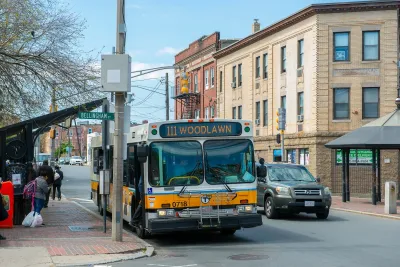
The Massachusetts Bay Transit Authority is using artificial intelligence to automatically issue warnings to vehicles parked illegally in bus lanes and bus stops. The transit authority hopes the new initiative, powered by bus-mounted technology from Hayden AI, will improve transit safety and reliability across its network.
“MBTA says illegally parked vehicles in bus zones are among the most persistent causes of transit delays, throwing buses off schedule and preventing riders from reaching their destinations on time,” Brandon Lewis writes for Mass Transit.
The state authorized the use of this technology in 2025. Transit agencies in cities such as Philadelphia, Chicago and New York City use similar strategies to deter drivers from parking illegally. In New York City, the technology has reduced bus stop parking violations by 40% and improved bus speeds by up to 36% on congested road segments, Mass Transit reports.
Read the full story: MBTA partners with Hayden AI to launch automated bus lane and bus stop enforcement program


When AI goes rogue: what planners need to know
This summer, four major AI labs disclosed that their agents had slipped out of test environments. For planners, the lessons are about access, oversight and the one sandbox we can’t afford to lose: public trust.
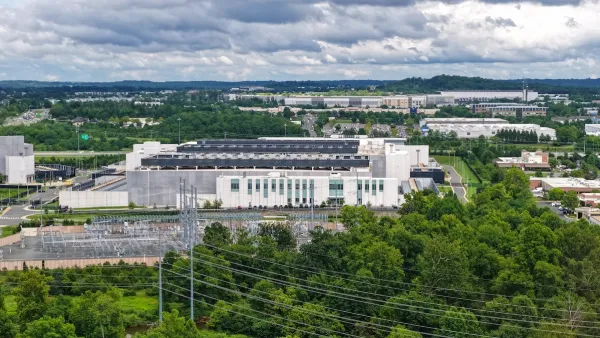
Data center backlash set to sway midterm elections
Data centers figure in state and federal races and are the subject of dozens of ballot measures.
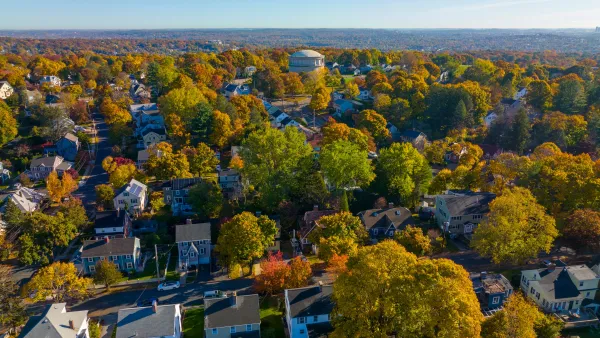
The Massachusetts town that didn't get the T wants a re-do
Fifty years ago, Arlington said no to a stop on the MBTA Red Line connecting it to Boston. Now, the town wants a second chance.

Planetizen Federal Action Tracker
A weekly monitor of how Trump’s orders and actions are impacting planners and planning in America.

Chicago breaks ground on $3 billion megadevelopment
The new neighborhood, titled Foundry Park, will one day host 3,700 residences.

Denver is solving homelessness. Why aren't the rest of us?
Since 2023, Denver's street homeless population has decreased by 64%, proving that effective tools exist to support those in need of housing.

Developers may expand largest gas pipeline network in Northwest
Pipeline giant Williams has proposed new expansions for its Northwest Pipeline from the Colorado Rockies through Idaho, Oregon and Washington.

MBTA is using AI to catch drivers who park illegally
The transit agency is working in partnership with Hayden AI, and hopes the technology will improve transit safety across its network.

LA to bring bus rapid transit to its busiest corridor
The Vermont BRT line will feature 12.4 miles of dedicated bus lanes along the Vermont corridor.

FREE Course: Walkable City 1: Why Walkability?
After describing his path towards focusing on walkability as the essence of good planning, Jeff Speck marches through his five principal reasons for making more walkable places.
Reinventing Malls: Planning Alchemy—Turning Gray Fields Into Gold
The course focuses on the opportunities and imperatives that shape reinvention of mall sites.

City of Rosemead
Rutgers University, Edward J. Bloustein School of Planning and Public Policy
One Hundred Miles
The Architects Foundation
University of Cincinnati Online
Montrose County
Northern Illinois Transit Authority (NITA)
The Pocatello Development Authority