The Federal Transit Association plans to cover up to 10% more of a transit project's costs if the community’s birth rates meet or exceed national thresholds.



The Trump administration plans to direct federal transit funding to communities with high birth and marriage rates, according to newly-released plans from the Federal Transit Association. The new criteria comes as part of the FTA’s proposed revamp of a multi-billion dollar program that provides funding to states and local authorities for infrastructure such as bus lanes and rail improvements.
“Under the transit proposal, the FTA would cover up to 10 percentage points more of a project’s costs if an area’s average birth and marriage rates meet, exceed or are just below nationwide thresholds,” Sam Ogozalek writes for Politico.
In 2025, the national fertility rate hit a record low of 53.1 births per 1,000 women ages 15 to 44. “Trump has said he will be known as the ‘fertilization president,’” Politico reports.
Read the full story: Trump administration unveils plan to tie high birth and marriage rates to transit funding
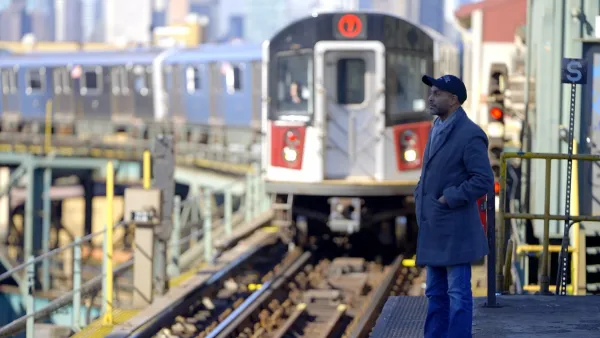
The News Is Not All Bad
President Trump's election might not be a disaster for local transit.

Two Demographic Firsts, Both Losses, for California
The nation's most populous state learned from the Census Bureau last month that it would lose a congressional district for the first time in its history. On Friday, it revealed that 2020 was the first year since 1850 to experience a population loss.
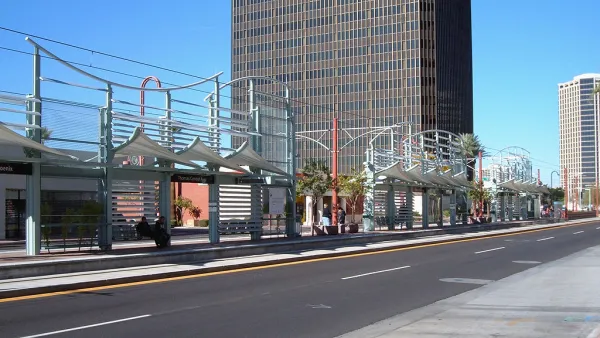
$544 Million in Transit Capital Investment Funding Announced
The latest round of funding for the Federal Transit Administration's Capital Investment Grant funding program was announced this week.

Planetizen Federal Action Tracker
A weekly monitor of how Trump’s orders and actions are impacting planners and planning in America.

Washington state to charge fee to drivers with fuel-efficient cars
Revenue from the fee will go towards supporting the state’s highways.

Illinois considers spending $1 billion in taxpayer money on data center
A quantum computing campus and data center are currently under construction in Chicago.

Trump to blast ‘hydrocarbon highway’ through ‘world’s longest art gallery’
Environmental and historic preservation groups are suing to stop the project.

25 states cast bids to be the home of U.S. Space Academy
The academy will train scientists, officers and astronauts for the U.S. Space Force.

Trump’s emergency orders to resuscitate coal plants cost ratepayers $593 million
Keeping coal plants on life support in Florida has cost ratepayers there $25.6 million.

FREE Course: Walkable City 1: Why Walkability?
After describing his path towards focusing on walkability as the essence of good planning, Jeff Speck marches through his five principal reasons for making more walkable places.
Reinventing Malls: Planning Alchemy—Turning Gray Fields Into Gold
The course focuses on the opportunities and imperatives that shape reinvention of mall sites.

City of Charlotte
City of Rosemead
Rutgers University, Edward J. Bloustein School of Planning and Public Policy
University of Michigan School for Environment and Sustainability (SEAS)
Hunter College, City University of New York (CUNY)
The Architects Foundation
University District Partnership