The Upper East and West Sides, Elmhurst, and Bayside are among the communities that have built little affordable housing over the past five years, and now will see certain projects fast-tracked under new city rules.


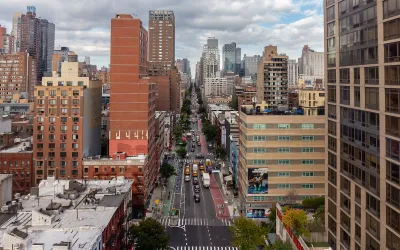
This story was originally published by the nonprofit news site City Limits.
A dozen New York City communities that built the least affordable housing are going to be in the development dog house for the next five years.
The Department of City Planning announced the list of 12 community districts Thursday morning, concluding a prolonged fight over which neighborhoods should bear the burden of building new housing, and setting the stage for where future battles may unfold.
Thanks to ballot measures passed by voters last year, affordable housing projects in the 12 districts producing the least will now be “fast tracked,” shortening land use review timelines and taking the final call out of the hands of the City Council and giving it to the mayor-appointed City Planning Commission. The fast track will take effect in January.
“New York’s housing crisis is not going to be solved by asking the same neighborhoods to do all the building,” said Mayor Zohran Mamdani in a statement. “Every New Yorker deserves a home they can afford, and every neighborhood must be part of delivering it. The Affordable Housing Fast Track gives us a new tool to cut through red tape and make sure our housing growth is shared more fairly across all five boroughs.”
The fast track is sure to be controversial in the target neighborhoods, where housing production has lagged.
“It makes me very angry. It always has. I didn’t support the fast track,” said Councilmember Gale Brewer, who represents the Upper West Side.
The districts include some dense, wealthy areas of the city, like the Upper East and West Sides, that had affordable housing growth rates at 0.1 percent. But it also includes more suburban style neighborhoods in Eastern Queens, across Bayside, Queens Village, and Rosedale, areas that built just 61 affordable housing units over the past five years.
“The fast track districts represent 20 percent of our city, but are producing 1.1 percent of its housing,” said City Planning Commissioner Sideya Sherman.
To qualify for the fast track, a housing project would have to meet or exceed the level of affordable housing found in the city’s mandatory inclusionary housing rules—usually between 20 and 35 percent of units being affordable, depending on the range of acceptable incomes.
Many City Council members were critical of the fast track proposal, which they said would punish communities and take away a councilmember’s power to negotiate with developers and get local benefits in land use deals.
Kayla Santosuosso, who represents Bay Ridge in South Brooklyn, said she got mixed reactions from her constituents when she explained the new process.
“People felt like they were duped, or that it was a bait switch. People like, ‘I voted for those measures. I didn’t realize that it meant that I would have a diminished voice in rezoning,'” said Santosuosso. “And then there are people who knew very well what the ballot proposals were, and were mad that the citywide voters deprived them of their voice.”
But Department of City Planning officials say the fast track is an “opportunity,” rather than a punishment, for neighborhoods lagging on housing.
“It does not mandate housing. It does not automatically rezone. It certainly does not take away public input from our land use processes,” said Sherman.
Another goal of the initiative is to dismantle residential racial segregation in the city.
Sherman said the 12 districts that built the most have produced over half of the city’s new affordable housing, and tend to have more Black and brown residents than the rest of the city.
“One of the goals of the fast track is to build fair housing, and fair housing includes undoing historic paradigms of segregation,” said Sherman. The bottom 12 neighborhoods, while all different, have “around 46 percent home ownership compared to 30 percent citywide and 44 percent white compared to 31 percent citywide,” Sherman added.
Some councilmembers saw the bottom coming up at them. In Bay Ridge, Santosuosso already pitched rezoning an industrial stretch to build more housing in response to the new measures, saying she hoped the district could build its way of the hole and reclaim their vote at City Council.
“That is exactly what the Council is seeking to accomplish through our proactive, community-led planning efforts—like in Bay Ridge—to ensure New Yorkers have a meaningful role in shaping their neighborhoods,” said City Council Speaker Julie Menin in a statement. Parts of her district, on the Upper East Side, are also on the list.
While the fast track relates to community districts—which are different geographies than Council districts—the new policy could force councilmembers to look closely at what parts of their districts could build more.
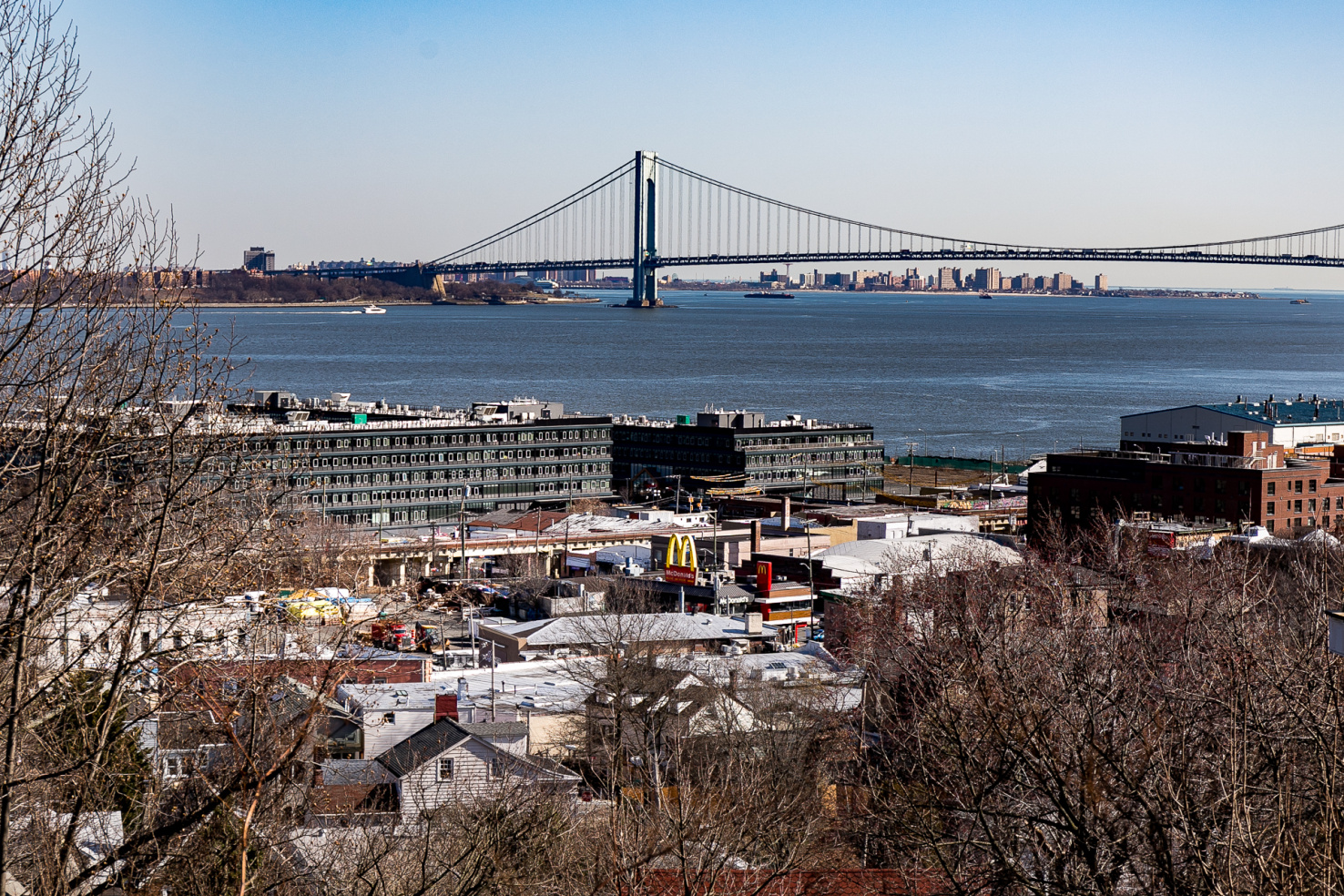
Earlier this week, Councilmember Kamillah Hanks, of Staten Island’s North Shore, released a rezoning proposal to build 5,000 units of housing. While most of Hanks’s district is not in the bottom 12, her neighbors in Staten Island Community Boards 1 and 2 built just 27 affordable housing units between them over the past five years.
Council Minority Leader David Carr, who represents the mid-island, said the fast track curtails neighborhood voices. “You are removing local input and the opportunity to shape these projects to fit the needs and the unique character of each community,” he said.
The changes will upset the usual balance of power in land use battles, responsibilities which traditionally belonged to the Council under the city’s Uniform Land Use Review Procedure, or ULURP.
“I think there will definitely be developers who don’t care about community input who may take advantage of this and completely bypass even discussing with the councilmember because there’s presumably no leverage,” said Santosuosso. “But while we no longer have the ULURP process in these community districts, we do have a bully pulpit. We can advocate for projects that we like, we can advocate against projects we don’t.”
To reach the reporter behind this story, contact [email protected]. To reach the editor, contact [email protected]
This article was republished from City Limits, an independent, investigative news source.
Read the full story: See the 12 Communities on New York City’s Affordable Housing Naughty List

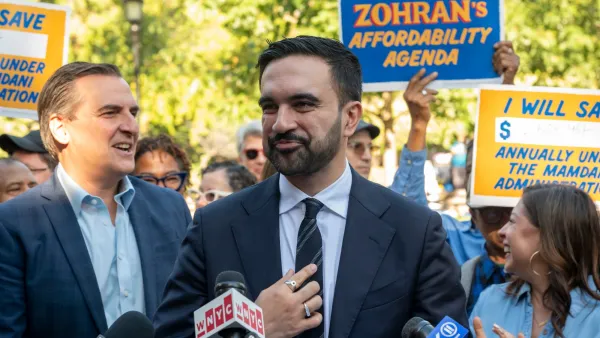
NYC Mayor Mamdani Backs Down on Expanded Rental Assistance Program, Citing $7 Billion Deficit
The new mayor had promised to expand the CityFHEPS rent assistance program to an additional 47,000 households.

NYC Mayor Mamdani’s First Executive Orders Focus on Tenant Protections, Reverse Adams Orders
A Mamdani order revokes all executive orders issued by former mayor Eric Adams, including one that created a city office focused on cryptocurrency.
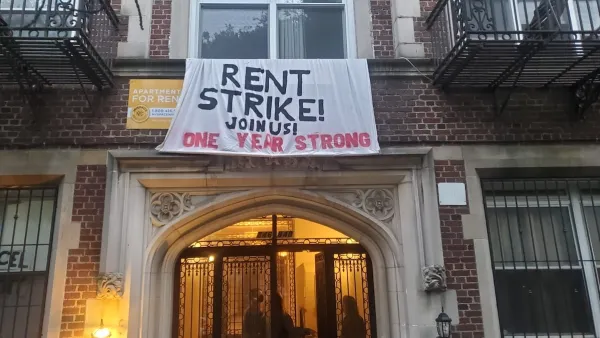
What Zohran Mamdani’s Primary Win Means for the Tenant Movement
The mayoral candidate made a rent freeze central to his campaign. Here's how his supporters used in-person campaigning to clinch a victory, and what's ahead.

Planetizen Federal Action Tracker
A weekly monitor of how Trump’s orders and actions are impacting planners and planning in America.

Northwest rail fans eager for Sept. 30 debut of Amtrak’s Airo fleet
Get ready for that new train smell and more seats. But they won’t go faster or run more frequently on the Cascades route in Washington and Oregon.

Record-breaking wildlife overpass in Colorado brings 91% reduction in animal collisions
Prior to the overpass, vehicles were hitting one deer per day on Colorado’s Interstate 25.

Trump wants to cancel nearly 98% of funding for HUD housing support program
Multiple housing groups are suing the administration in an effort to preserve the funding.

See the 12 communities on New York City’s affordable housing naughty list
The Upper East and West Sides, Elmhurst, and Bayside are among the communities that have built little affordable housing over the past five years, and now will see certain projects fast-tracked under new city rules.

Downtown Chicago opens the doors of first office-to-housing project
Chicago aims to eventually turn empty office space into 1,765 mixed-income housing units.

FREE Course: Walkable City 1: Why Walkability?
After describing his path towards focusing on walkability as the essence of good planning, Jeff Speck marches through his five principal reasons for making more walkable places.
Reinventing Malls: Planning Alchemy—Turning Gray Fields Into Gold
The course focuses on the opportunities and imperatives that shape reinvention of mall sites.

City of Thousand Oaks
City of Wisconsin Rapids
Harvard University Graduate School of Design
The Architects Foundation
University of Cincinnati Online
Northern Illinois Transit Authority (NITA)
The Pocatello Development Authority
The Urban Renewal Agency of the City of Pocatello