The Environmental Protection Agency ended the Solar For All program, which provided the grants, after President Donald Trump’s inauguration.


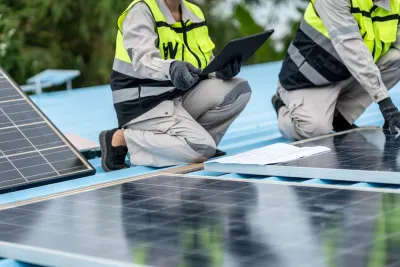
A federal judge ruled that the Trump administration acted unlawfully when it canceled the Solar For All program, which provided $7 billion in grants for “states, municipalities, tribes and nonprofits designed to reduce electric bills, create jobs and address the greenhouse gas emissions warming the global climate,” Amy Green writes for Inside Climate News.
The Biden administration established the program, which the Environmental Protection Agency canceled after President Donald Trump's inauguration. Multiple groups sued in the U.S. District Court for the District of Rhode Island on behalf of workers, business and nonprofits who suffered because of the withdrawn funding.
Inside Climate News reports:
“Congress’s clear intent was that EPA continue to administer the already obligated SFA grants,” Judge Mary S. McElroy, a Trump appointee, wrote in her ruling, issued Friday. “Defendants acted contrary to this intent, and with no other statutory authority, when they terminated the SFA program.”
Read the full story: Federal Judge Rules Against Trump Administration Over Canceled Clean Energy Grants

Trump administration formally announces intent to sell federal land
The department’s strategic plan does not specify which lands it might sell to states or tribes.
Federal government nominates new FTA administrator
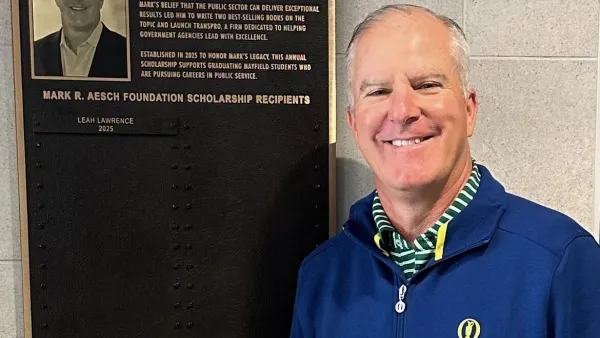
Mark Aesch is currently the founder and CEO of a transportation management consulting firm.

Massachusetts bogs generate both power, and cranberries
Putting solar panels above farmland is one way Massachusetts is advancing toward its goal of net-zero carbon emissions by 2050.

Planetizen Federal Action Tracker
A weekly monitor of how Trump’s orders and actions are impacting planners and planning in America.

Eastern Nebraska is running out of electricity
Data centers and electrification are straining eastern Nebraska’s grid, throttling economic development.

Study reveals best places in the U.S. for cycling, walking
New research from Streetlight Data examines bicycle and pedestrian miles per capita in the 100 largest U.S. cities by population.

Next-generation nuclear reactors are coming to Texas
The reactors will not require towering containment structures thanks to new safety features.

California distributes $1.3 billion to prevent transit service cuts, bolster projects
Twenty-eight projects across California received a portion of the funding.

Pennsylvania Democrats have 15 affordability, clean energy bills for flipped state Senate
Bills in consideration include a bill supporting geothermal energy and a bill supporting solar on warehouses.

FREE Course: Walkable City 1: Why Walkability?
After describing his path towards focusing on walkability as the essence of good planning, Jeff Speck marches through his five principal reasons for making more walkable places.
Reinventing Malls: Planning Alchemy—Turning Gray Fields Into Gold
The course focuses on the opportunities and imperatives that shape reinvention of mall sites.

City of Charlotte
City of Rosemead
Rutgers University, Edward J. Bloustein School of Planning and Public Policy
University of Michigan School for Environment and Sustainability (SEAS)
Hunter College, City University of New York (CUNY)
The Architects Foundation
City of Cambridge
The Pocatello Development Authority
The Urban Renewal Agency of the City of Pocatello