The transit agency is launching upgrades to three of its on-demand services.


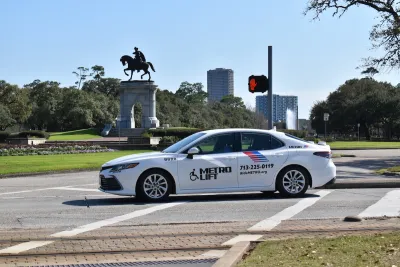
Houston Metro is investing in its on-demand services by upgrading METROLift, its paratransit service, making its on-demand rideshare pilot, Community Connector, a permanent part of the transit network and adding a new service zone to curb2curb, another on-demand rideshare service.
“According to [Houston Metro], an automated scheduling option [for METROLift] will allow customers to make next-day reservations while a new Where Is My Ride virtual assistant will provide customers with updated trip information. The METRO On Demand app will also provide self-service booking for METROLift same-day trips,” Brandon Lewis writes for Mass Transit.
Houston Metro is also expanding service hours for Community Connector and rolling out new climate controlled vehicles and dedicated ADA wheelchair-accessible minivans. Both Community Connector and curb2curb have new options where riders can arrange rides with independent drivers in commercial vehicles during periods of high demand.
Read the full story: Houston Metro expands on-demand services
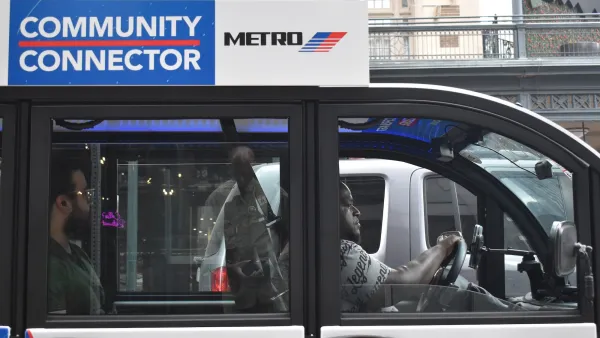
Houston Metro Secures Long-Term Funding for On-Demand Microtransit
The agency is working to integrate the Community Connector service into Houston’s broader transit network.
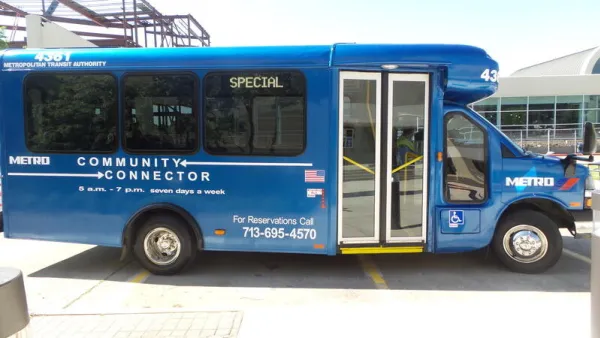
On-Demand Transit in Houston: There's an App for That
The city of Houston this week launched an app for its Community Connector shuttle service as part of a ten-month pilot project.
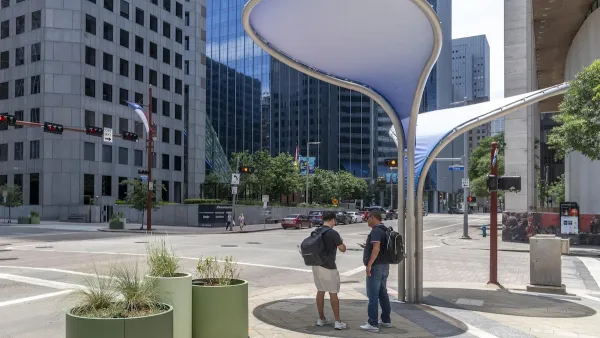
Houston gains petal-shaped cooling infrastructure to make streets more ‘delightful’
The city has installed the pavilions along 15 blocks in Houston.

Planetizen Federal Action Tracker
A weekly monitor of how Trump’s orders and actions are impacting planners and planning in America.

Eastern Nebraska is running out of electricity
Data centers and electrification are straining eastern Nebraska’s grid, throttling economic development.

Study reveals best places in the U.S. for cycling, walking
New research from Streetlight Data examines bicycle and pedestrian miles per capita in the 100 largest U.S. cities by population.

Next-generation nuclear reactors are coming to Texas
The reactors will not require towering containment structures thanks to new safety features.

California distributes $1.3 billion to prevent transit service cuts, bolster projects
Twenty-eight projects across California received a portion of the funding.

Pennsylvania Democrats have 15 affordability, clean energy bills for flipped state Senate
Bills in consideration include a bill supporting geothermal energy and a bill supporting solar on warehouses.

FREE Course: Walkable City 1: Why Walkability?
After describing his path towards focusing on walkability as the essence of good planning, Jeff Speck marches through his five principal reasons for making more walkable places.
Reinventing Malls: Planning Alchemy—Turning Gray Fields Into Gold
The course focuses on the opportunities and imperatives that shape reinvention of mall sites.

City of Charlotte
City of Rosemead
Rutgers University, Edward J. Bloustein School of Planning and Public Policy
University of Michigan School for Environment and Sustainability (SEAS)
Hunter College, City University of New York (CUNY)
The Architects Foundation
City of Cambridge
The Pocatello Development Authority
The Urban Renewal Agency of the City of Pocatello