The Mobile River Bridge and Bayway Project aims to ease congestion at Alabama’s worst bottleneck.


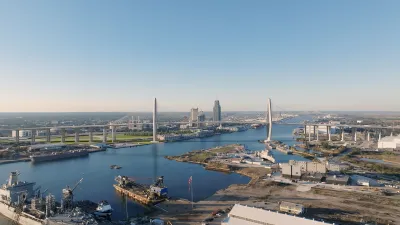
The Alabama Toll Road, Bridge and Tunnel Authority will receive a loan of up to $2.52 billion from the Build America Bureau to fund the largest infrastructure project in Alabama's history: the Mobile River Bridge and Bayway Project. The project will construct a six-lane bridge over Mobile River, and relieve Alabama’s primary bottleneck by giving hazmat freight a more direct path across the Mobile River.
“For decades, commuters and freight haulers have faced severe congestion at George Wallace Tunnel—Alabama's worst traffic bottleneck. Because hazardous materials are prohibited from using the tunnel, hundreds of trucks every day are forced to detour through downtown Mobile and local neighborhoods. The project will provide a direct interstate route for these vehicles, removing hazmat freight from city streets,” NBC 15 reports.
The project also aims to expand freight access to the Port of Mobile by restriping the 7.5 mile Bayway from two lanes to three in each direction.
Read the full story: Alabama lands up to $2.52B loan for Mobile River Bridge and Bayway Project
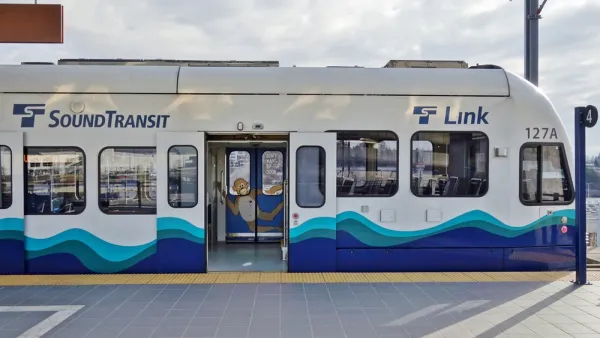
Sound Transit To Receive $3.84 Billion in Federal Loans
The funding will support the financing of six projects, including the Downtown Redmond Link Extension.
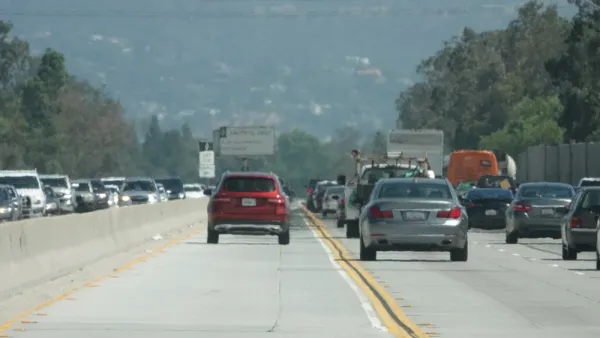
Funding Approved for Interstate 10 Express Lanes in Southern California
Construction of 10 miles of dual express lanes on I-10 received the go-ahead last month after a TIFIA loan closed for $225 million of the $925 million project planned by the San Bernardino County Transportation Authority.
Alabama Is Latest State to Hike Gas Tax
Thanks to bipartisan cooperation and strong leadership from Gov. Kay Ivey, the Heart of Dixie passed it first fuel tax hike in 27 years. The 21 cents per gallon tax will increase by 10 cents in three increments by 2021 and then indexed to inflation.

Planetizen Federal Action Tracker
A weekly monitor of how Trump’s orders and actions are impacting planners and planning in America.

Eastern Nebraska is running out of electricity
Data centers and electrification are straining eastern Nebraska’s grid, throttling economic development.

Study reveals best places in the U.S. for cycling, walking
New research from Streetlight Data examines bicycle and pedestrian miles per capita in the 100 largest U.S. cities by population.

Federal government nominates new FTA administrator
Mark Aesch is currently the founder and CEO of a transportation management consulting firm.

Developers reveal $10 billion stadium plan as ‘Hail Mary’ to keep Bears in Chicago
The plan would also boast a public park, high- and mid-rise buildings and a youth sports complex.

As Texas embraces carbon storage, a Black community questions the risks
Texas now issues permits for companies to store carbon dioxide underground. East Texas residents fear safety risks, and skeptics doubt the climate benefits.

FREE Course: Walkable City 1: Why Walkability?
After describing his path towards focusing on walkability as the essence of good planning, Jeff Speck marches through his five principal reasons for making more walkable places.
Reinventing Malls: Planning Alchemy—Turning Gray Fields Into Gold
The course focuses on the opportunities and imperatives that shape reinvention of mall sites.

City of Charlotte
City of Rosemead
Rutgers University, Edward J. Bloustein School of Planning and Public Policy
University of Michigan School for Environment and Sustainability (SEAS)
Hunter College, City University of New York (CUNY)
The Architects Foundation
City of Cambridge
The Pocatello Development Authority
The Urban Renewal Agency of the City of Pocatello