Under Monday’s plan, power plants would still have some limits on how much mercury, arsenic and other contaminants they can emit.


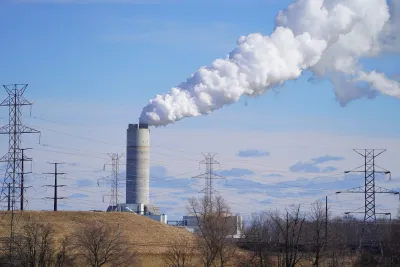
The Environmental Protection Agency announced on Sept. 14 that the United States will no longer limit the planet-warming pollution that power plants release while burning coal and gas, Maxine Joselow and Lisa Friedman write for the New York Times. The power sector is the second largest source of carbon dioxide in the United States, which accumulates in the atmosphere and traps the sun's heat, raising temperatures and exacerbating extreme weather.
“The agency plans to argue Monday that greenhouse gases from power plants do not endanger human health or the environment, and therefore it lacks the legal authority to regulate these emissions under the Clean Air Act, according to the people familiar with the matter. If courts uphold this argument, it could prevent future administrations from restoring the restrictions,” the New York Times reports.
Under Monday’s plan, power plants would still have some limits on how much mercury, arsenic and other contaminants they can emit.
Read the full story: E.P.A. Expected to Erase Limits on Climate Pollution From Power Plants

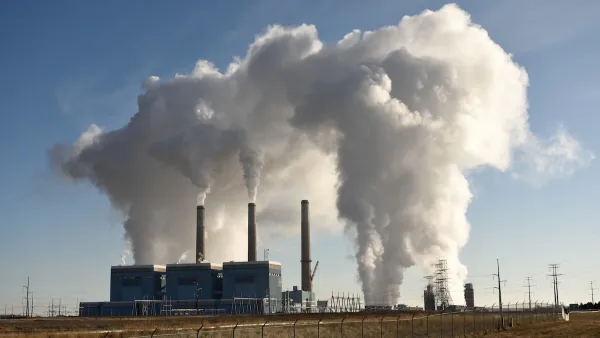
25 states, cities sue the EPA over erased power plant emissions limits
The coalition also intends to sue the EPA for not regulating emissions from gas-fired power plants.
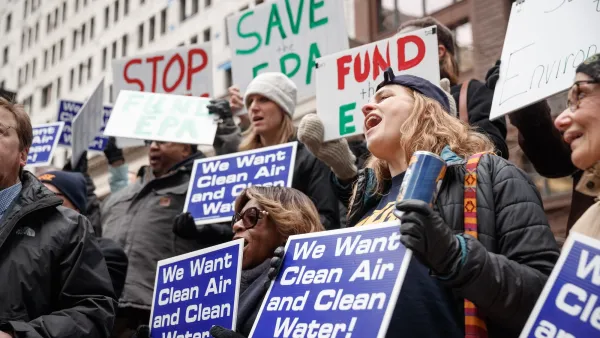
EPA Guts Emissions Regulations
The agency is eliminating the endangerment finding that underpins the agency’s authority to regulate greenhouse gas emissions.
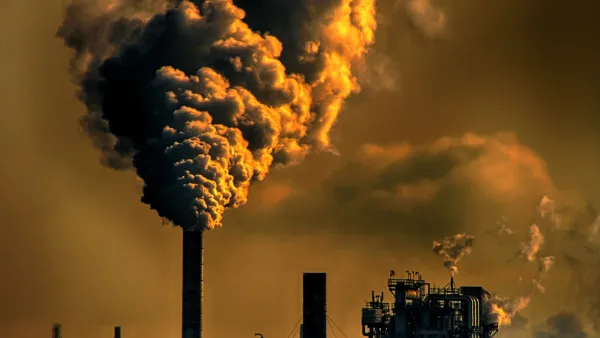
The Post-Pandemic Economy Could Be Dirtier Than Ever
The environmental gains at the beginning of the pandemic were only temporary., and there are signs more signs every day that the economy will be dirtier than ever in the future.

Planetizen Federal Action Tracker
A weekly monitor of how Trump’s orders and actions are impacting planners and planning in America.

California plans to bury El Niño’s downpour
If the state plays its cards right, it may be able to store a billion acre-feet of El Niño’s water in aquifers.

Chicago breaks ground on $3 billion megadevelopment
The new neighborhood, titled Foundry Park, will one day host 3,700 residences.

California High-Speed Rail Authority CEO resigns after $600,000 scandal
Under Ian Choudri, the authority used taxpayer dollars to fund first class flights and trips to nightclubs.

Want to study the Missouri River? Soon, you may need unanimous approval from 10 states
Legislation would require 10 governors’ permission to study or build projects moving water outside the basin.

Desperate measures: Advocates weigh draining Lake Powell to fill Colorado River
Draining the reservoir could reduce evaporation losses by a couple hundred thousand acre-feet.

FREE Course: Walkable City 1: Why Walkability?
After describing his path towards focusing on walkability as the essence of good planning, Jeff Speck marches through his five principal reasons for making more walkable places.
Reinventing Malls: Planning Alchemy—Turning Gray Fields Into Gold
The course focuses on the opportunities and imperatives that shape reinvention of mall sites.

City of Rosemead
Rutgers University, Edward J. Bloustein School of Planning and Public Policy
One Hundred Miles
Hunter College, City University of New York (CUNY)
The Architects Foundation
University of Cincinnati Online
City of Cambridge
Montrose County
The Pocatello Development Authority