A report from the Office of Inspector General says the authority must borrow against state infusions to stay afloat.


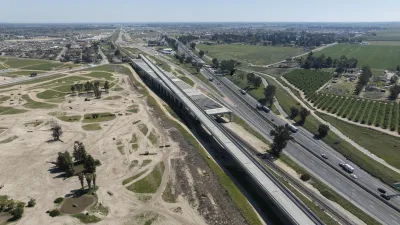
The California High-Speed Rail Authority may run out of money by December, 2027, Smart Cities Dive reports.
Though the state committed $1 billion annually to the project for the next 20 years from its cap-and-trade program, a July 31 report from the Office of the Inspector General for the High-Speed Rail Authority claims that it will not be enough unless it can borrow against the funds.
"Leveraging the cap-and-invest funds would be similar to how New York’s congestion pricing program enables its transit authority to borrow against future revenues through municipal bonds, an approach the authority is considering, Smart Cities Dive reports. "For that to work, the California attorney general must approve the authority’s eligibility to use revenue bonds, and the state must enact a law ensuring that cap‑and‑invest revenues cannot be reduced by future laws."
The news continues the narrative of the project's long history of cost overruns and delays. Read more below.
Read the full story: California high-speed rail project could run out of money by end of 2027, inspector general says
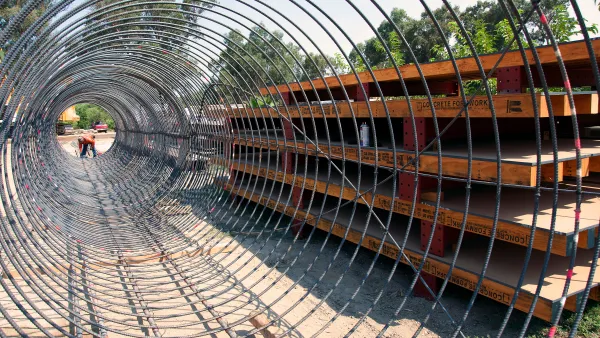
California High Speed Rail to lay first tracks
High Speed Rail Authority officials describe the milestone as "the moment this project truly begins to become a railroad."
TOD Opportunities Around America's First True High-Speed Rail Line
Brightline West hopes to break ground, in anticipation of a 2027 opening. Cities in the Inland Empire and High Desert areas of Southern California are looking to take advantage.

Brightline Opening to Central Florida Delayed
The high-speed rail connection between West Palm Beach and Orlando will not open on time for the holiday weekend as originally planned.

Planetizen Federal Action Tracker
A weekly monitor of how Trump’s orders and actions are impacting planners and planning in America.

Eastern Nebraska is running out of electricity
Data centers and electrification are straining eastern Nebraska’s grid, throttling economic development.

Study reveals best places in the U.S. for cycling, walking
New research from Streetlight Data examines bicycle and pedestrian miles per capita in the 100 largest U.S. cities by population.

Officials look to alter BART extension as price goes through the roof
Tariffs and the war with Iran are behind the rising cost.

To power data centers, Utah company may build hundreds of nuclear reactors on state land
In its permit application, Valar asked for the county to confirm that changes within its outlined plan would still be covered by the permit.

San Antonio is using environmental review to stall ICE detention center
San Antonio sued last month to pause work on the new detention center until the federal government studied its effect on the surrounding area.

FREE Course: Walkable City 1: Why Walkability?
After describing his path towards focusing on walkability as the essence of good planning, Jeff Speck marches through his five principal reasons for making more walkable places.
Reinventing Malls: Planning Alchemy—Turning Gray Fields Into Gold
The course focuses on the opportunities and imperatives that shape reinvention of mall sites.

City of Charlotte
City of Rosemead
Rutgers University, Edward J. Bloustein School of Planning and Public Policy
University of Michigan School for Environment and Sustainability (SEAS)
Hunter College, City University of New York (CUNY)
The Architects Foundation
City of Cambridge
The Pocatello Development Authority
The Urban Renewal Agency of the City of Pocatello