An underground network of pipes has been cooling public buildings since the 1990s.


Since the 1990s, Paris has been using a vast underground network of pipes to cool public buildings using water from the river Seine.
According to an article by Jesse Chase-Lubitz in The Guardian, "The system circulates cold water through a network of pipes: cold river water from the Seine is pumped through one pipe, which runs right next to a secondary pipe carrying warm water from the city’s buildings. A thin metal wall separates them and a heat exchanger allows the heat from the warm city water to enter the cold Seine water without the fluids ever touching."
The system was started in the 1990s by Fraîcheur de Paris, a subsidiary of the city's electric utility. "The city of Paris remains the owner of the network and it is operated by the transportation company RATP and Engie through a 20-year concession contract that was renewed in 2022." Paris plans to triple the network's size by 2042 to reach over 3,000 buildings.
As Chase-Lubitz explains, "Beyond the city-wide cooling effects, the hope is that Fraîcheur de Paris will stop at least some of the 2.1 million people who live in Paris from buying an air conditioner, which works by taking the heat inside and sending it into the streets outside."
Although the system sends slightly warmer water into the Seine, there is so far no evidence that it is harming the river's ecology.
Read the full story: ‘Kind of miracle solution’: How Paris is harnessing the Seine to replace air-con
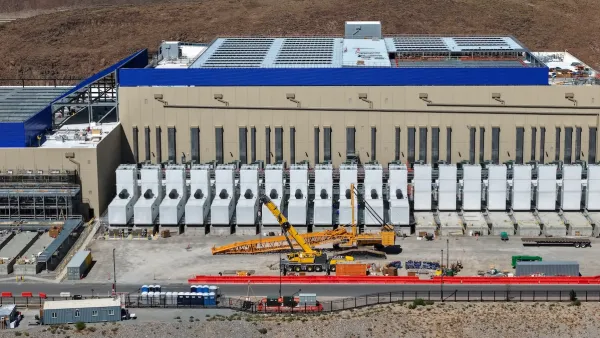
Data centers may drain 4 billion gallons of water annually from U.S.’s driest state
Nevada already has three dozen data centers; several dozen more are planned.

The Pacific Northwest is an unlikely front in the fight for cooling
A 2021 heat dome killed over 250 people in the Pacific Northwest, bringing into sharp focus the potential of extreme heat to have deadly consequences even in historically cool climates.
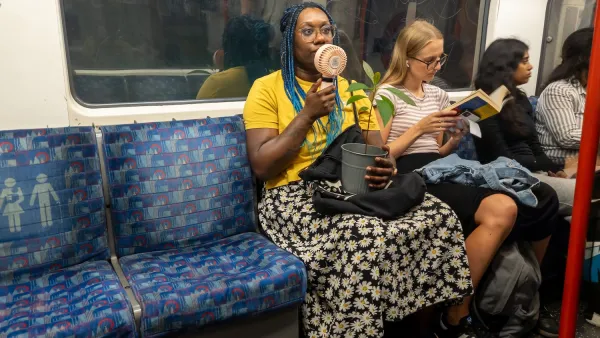
Temperatures in Subways Can Soar Well Above 100. What Some Cities are Doing About it.
Extreme heat can be even more dangerous in confined subway cars and stations.

Planetizen Federal Action Tracker
A weekly monitor of how Trump’s orders and actions are impacting planners and planning in America.

Washington state to charge fee to drivers with fuel-efficient cars
Revenue from the fee will go towards supporting the state’s highways.

Trump to blast ‘hydrocarbon highway’ through ‘world’s longest art gallery’
Environmental and historic preservation groups are suing to stop the project.

Minnesota Gold Line extension now has launch date
Plans to extend the Gold Line have existed since 2025.

Data centers need power – lower income, rural residents pay the price
In 2025, data centers paid only 38% of the energy infrastructure costs linked to their growth, with households, especially rural and low-income residents, bearing the remaining burden.

MBTA Green Line project moved to next phrase of CIG program
The modernization effort will cost $4.08 billion.

FREE Course: Walkable City 1: Why Walkability?
After describing his path towards focusing on walkability as the essence of good planning, Jeff Speck marches through his five principal reasons for making more walkable places.
Reinventing Malls: Planning Alchemy—Turning Gray Fields Into Gold
The course focuses on the opportunities and imperatives that shape reinvention of mall sites.

City of Charlotte
City of Rosemead
Rutgers University, Edward J. Bloustein School of Planning and Public Policy
University of Michigan School for Environment and Sustainability (SEAS)
Hunter College, City University of New York (CUNY)
The Architects Foundation
University District Partnership