Culdesac Mesa will take the same transit-oriented approach with a compact, walkable design and access to transit and shared mobility options.


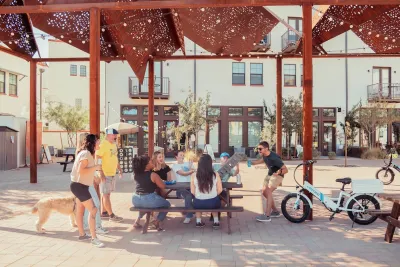
The city council in Mesa, Arizona approved a new "car-light" development by the developer of Culdesac Tempe, a mostly car-free community near Arizona State University. As Sean McDowell explains in an article for ABC 15, the development will create around 1,000 new homes near a Valley Metro light rail line.
Like the Tempe project, Culdesac Mesa will emphasize public transit over driving, include plenty of green spaces and walkability features, and encourage a reduction of car dependence. In Tempe, all residents park privately owned cars outside the complex and use light rail and bikes to access homes and businesses within Culdesac. "The Mesa project will follow a similar blueprint, integrating green space, light rail access and street-level retail businesses."
Read the full story: Mesa City Council approves 'car-light' 'Culdesac' development near light rail
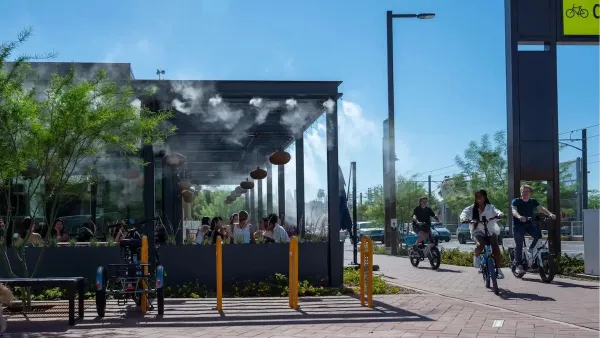
Car-Free Arizona Suburb Gains Residents
The project, dubbed Culdesac, offers EV rentals, free light rail passes, and other perks instead of private parking.
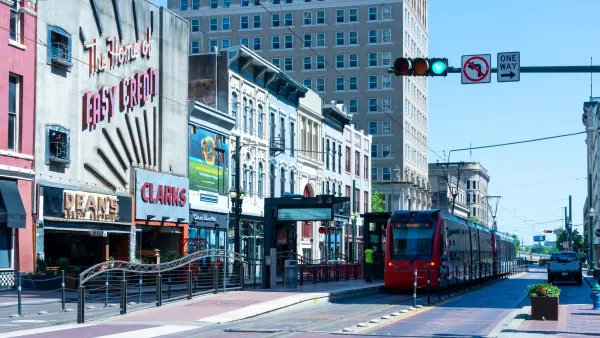
Houston's pedestrian promenade on track to be ready for World Cup crowds
The city is transforming seven downtown blocks along a light rail line into a car-free zone focused on outdoor dining and entertainment.
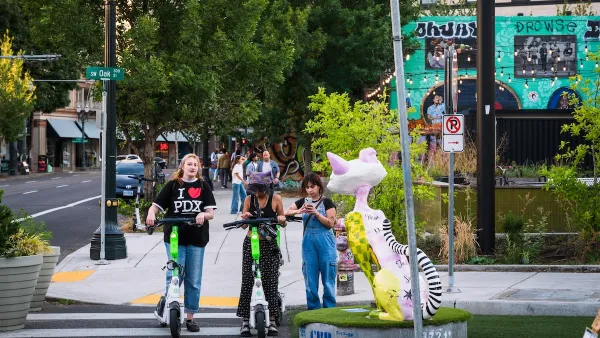
Study: Nearly Half of Portland TOD Residents Commute by Transit
People living in transit-oriented developments are more likely to ditch the car and opt for transit or walking, new research shows.

Planetizen Federal Action Tracker
A weekly monitor of how Trump’s orders and actions are impacting planners and planning in America.

Eastern Nebraska is running out of electricity
Data centers and electrification are straining eastern Nebraska’s grid, throttling economic development.

Study reveals best places in the U.S. for cycling, walking
New research from Streetlight Data examines bicycle and pedestrian miles per capita in the 100 largest U.S. cities by population.

Officials look to alter BART extension as price goes through the roof
Tariffs and the war with Iran are behind the rising cost.

To power data centers, Utah company may build hundreds of nuclear reactors on state land
In its permit application, Valar asked for the county to confirm that changes within its outlined plan would still be covered by the permit.

San Antonio is using environmental review to stall ICE detention center
San Antonio sued last month to pause work on the new detention center until the federal government studied its effect on the surrounding area.

FREE Course: Walkable City 1: Why Walkability?
After describing his path towards focusing on walkability as the essence of good planning, Jeff Speck marches through his five principal reasons for making more walkable places.
Reinventing Malls: Planning Alchemy—Turning Gray Fields Into Gold
The course focuses on the opportunities and imperatives that shape reinvention of mall sites.

City of Charlotte
City of Rosemead
Rutgers University, Edward J. Bloustein School of Planning and Public Policy
University of Michigan School for Environment and Sustainability (SEAS)
Hunter College, City University of New York (CUNY)
The Architects Foundation
City of Cambridge
The Pocatello Development Authority
The Urban Renewal Agency of the City of Pocatello