The city is also budgeting $30 million for repairs to the city's only intercity bus station.


The Chicago city council approved an agreement for the city to buy the downtown bus terminal for $19.2 million to preserve the station as the city's only intercity bus depot.
As Melody Mercado explains in Block Club Chicago, "The move comes as officials also expanded the boundaries of the Canal/Congress Tax Increment Financing district to include the terminal, which would provide public funding to support the purchase and future improvements to the station."
Per Mercado,
"The Greyhound station has served intercity bus riders since the late 1980s and now handles about 500,000 passengers a year, including older adults, low-income riders, people with disabilities and others who can’t or don’t drive. If it closed, Chicago would become the largest city in the northern hemisphere without an intercity bus terminal, according to a DePaul University policy brief."
The city signed a transition agreement with current Greyhound owner Flix in which Flix will continue to operate and manage the station for up to a year after the deal closes. "Under the agreement, Flix will be responsible for several operating costs, including utilities, insurance, janitorial work, trash removal, snow removal, security and nonstructural repairs. The city will be responsible for large capital improvements like structural work and foundation repairs."
Read the full story: City Gives Final OK To Buy Greyhound Bus Station


Chicago Bus Travelers Could Lose Downtown Terminal — and Winter is Coming
As the loss of intercity bus services and stations continues, Chicago could become the largest city in the developed world without a major downtown bus terminal.
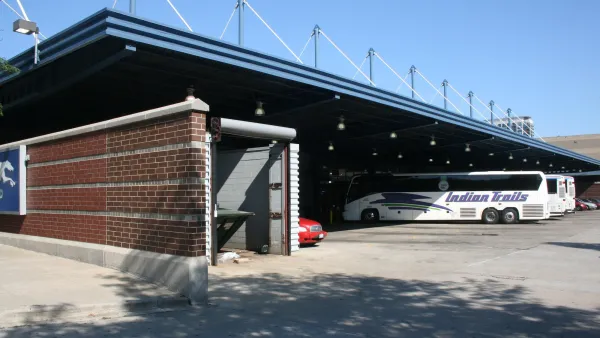
Chicago Considers Buying its Greyhound Station to Save it From Redevelopment
The intercity bus terminal is a 15-minute walk from Chicago’s Union Station, served by Amtrak, and five minutes from a CTA Blue Line station.
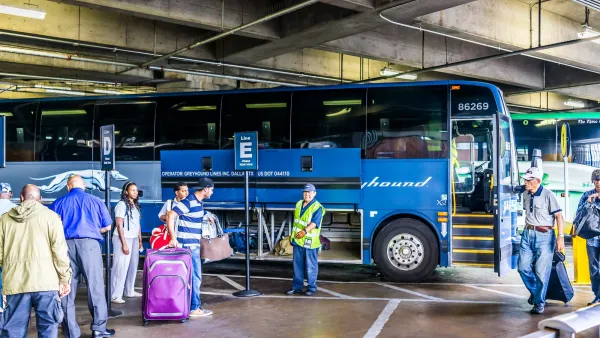
Greyhound Says the ‘Great American Road Trip’ is Best Done by Bus
Hitting back on Sec. Duffy’s call for Americans to “get in the car,” Greyhound launched a guide to using buses to access America 250 celebrations.

Planetizen Federal Action Tracker
A weekly monitor of how Trump’s orders and actions are impacting planners and planning in America.

The state-sanctioned urbicide of Austin
People don’t kill cities. Freeways do.

US to reduce Colorado River water deliveries to Mexico
A new Colorado Treaty amendment reduces Mexico’s Colorado River water allocation by 250,000 acre feet.

Nation's most wind-powered state turns to coal as data centers increase energy demand
For the first time in decades, Iowa has increased its generation of coal power.

NYC cools commuters with city's first rain garden above a bus stop
New York City officials say the plants in the rain garden can absorb 16 gallons of rainwater during heavy storms.

Brightline West’s future may rely on $6 billion federal loan
The company has until Nov. 2 to make a $400 million equity investment into its proposed high-speed rail line.

FREE Course: Walkable City 1: Why Walkability?
After describing his path towards focusing on walkability as the essence of good planning, Jeff Speck marches through his five principal reasons for making more walkable places.
Reinventing Malls: Planning Alchemy—Turning Gray Fields Into Gold
The course focuses on the opportunities and imperatives that shape reinvention of mall sites.


Greater Baltimore Committee
Eagle County Government
Harvard University Graduate School of Design
The Architects Foundation
University of Cincinnati Online
The Pocatello Development Authority
The Urban Renewal Agency of the City of Pocatello
Journal of the American Planning Association