90% of freight enters New York City by big rig.


The New York City Department of Transportation is proposing changes to the city's truck routes that residents say will create unsafe conditions on Third Avenue, where advocates have been calling for more safety interventions for years.
According to an article by Kevin Duggan in Streetsblog NYC, "Third Avenue is already a truck route, but the Department of Transportation’s proposed overhaul of the city’s truck route map would allow big rigs onto nearby Second Avenue as well. The agency also wants to designate a new truck route on Third Avenue further south in Bay Ridge — an addition that locals fear will inundate their streets with heavy haulers."
Duggan adds that "DOT’s plans come out of a City Council bill that aimed to reduce truck traffic, but the agency is effectively allowing truckers to drive on more roads. NYPD’s enforcement against off-route heavy haulers has plummeted over the last decade." Roughly 90% of freight coming into NYC enters via big rigs, well above the national average of 70%.
Read the full story: Department of Trucks: Brooklynites Beg for Relief on Third Ave. as Safety Redesign Stalls

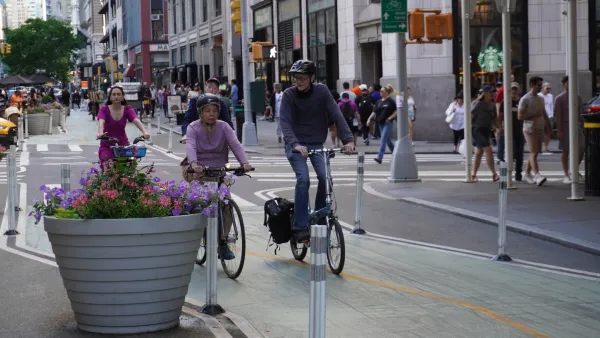
Janette Sadik-Khan has Some Advice for Zohran Mamdani
The former NYC transportation commissioner says Mamdani’s streets plan is ambitious, but not impossible.
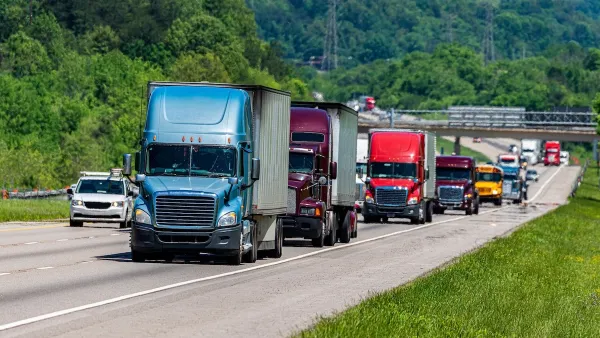
Study: 4% of Truckers Lack a Valid Commercial License
Over 56% of inspected trucks had other violations.
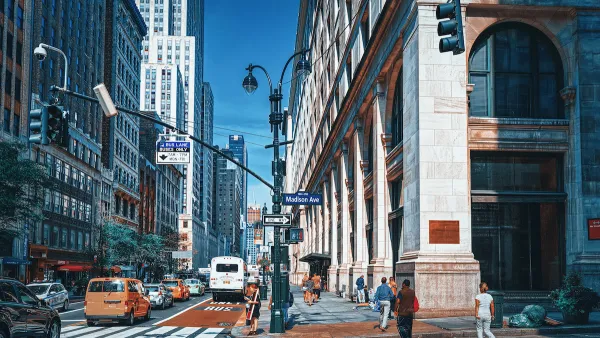
NYC Streets Plan Remains Largely on Paper
For the second year in a row, the city failed to meet legally required targets for building protected bike lanes and bus lanes.

Planetizen Federal Action Tracker
A weekly monitor of how Trump’s orders and actions are impacting planners and planning in America.

California plans to bury El Niño’s downpour
If the state plays its cards right, it may be able to store a billion acre-feet of El Niño’s water in aquifers.

Chicago breaks ground on $3 billion megadevelopment
The new neighborhood, titled Foundry Park, will one day host 3,700 residences.

California High-Speed Rail Authority CEO resigns after $600,000 scandal
Under Ian Choudri, the authority used taxpayer dollars to fund first class flights and trips to nightclubs.

Want to study the Missouri River? Soon, you may need unanimous approval from 10 states
Legislation would require 10 governors’ permission to study or build projects moving water outside the basin.

Desperate measures: Advocates weigh draining Lake Powell to fill Colorado River
Draining the reservoir could reduce evaporation losses by a couple hundred thousand acre-feet.

FREE Course: Walkable City 1: Why Walkability?
After describing his path towards focusing on walkability as the essence of good planning, Jeff Speck marches through his five principal reasons for making more walkable places.
Reinventing Malls: Planning Alchemy—Turning Gray Fields Into Gold
The course focuses on the opportunities and imperatives that shape reinvention of mall sites.

City of Rosemead
Rutgers University, Edward J. Bloustein School of Planning and Public Policy
One Hundred Miles
Hunter College, City University of New York (CUNY)
The Architects Foundation
University of Cincinnati Online
City of Cambridge
Montrose County
The Pocatello Development Authority