A new data center proposal is moving forward in northeastern Kentucky.


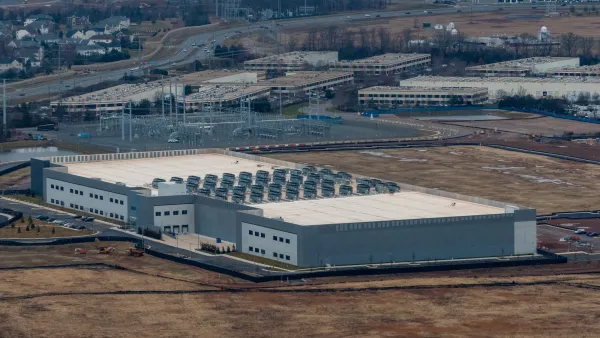
A bitcoin mining company is planning a new data center in northeastern Kentucky, reports Lily Burris for Louisville Public Media.
According to Burris, "TeraWulf says the Muskie Data Campus will eventually need more than one gigawatt of electricity, or enough to support more than 800,000 average homes for an entire year. The bitcoin mining company expects to need its first 500 megawatts by the second half of 2028 and the rest in 2030."
The site in question is part of the Northeast Kentucky Economic Development Authority, a regional group that represents five local counties. The group plans to hold public meetings to inform communities about the project and answer questions, but has not announced a specific timeline for the meetings. "Kentucky Power plans to build additional infrastructure in the area to support the project, according to TeraWulf's press release."
Read the full story: Massive new data center project announced in northeastern Kentucky

Data centers are consuming nearly 25% of Oregon’s power
The state has 111 data centers, with 32 more either planned or under construction.
Data center developer offers over $4M per acre to buy out homeowners
Data center builders are outbidding home builders for land, prompting concerns about competition with housing.

Over half of Colorado's energy now comes from renewables
In the first quarter of 2026, renewables made up 53% of Colorado's electricity, up from 43% in 2025.

California plans to bury El Niño’s downpour
If the state plays its cards right, it may be able to store a billion acre-feet of El Niño’s water in aquifers.

Desperate measures: Advocates weigh draining Lake Powell to fill Colorado River
Draining the reservoir could reduce evaporation losses by a couple hundred thousand acre-feet.

Eastern Nebraska is running out of electricity
Data centers and electrification are straining eastern Nebraska’s grid, throttling economic development.

Houston gains petal-shaped cooling infrastructure to make streets more ‘delightful’
The city has installed the pavilions along 15 blocks in Houston.

After years of opposition to light rail, this L.A. city wants a $200 million station
Cerritos officials want the Southeast Gateway Line, a planned 14.5-mile light rail route through Los Angeles County, to stop in their city.

SpaceXAI may be fined $6 million for data center lacking water permits
A Mississippi agency also responds after a federal judge criticized the state’s Clean Air Act enforcement.

FREE Course: Walkable City 1: Why Walkability?
After describing his path towards focusing on walkability as the essence of good planning, Jeff Speck marches through his five principal reasons for making more walkable places.
Reinventing Malls: Planning Alchemy—Turning Gray Fields Into Gold
The course focuses on the opportunities and imperatives that shape reinvention of mall sites.

City of Rosemead
Rutgers University, Edward J. Bloustein School of Planning and Public Policy
One Hundred Miles
University of Michigan School for Environment and Sustainability (SEAS)
Hunter College, City University of New York (CUNY)
The Architects Foundation
City of Cambridge
Montrose County
The Pocatello Development Authority