The sometimes painful process of decommissioning former nuclear facilities offers useful lessons for communities planning to host data centers.


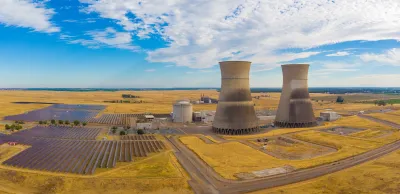
In a piece for The Daily Yonder, Jim Hamilton of the The Nuclear Decommissioning Collaborative explains how communities considering hosting data centers can learn from the experience of those that have had nuclear facilities nearby.
According to Hamilton, "While data centers differ significantly from nuclear power plants in workforce intensity and operational footprint, they share key structural characteristics: They are large, capital-intensive, tax-generating, place-based assets, and they eventually close."
When facilities close, they take their job and tax contributions with them. If a community is too dependent on this one source of income, a closure can have devastating effects on the local economy. Decommissioning a nuclear plant — or a data — is also a complex and expensive process, and practically no significant redevelopment has occurred at former nuclear sites.
The lesson, for Hamilton, is "not to avoid development, but to plan deliberately for its full lifecycle—before the first shovel hits the ground." Hamilton suggests that local officials understand the potential speed of closure decisions, plan for eliminated tax payments, and define facility decommissioning in regulatory agreements. "Lifecycle thinking should be embedded into every data center agreement, investment, and plan. And communities should continue to diversify the local economy during the operational phase, so that no single facility—no matter how attractive—defines the community’s fiscal future."
FULL STORY: Commentary: After the Servers Go Dark

After the servers go dark
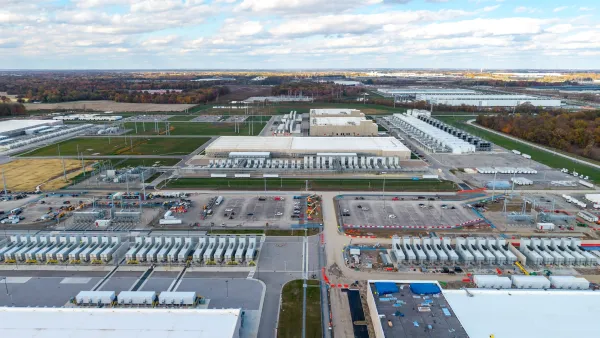
The rise and fall of communities with decommissioned nuclear facilities hold critical lessons for those considering hosting data centers.

Data Centers are Crushing Communities. One Virginia County is Changing That.
Henrico County’s innovative approach uses tax revenue from data centers to fund affordable housing.
Google Inks Nuclear Power Deal
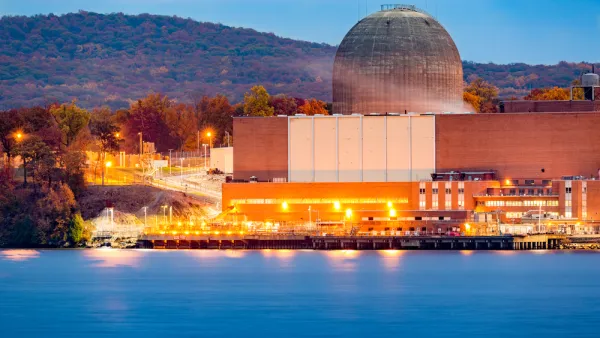
Tech giants are seeking out renewable energy to fuel power-hungry data centers and AI applications.

Planetizen Federal Action Tracker
A weekly monitor of how Trump’s orders and actions are impacting planners and planning in America.

The state-sanctioned urbicide of Austin
People don’t kill cities. Freeways do.

US to reduce Colorado River water deliveries to Mexico
A new Colorado Treaty amendment reduces Mexico’s Colorado River water allocation by 250,000 acre feet.

5 New England states march closer to 800 megawatt wind energy project
Securing federal approval for the project may be complicated under the Trump administration, which has historically been hostile towards domestic wind power.

Baltimore to break ground on $50 million Transit Priority Project
The project will bring faster bus trips, safer streets and better bike connections to Baltimore.

Airbnb launches $250 million 'last-dollar financing' housing accelerator, makes first investment in Austin
The company will put $6.4 million towards affordable housing development in Texas’ capital.

FREE Course: Walkable City 1: Why Walkability?
After describing his path towards focusing on walkability as the essence of good planning, Jeff Speck marches through his five principal reasons for making more walkable places.
Reinventing Malls: Planning Alchemy—Turning Gray Fields Into Gold
The course focuses on the opportunities and imperatives that shape reinvention of mall sites.

Eagle County Government
Harvard University Graduate School of Design
Nashville Planning Department
The Architects Foundation
University of Cincinnati Online
The Pocatello Development Authority
The Urban Renewal Agency of the City of Pocatello
Journal of the American Planning Association