The rise and fall of communities with decommissioned nuclear facilities hold critical lessons for those considering hosting data centers.


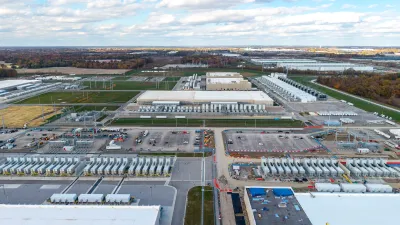
Across the United States, communities are evaluating whether to host a new generation of infrastructure: hyperscale data centers. These projects are often framed as low-impact, high-value opportunities: quiet neighbors that promise reliable tax revenue, infrastructure upgrades and a foothold in the digital future. They are being sold as clean, quiet and high-tech.
But a critical blind spot remains in how potential host communities evaluate these facilities: what happens at the end of their lives?
The experience of communities that host nuclear power plants, documented in Socioeconomic Impacts from Nuclear Power Plant Closure and Decommissioning, offers a valuable framework for those considering hosting new digital infrastructure.
While data centers differ significantly from nuclear power plants in workforce intensity and operational footprint, they share key structural characteristics: They are large, capital-intensive, tax-generating, place-based assets — and they eventually close.
When they do, closure has the potential to debilitate local economies in ways that are rarely (if ever) planned for.
The nuclear plant experience
To understand end-of-life impacts in practice, it is instructive to look to those who have already lived through them. Nuclear host communities offer clear, well-documented examples of what happens when a dominant tax base disappears, revealing the speed and depth of disruption across fiscal, institutional and social systems.
The invisible dependency of tax payments: During the operational life of a nuclear power plant, host communities benefit from sustained economic activity generated by a large, stable facility. When closure occurs, the associated negative effects are swift, severe and lasting — not because of job loss alone, but because entire local systems were calibrated around a single tax-generating asset.
For example, a typical nuclear plant comprises a dominant share of the local tax base, sometimes accounting for more than 50% of municipal budgets. Over years of operation, that contribution is not only taken for granted, it becomes invisible, just like the air those communities breathe. When that fiscal contribution stops (following plant closure), municipal budgets don’t just experience shortness of breath; they asphyxiate. Classrooms close, fire stations are shuttered and municipal workers are fired.
The sudden need to do more: It is at this very moment, when plant closure deprives local officials of economic air, that these same officials are asked to sprint: to develop strategic plans and quickly find new ways to fill the sudden budget gaps that preserve long-standing quality of life expectations.
However, the need to undertake this new and complex workload occurs at the exact moment that their budgets are being curtailed. As a result, local officials are placed in an unenviable position. It’s no longer do more with less. Instead, it’s do everything with nothing — now.
The murky future of the plant site: Nuclear power plants typically operate for decades, during which the industrial site itself becomes a place-based symbol of economic prosperity. However, once a nuclear plant closes, it enters a complex technical and regulatory process called decommissioning through which the plant is decontaminated, dismantled and its federal operating license terminated.
Decommissioning is funded through the plant’s Nuclear Decommissioning Trust (NDT), a federally regulated account capitalized by the sale of electricity throughout the plant’s operating life. At the time of closure, the value of a plant’s NDT often totals over $1 billion and is used to fund the decommissioning process, which is allowed to take up to 60 years.
For several reasons, the fate of a decommissioned nuclear power plant site is complicated. Utilities, who tend to retain site control, see little business value in offering the property for alternative uses. As such, redevelopment at former nuclear plant sites has yet to occur to any meaningful degree, all of which has served to deprive host communities of much-needed economic development opportunities.
Hosting considerations for data centers
The experience of nuclear plant host communities points to a clear conclusion: the consequences of closure are not hypothetical. They are predictable, repeatable and, if unaddressed, can be deeply disruptive.
For potential data center host communities, the lesson is not to avoid development, but to plan deliberately for its full lifecycle before the first shovel hits the ground. In that context, here are some practical considerations for potential host communities.
Appreciate the speed of closure decisions: In many jurisdictions, nuclear power operators need to inform regulators well in advance of a planned closure. But data centers don’t close with a bang. They close with a firmware update. All that to say, the decision to close a data center may be precipitated by technological change, a shift in corporate strategy or a variety of factors far beyond the host community’s control or awareness. That decision will likely be delivered with little to no warning.
When planning a mitigation strategy for your community, require advanced notice of planned closure (e.g., one year) so that host communities may begin contingency planning.
Respond to eliminated tax payments: Once a nuclear facility closes, tax payments and other benefits generally cease in short order. Similarly, with a sudden data center closure, host communities could see an immediate erosion of tax payments and be left to suffer the well-documented and far-reaching consequences.
As part of the hosting agreement, a community should negotiate tax payment phase-outs (e.g., five to 10 years of payments at pre-closure levels) that are triggered once data center operations fall below a certain threshold. You can also include lump sum payments to host communities to assist them with economic development planning necessary to fill the fiscal gaps created by the data center closure.
Define and complete facility decommissioning: Decommissioning a nuclear power plant follows a heavily regulated and prescribed process with clear outcomes supported by a robust funding mechanism. But no such regulatory or financial assurance systems exist for data centers.
As such, host communities may be faced with responsibilities and liabilities that accompany the management of large-scale stranded assets and single-purpose infrastructure that are not supportive of future repurposing. These may include large, windowless structures with limited alternative uses; sites tied to specific electrical configurations that are costly to modify; environmental legacies (backup diesel systems, heat discharge impacts) or zoning and land-use patterns that were shaped around specific industrial-scale operations.
To mitigate these issues, communities should require decommissioning and site restoration plans as part of the hosting agreement. Clearly define end state criteria. Establish Data Center Decommissioning Trusts (DCDTs) that are funded during data center operation, managed by a neutral third party and used to fund decommissioning efforts once facility closure is initiated. Lastly, use independent third parties to develop data center decommissioning cost estimates and use these to define the parameters of the DCDTs.
Design for the full lifecycle: The key lessons are simple. Communities should evaluate data centers not just as economic development projects, but as long-lived infrastructure with real end-of-life consequences.
For data center host communities, this means recognizing that closure is inevitable, even if the timeline is uncertain and understanding that the primary risks of closure are fiscal and structural, not employment-based.
Lifecycle thinking should be embedded into every data center agreement, investment and plan. And communities should continue to diversify the local economy during the operational phase, so that no single facility, no matter how attractive, defines the community’s fiscal future.
If these lessons are applied, data centers can be integrated into communities in a way that supports long-term resilience. If they are not, communities may find themselves — years or decades from now — facing a familiar question: What happens after the servers go dark?
—
Jim Hamilton is the Executive Director of the Nuclear Decommissioning Collaborative, a non-profit that supports host communities in planning for and managing the impacts of nuclear plant closures. He is also the co-founder of Site Lifecycle Advisors, a consultancy that helps developers site large-scale energy infrastructure projects grounded in durable community partnerships.
This article first appeared on The Daily Yonder and is republished here under a Creative Commons Attribution-NoDerivatives 4.0 International License.

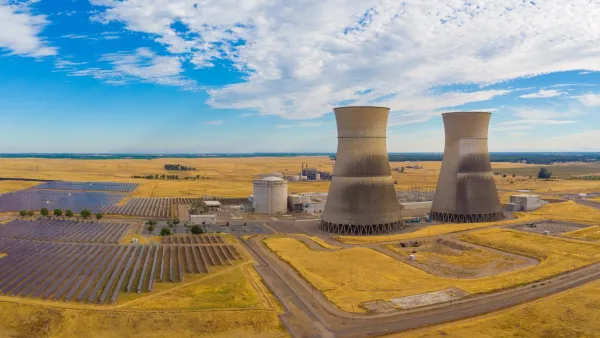
What data center host communities can learn from former nuclear hubs
The sometimes painful process of decommissioning former nuclear facilities offers useful lessons for communities planning to host data centers.

Data Centers are Crushing Communities. One Virginia County is Changing That.
Henrico County’s innovative approach uses tax revenue from data centers to fund affordable housing.
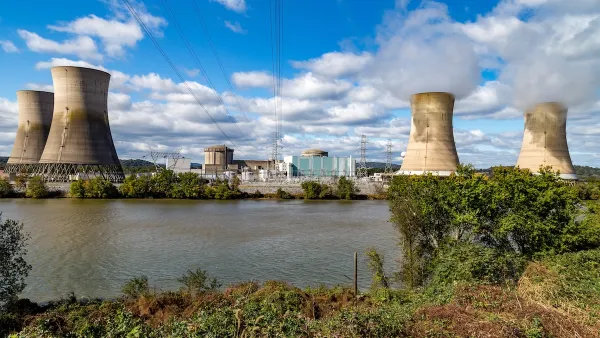
Three Mile Island Nuclear Plant Could Power Microsoft Data Centers
The proposal to restart one unit of the infamous plant, which suffered a partial meltdown in 1979, still requires federal, state, and local approvals.

Planetizen Federal Action Tracker
A weekly monitor of how Trump’s orders and actions are impacting planners and planning in America.

Data reveals that NYC’s bet on congestion pricing has paid off
After almost two years of the program, reports show positive impacts on traffic and air quality and no disruptions to parking.

Denver is solving homelessness. Why aren't the rest of us?
Since 2023, Denver's street homeless population has decreased by 64%, proving that effective tools exist to support those in need of housing.

CA city to shut down airport, transform it into utopian park
The western side of the 200-acre park will feature a dog park, nature education center and arboretum.

NYC to vote on supporting outdoor dining, streamlining bus and bike lane creation
The city has five proposed amendments to its municipal constitution on the ballot this November.

Chicago breaks ground on $3 billion megadevelopment
The new neighborhood, titled Foundry Park, will one day host 3,700 residences.

FREE Course: Walkable City 1: Why Walkability?
After describing his path towards focusing on walkability as the essence of good planning, Jeff Speck marches through his five principal reasons for making more walkable places.
Reinventing Malls: Planning Alchemy—Turning Gray Fields Into Gold
The course focuses on the opportunities and imperatives that shape reinvention of mall sites.

City of Rosemead
Rutgers University, Edward J. Bloustein School of Planning and Public Policy
One Hundred Miles
The Architects Foundation
University of Cincinnati Online
Montrose County
Northern Illinois Transit Authority (NITA)
The Pocatello Development Authority

