Since 2019, the city has levied a 1% sales tax on large corporations to support climate resilience and clean energy projects.


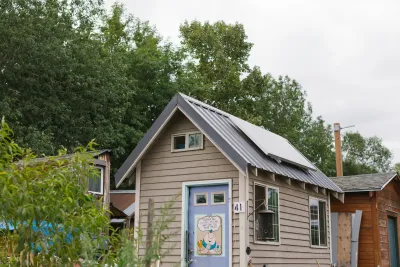
Portland, Oregon's Clean Energy Community Benefits Fund has provided over 20,000 free air conditioning units to low-income households, funded energy efficiency retrofits for 3,100 homes and trained 2,000 people in renewable energy and construction jobs, reports Monica Samayoa for Oregon Public Broadcasting.
As Samayoa explains, "The Portland Clean Energy Fund is a first-of-its-kind racial, social and climate justice fund aimed at helping the city’s most vulnerable residents adapt to climate change while also reducing carbon emissions." The fund was approved by a public measure in 2018 that levied a 1% retail sales tax — paid by the companies — on large corporations within Portland city limits. The fund has since generated roughly $1 billion for climate resilience projects. "Since 2021, the fund has distributed four rounds of community-based nonprofit grants totaling about $262 million. Grants range from about $8,000 to as high as $10.3 million — and many projects are also helping reduce greenhouse gas emissions."
Other cities are starting to replicate Portland's model, but some have local restrictions that prevent the creation of a similar retail tax. Denver passed a consumer-facing 0.25% sales tax that generated $41 million for its Climate Protection Fund. Ann Arbor increased property taxes to generate funding for climate action.
FULL STORY: Portland’s billion-dollar climate fund becomes a blueprint for other cities

Court unfreezes $20B in federal climate grants
A U.S. Court of Appeals ruled that the Trump administration potentially violated the Inflation Reduction Act by attempting to claw back grants awarded under the Greenhouse Gas Reduction Fund program.

Trump Attacks Environmental Rules Amid Flurry of Executive Orders
Several executive orders signed on Monday seek to repeal Obama- and Biden-era environmental regulations and roll back goals to encourage the shift to electric vehicles.
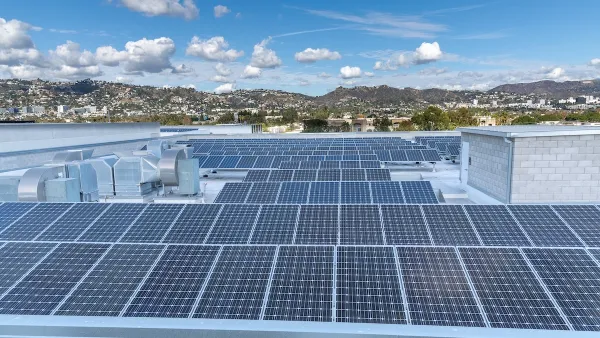
How Los Angeles County is Advancing Sustainability
A recently released report by the Chief Sustainability Office (CSO) shows that L.A. County is making progress on meeting the goals of the OurCounty Sustainability Plan.

Planetizen Federal Action Tracker
A weekly monitor of how Trump’s orders and actions are impacting planners and planning in America.

The state-sanctioned urbicide of Austin
People don’t kill cities. Freeways do.

US to reduce Colorado River water deliveries to Mexico
A new Colorado Treaty amendment reduces Mexico’s Colorado River water allocation by 250,000 acre feet.

5 New England states march closer to 800 megawatt wind energy project
Securing federal approval for the project may be complicated under the Trump administration, which has historically been hostile towards domestic wind power.

Baltimore to break ground on $50 million Transit Priority Project
The project will bring faster bus trips, safer streets and better bike connections to Baltimore.

Airbnb launches $250 million 'last-dollar financing' housing accelerator, makes first investment in Austin
The company will put $6.4 million towards affordable housing development in Texas’ capital.

FREE Course: Walkable City 1: Why Walkability?
After describing his path towards focusing on walkability as the essence of good planning, Jeff Speck marches through his five principal reasons for making more walkable places.
Reinventing Malls: Planning Alchemy—Turning Gray Fields Into Gold
The course focuses on the opportunities and imperatives that shape reinvention of mall sites.

Eagle County Government
Harvard University Graduate School of Design
Nashville Planning Department
The Architects Foundation
University of Cincinnati Online
The Pocatello Development Authority
The Urban Renewal Agency of the City of Pocatello
Journal of the American Planning Association