Several cities are moving to create municipal stores, but do they actually save low-income households money?


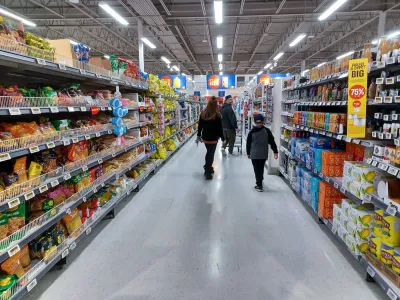
In an opinion piece for the Toronto Star, David Olive makes the case that, while a "noble idea," Toronto's plan to open city-owned grocery stores is not the most effective way to help Toronto families that need food assistance.
According to Olive, other places that have tried the strategy have not managed to reduce costs for consumers by very much — at least not without a massive government subsidy. Such a subsidy, Olive argues, could be used to give more Canadian households direct payments or other forms of assistance. "The means-tested, tax-free Canada Groceries and Essentials Benefit rolled out this year provides a family of four as much as $1,890 this year and about $1,400 a year for the next four years." That program will benefit roughly 12 million Canadians.
Toronto nonprofit Daily Bread Food Bank has asked the city to reconsider the initiative. "Instead, Daily Bread proposes that Toronto make more of its municipally owned properties available to its own and other non-profit food programs. That would increase access to affordable food without straining the City’s budget." The organization says the city-owned stores would only offer a modest reduction in household food spending while putting an "additional burden on an already fiscally challenged Toronto government."
FULL STORY: Opinion | City of Toronto grocery stores are a noble idea. But do the numbers add up?


Even in ‘Food Deserts,’ Independent Grocers Struggle to Survive
Government support has helped open stores in underserved communities, but cost and scale make it difficult for small businesses to survive long-term.
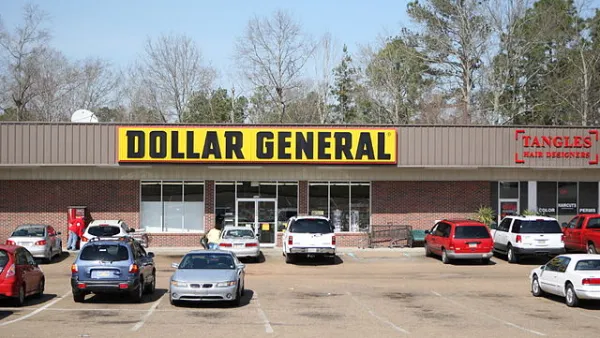
Local Restrictions on Dollar Stores Gaining Popularity
Cities and counties all over the South are restricting further development of dollar stores.
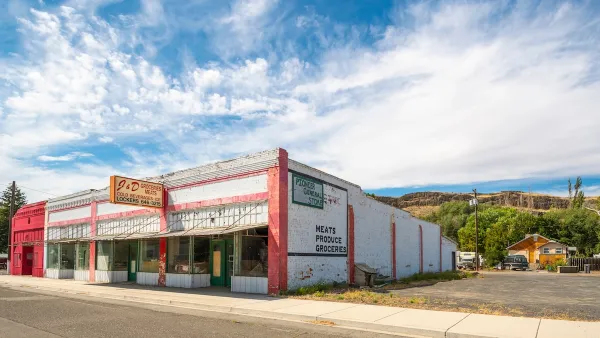
One Weird Trick for Eliminating Food Deserts
How enforcing one federal law, ignored since the 1980s, could bring back small grocers and ensure more people have convenient access to fresh foods.

The state-sanctioned urbicide of Austin
People don’t kill cities. Freeways do.

US to reduce Colorado River water deliveries to Mexico
A new Colorado Treaty amendment reduces Mexico’s Colorado River water allocation by 250,000 acre feet.

New Jersey’s second-largest city bans standalone data centers
Jersey City will continue to allow co-location facilities, such as those meant for research institutions that store their own data.

Amtrak not solely to blame for New Jersey commuter rail's unreliability, report finds
A new study from the Garden State Initiative found that NJ Transit’s budget grew 20% across a 4 year period, but reliability declined significantly over the same period.

EPA erases limits on planet-warming pollution from power plants
Under Monday’s plan, power plants would still have some limits on how much mercury, arsenic and other contaminants they can emit.

Phoenix announces new on-demand transit service, more frequent RAPID buses
Both new services will launch in October, and are part of Phoenix's Project Effective Access Solutions for Easing Congestion.

FREE Course: Walkable City 1: Why Walkability?
After describing his path towards focusing on walkability as the essence of good planning, Jeff Speck marches through his five principal reasons for making more walkable places.
Reinventing Malls: Planning Alchemy—Turning Gray Fields Into Gold
The course focuses on the opportunities and imperatives that shape reinvention of mall sites.

Eagle County Government
Harvard University Graduate School of Design
Nashville Planning Department
The Architects Foundation
University of Cincinnati Online
The Pocatello Development Authority
The Urban Renewal Agency of the City of Pocatello
Journal of the American Planning Association