The agency is moving from using farebox data and manual video reviews to automatic counters that more accurately measure the total number of riders, whether or not they pay full fares.


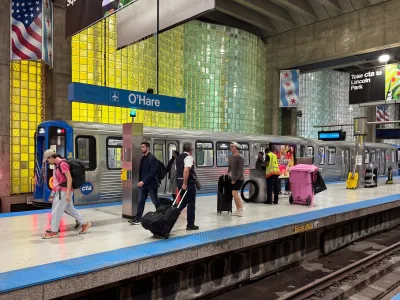
After revising its counting methodology, the Chicago Transit Authority announced that its updated ridership totals for 2025 are roughly 19 million rides higher than previously estimated, reports Ellen Steinke in Streetsblog Chicago.
The revised methodology also reveals bigger differences in which buses get the most use: "Buses in many South and West Side neighborhoods appear significantly busier than previous public data indicated."
According to Steinke, "The changes stem largely from two things: new fareboxes and a new counting methodology using automatic passenger counters, or APCs. These infrared sensors and cameras mounted near bus doors count riders boarding and exiting vehicles regardless of whether they pay a fare and help paint a more accurate picture of ridership." Older counting methods that relied on farebox data and manual video review often undercounted usage, the agency said.
The revised data indicate that "the routes serving some of Chicago’s most transit-dependent communities may also have been among the system’s most undercounted," which could have major implications for how the agency evaluates ridership and user needs. They also show that "underpaid" rides — "trips where riders either paid reduced fares, insufficient fares, or no fares at all" — made up 20% of bus rides and around 5% of rail rides.
Read the full story: CTA revises ridership upward by 19 million trips after methodology update


Chicago Transit Agencies on Brink of Major Crisis
Without additional funding, regional transit agencies will be forced to cut services by 40 percent.
Chicago Transit Increasing Rail Service to Pre-Pandemic Levels
The Chicago Transit Authority is close to returning both rail and bus service to pre-pandemic schedules, with some adjustments for new travel demand.
Chicago Transit Ridership Continues to Grow
The city’s three regional agencies are seeing ridership reaching 64 percent of 2019 levels.

Planetizen Federal Action Tracker
A weekly monitor of how Trump’s orders and actions are impacting planners and planning in America.

‘Going backwards:’ Baltimore mayor, students rally against state's transit funding plan
Maryland's proposed six-year plan provides no funding for Baltimore’s BMORE bus program and reduces its road maintenance funding.

Detroit to transform waterfront with $2.2 billion investment
Developers will convert about 18 acres of unused parking lot space into civic spaces.

HUD modernizes 50-year-old manufactured housing framework
The Next Generation Manufactured Housing Action Plan establishes new energy-efficiency standards for manufactured homes, and new guidelines for anchoring them.

New CA housing laws tear down development red tape
Recently-signed legislation makes building starter homes and ADUs cheaper and faster in California.

Metrolink finishes first expansion in 20 years
The transit agency is now one of very few in the United States to connect two major airports.

FREE Course: Walkable City 1: Why Walkability?
After describing his path towards focusing on walkability as the essence of good planning, Jeff Speck marches through his five principal reasons for making more walkable places.
Reinventing Malls: Planning Alchemy—Turning Gray Fields Into Gold
The course focuses on the opportunities and imperatives that shape reinvention of mall sites.

One Hundred Miles
County of Mendocino
planning NEXT
The Architects Foundation
University of Cincinnati Online
Montrose County
Northern Illinois Transit Authority (NITA)
The Pocatello Development Authority