Once known for total gridlock, the Indonesian capital has transformed itself into a public transit leader.


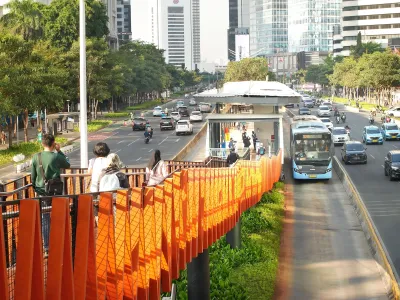
For years, Jakarta was known as a traffic-choked metropolis with some of the worst gridlock in the world. But, reports Nithin Coca in an article for In Development, the last ten years have seen the Indonesian capital transform its transit system into the largest and most used transit systems in the world.
"The old, crowded diesel commuter trains, famous for allowing passengers to ride on the roofs, are now electrified, air conditioned, and run on regular schedules linking the suburbs to the city center. There are multiple subway and light rail lines crisscrossing the city." In 2015, less than 20% of residents lived within walking distance to transit. Now, close to 90% of the city has access to bus rapid transit or trains.
How did it happen? In 2014, new Indonesia president Joko Widodo began taking steps to improve Jakarta's transit system. "To him, addressing Jakarta’s congestion was central to making it a world class capital city, and foreign investment, via development loans and technology transfer, would be key." The country signed an agreement with Japan to build mass rapid transit. "For the most part, the MRT was built underground or alongside existing large thoroughfares, minimizing the need for expensive land acquisition. When land was needed, the project used international standards to determine fair compensation and ensure fair process."
The first line opened in 2019, and work continued. All of the new transit lines are part of an integrated digital fare system. As of 2024, 10% of trips in greater Jakarta are made by transit, as compared to just 2% in 2015. However, because of Jakarta's rapid population growth, there are still more cars in the region now than in 2019, and air pollution has worsened. Experts suggest that officials should create low emission zones with congestion pricing to help reduce the number of cars in the city.
FULL STORY: Jakarta’s Remarkable Urban Transit Transformation

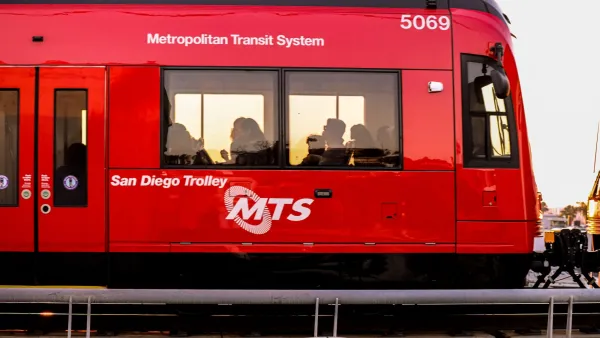
San Diego Regional Transportation Plan Shifts Away From Big Projects to Focus on Improving Existing Infrastructure
SANDAG’s 2025 Regional Plan scales down plans for new rail lines in favor of expanding rapid bus service.

Experts Reject Florida Study That Killed St. Pete Bus Lane as ‘Incomplete,’ ‘Unfair’
A transit activist has filed a suit against FDOT, which used a a one-page study to justify removing a dedicated bus lane.
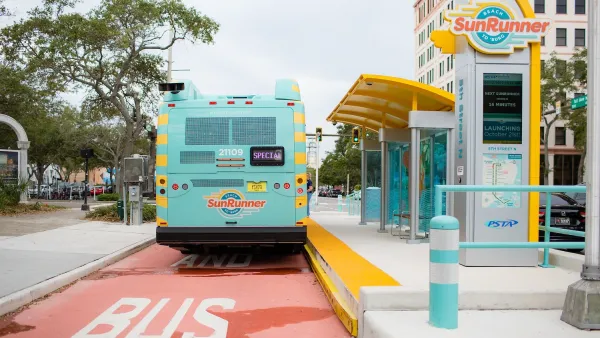
Lawsuit Claims Florida Bus Lane Removal was Illegal
The state cites an increase in crashes and congestion as reasons for eliminating a dedicated bus lane on the SunRunner BRT line, but city data tells a different story.

The state-sanctioned urbicide of Austin
People don’t kill cities. Freeways do.

US to reduce Colorado River water deliveries to Mexico
A new Colorado Treaty amendment reduces Mexico’s Colorado River water allocation by 250,000 acre feet.

New Jersey’s second-largest city bans standalone data centers
Jersey City will continue to allow co-location facilities, such as those meant for research institutions that store their own data.

Amtrak not solely to blame for New Jersey commuter rail's unreliability, report finds
A new study from the Garden State Initiative found that NJ Transit’s budget grew 20% across a 4 year period, but reliability declined significantly over the same period.

EPA erases limits on planet-warming pollution from power plants
Under Monday’s plan, power plants would still have some limits on how much mercury, arsenic and other contaminants they can emit.

Phoenix announces new on-demand transit service, more frequent RAPID buses
Both new services will launch in October, and are part of Phoenix's Project Effective Access Solutions for Easing Congestion.

FREE Course: Walkable City 1: Why Walkability?
After describing his path towards focusing on walkability as the essence of good planning, Jeff Speck marches through his five principal reasons for making more walkable places.
Reinventing Malls: Planning Alchemy—Turning Gray Fields Into Gold
The course focuses on the opportunities and imperatives that shape reinvention of mall sites.

Eagle County Government
Harvard University Graduate School of Design
Nashville Planning Department
The Architects Foundation
University of Cincinnati Online
The Pocatello Development Authority
The Urban Renewal Agency of the City of Pocatello
Journal of the American Planning Association