The city that brought BRT and Ciclovía to the world is at the forefront of a new revolution.


This article is an extract from the book WOMEN CHANGING CITIES: Global Stories of Urban Transformation, published in October 2025 by © RIBA Books.
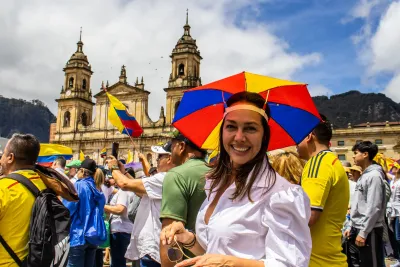
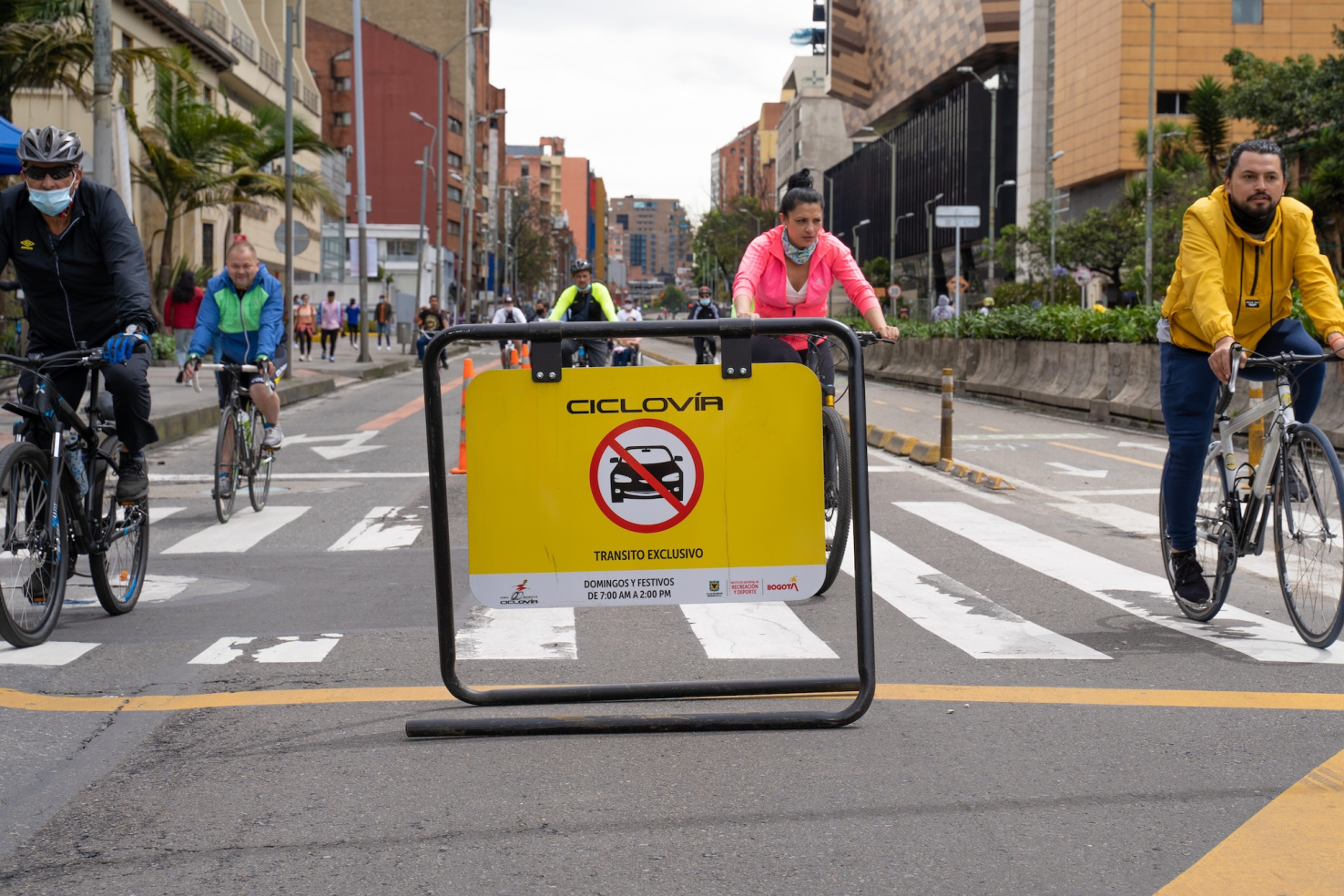
In urban planning circles, Bogotá is very much a household name. Since the 1970s, it has been the launching point of many influential mobility breakthroughs, with two in particular becoming global examples for other cities to emulate. The first is La Ciclovía, a day-long event that opens streets throughout the city to people walking and cycling. It began in 1974 and became a weekly occurrence two decades later. It now takes place every Sunday from 7am to 2pm, drawing more than two million residents to stroll, cycle, jog and skate along 120 kilometres of car-free streets. The second, arguably more renowned innovation, is the TransMilenio, a bus rapid transit system, which launched in 2000 and now boasts 152 stations across 12 lines, transporting 2.4 million riders each weekday. These bold moves, in parallel with investments in cycling infrastructure, aerial trams to connect outlying informal settlements to the central city and the construction of a metro and light rail network to provide even more fast and frequent options in the integrated transportation network, mean that Bogotá will likely remain the envy of other Latin American cities as well as other growing global metropolises looking to address their transportation challenges in the 21st century.
The legacies of the late twentieth and early twenty-first centuries in Bogotá should be held up as examples of what is possible with visionary political leadership. As a LATAM city, advocates and professionals from other fast-growing urban areas in LATAM, Africa, India and Southeast Asia can find the 1,636-square kilometre region with a population of 7.7 million more relatable than more compact European cities — and its ideas more readily transferable. While these ongoing innovations and investments have been vital in creating options for moving through this expansive city beyond the private automobile, the unfortunate reality is that while Bogotá has improved access to opportunities for some, it has left many others behind — namely, women.
The high costs of unpaid care work
It is well documented that women and marginalised groups rely on public transport at higher rates than men, using it to access part-time and service-related employment, and to carry out the daily unpaid tasks of running a household, also called 'care work.' According to statistics from the City of Bogotá, of the 4 million women in the city, 1.3 million perform care work, spending hours each day transporting themselves and their loved ones across the city, leaving little time for much else. This is having detrimental knock-on effects on the female population: 20% of Bogotá women have diagnosed illnesses, 33% are deprived of free time for self-care, 70% do not get to pursue secondary school education and 90% have a low income.
Women in Bogotá are trapped in 'time poverty' with little hope of finding a way out on their own, harming not just them but their families and the city as a whole. A report published by UN Women and DANE (Colombia’s national statistical authority) in 2020 found that if they were paid, unpaid care activities would represent 20% of the country’s gross domestic product.
These issues were front-of-mind for Claudia López when she decided to run for Mayor of Bogotá, successfully winning in 2019 and becoming the city’s first female — and lesbian — mayor. Committed to addressing Bogotá’s biggest challenges — inequality, climate change and governance — Mayor López understood her actions and those of her cabinet could only succeed if that also meant improving the lives of women. Alongside a largely female cabinet, the following four years saw the rollout of significant investments that didn’t just transform streets but created a new urban legacy, one that is more inclusive of all bogotanos and bogotanas.
Mayor Claudia López: Addressing disparity by empowering women
The election of Mayor López followed nearly a decade of public service as Head of the Community Action Department, Mayor of the Locality of Santa Fé, advisor to the Ministry of Housing and consultant to the United Nations Development Programme. "Since joining the realm of politics, I have found myself well-placed in the role of leader," explains Mayor López. From 2014 to 2018, she served as a senator on behalf of the Alianza Verde (Green Alliance) party. From there, she endorsed several key initiatives, including Law 1811 (the 'Bicycle Law'), ensured a fair premium for domestic employees, helped provide a guarantee of resources 'From Zero to Always' (an early childhood policy) and facilitated Guías Didácticas Escolares (GDEs or Educational Development Guides) for students without enlisting in the military. She was widely considered the most trustworthy and effective senator in this period, during which time she spearheaded the Anti-Corruption Consultation, the most-voted citizen initiative in Colombia’s history, which made transparency and legitimacy an integral part of public administration.
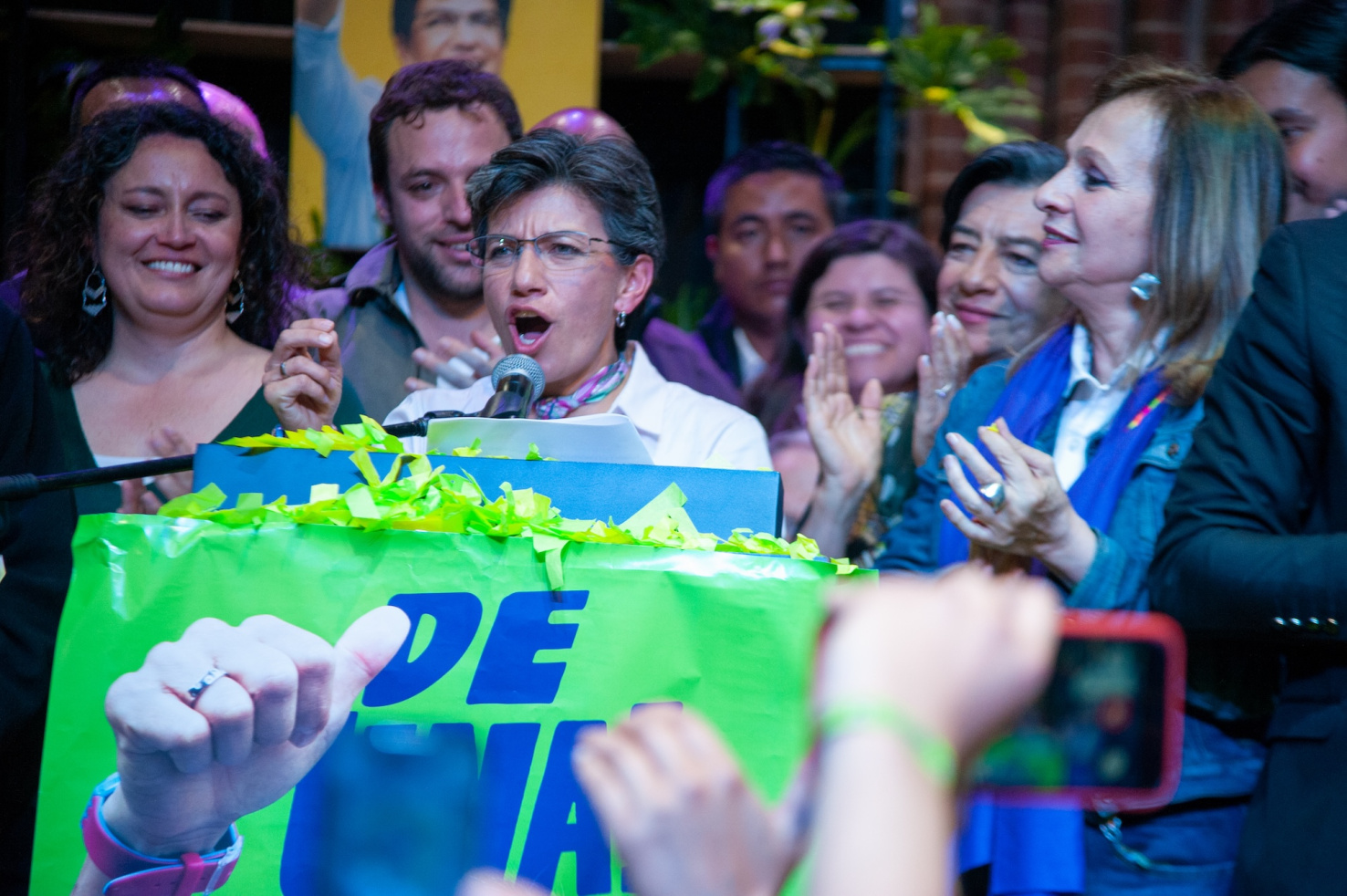
Mayor López’s experience laid the foundation to spend the next four years advancing the needs of those historically left behind, particularly women. She endorsed several projects aimed at improving the quality of mobility, air and life in Bogotá. But in her quest to boost equity for bogotanas, the most important place to start was addressing historical inequities that left so many of them lacking the skills they needed to get out of their low- or no-income existence. This was accomplished not through handouts, but through empowerment and the development of the Manzana del Cuidado, known internationally as 'Care Blocks.' "To avoid taking care of others resulting in neglecting their own lives and fostering economic dependency and inequality, we designed and launched the Care Blocks," stated López.
Care Blocks are areas that centralise several types of services and activities for caregivers, while also providing professional care for care receivers (children and other dependents), helping to reduce the barriers imposed by care responsibilities and transportation requirements. The premise of Care Blocks is relatively straightforward: recognise caregivers’ contribution to society; redistribute care work more equitably between men and women; and reduce caregivers’ unpaid care work so they can pursue personal development and self-care.
These aims are universal, regardless of where one lives in the world. Many nations recognise the need for more serious consideration of how women are seen and valued in society. Gender mainstreaming in the E.U. and global efforts to address the gender pay gap are just two of many attempts to help level the playing field. What makes the Care Blocks impactful is that the aims to recognise, redistribute and reduce are paired with physical infrastructure to ensure they are fully realised. Care Blocks are based on three principles: simultaneity offers education, self-care and income-generating services to caregivers while professionally caring for care receivers; flexibility optimises the use of existing public infrastructure and adapts service schedules to the caregivers' schedules; and proximity ensures that all Care Block services can be reached within a 15- to 20-minute walk.
The project is ongoing, and its success rests largely on its ability to reach all areas of the city, particularly those that have been historically overlooked. Still, the Manzana del Cuidado has already demonstrated the value of investing in spaces that assist in lightening women’s mental and physical load to achieve their individual potential. As López emphasizes: "Care Blocks are an urban planning criterion to create gender-conscious cities, to promote equity and close gender gaps in society. Women are at the center of this public policy." Revitalising old buildings and establishing social programming may seem like a frivolous expense, but these spaces serve as a catalyst for women to take control of their lives and their economic prosperity.
At the end of 2023, there were 21 Care Blocks operating, with five more to be built under the next administration. They were included in the Bogotá Urban Master Plan, guiding planning until 2035, with a target of 45 Care Blocks to be created within this period, regardless of political change. They have provided 2.6 million unique services, impacting the lives of 450,000 women and their family members. Importantly, since the aim is to reduce time poverty for caregivers, Care Blocks have had a net positive impact on services, freeing up 11,548 hours of care work (the equivalent of 363 days), community laundry facilities — freeing over 8,720 hours (the equivalent of 481 days) — and 28,812 women have graduated from high school with certified care knowledge or digital skills.
Creating a legacy
The work of Mayor López and countless other women within the administration has built on Bogotá’s legacy of innovation, with one important adjustment – it has created a legacy that works more equitably for bogotanas. Before her administration, the women’s secretariat was a marginal entity, but with Mayor López’s commitment to the care system, it has been moved to the center — with a budget increase of 116% — and given permanent coordination with other secretariats involved in providing for and supporting social services. The Care Blocks have been held up as a model that can be replicated elsewhere in the world, with the model recently receiving the International Award for Urban Innovation in Guangzhou, China.
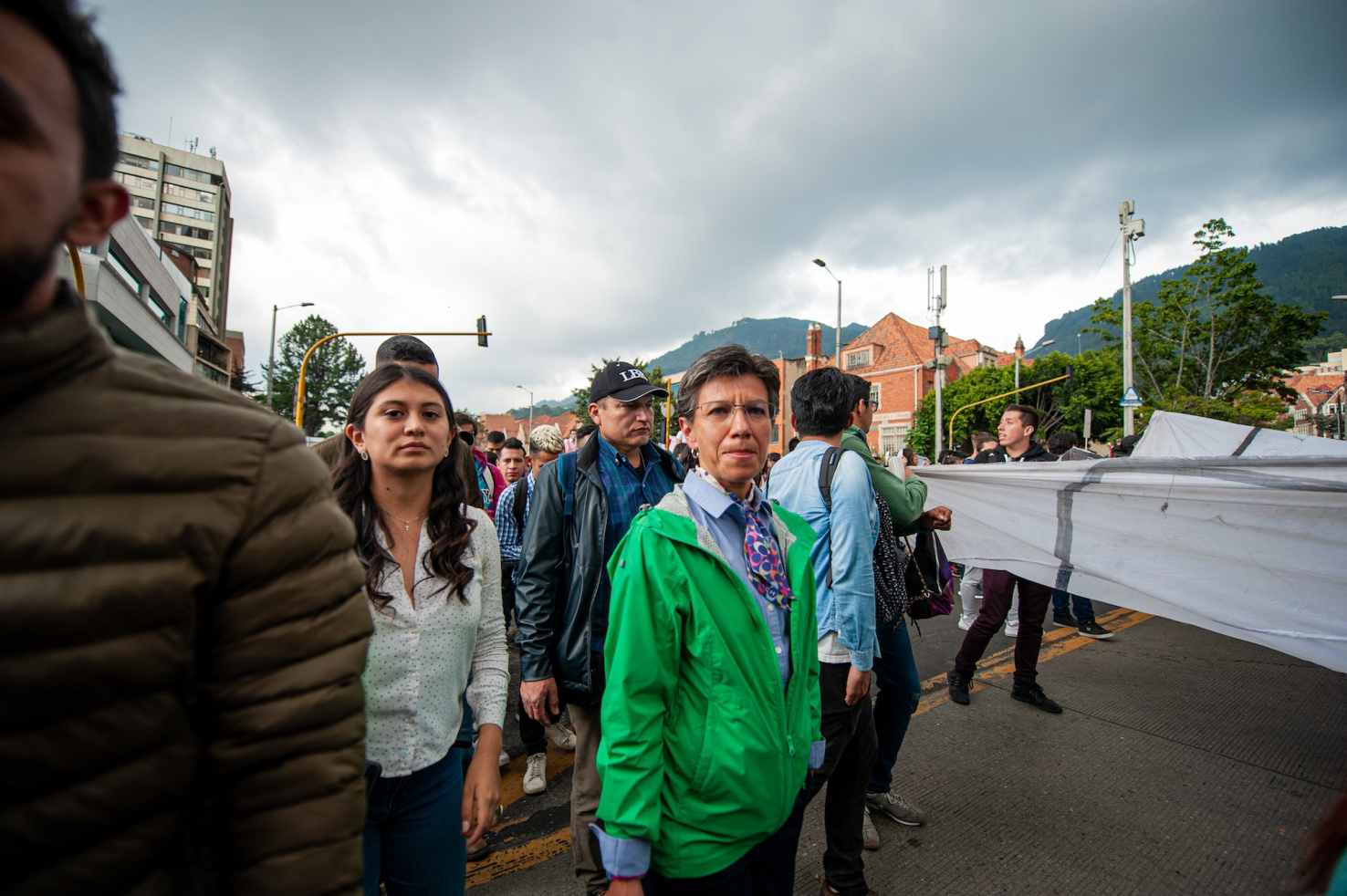
In 2023, Mayor López saw her term come to an end. However, her work and determination, alongside that of her team, formed a foundation for these efforts to continue under the new administration. When asked to reflect on what they were able to achieve and the reasons behind their work, López points to the fact that female leaders largely approach policymaking from the perspective of families, households and invisible women, ending the omission of women in the policymaking process, which often means breaking with the current approach. Women understand the experience of other women — how it feels to live in a society where they are thought of as lesser — and can therefore address how best to change that.
According to Mayor López: "Care Blocks are a social innovation for urban challenges: including gender inequality, climate crisis, quality education and systemic governance." By giving women across Bogotá the precious gifts of time and dignity, the administration helped Bogotan women create their own prosperity, and ultimately a legacy that shows the importance of care to every resident.
—
Melissa Bruntlett is a Dutch-Canadian urban mobility advocate, author, and storyteller based in Delft, the Netherlands. She is the founder of Modacity Creative, an independent consultancy that partners with advocates, professionals, and city leaders to bridge the gap between creative thinking and lasting behaviour change. Her work centers on developing projects with positive social impact through storytelling, narrative building, inspiration sessions, and interactive workshops, helping organisations and partners realise a more equitable, inclusive, and sustainable mobility future. A long-time mobility advocate in Vancouver before relocating to the Netherlands in 2019, Melissa brings both lived experience and professional expertise to the question of who cities are built for and who they leave behind. She is the co-author of Building the Cycling City and Curbing Traffic.
Chris Bruntlett is International Relations Manager at the Dutch Cycling Embassy, a public-private partnership located in Utrecht that shares the best knowledge, experience, and expertise from the Netherlands with cities and regions from around the world. He uses his diverse skills to manage the marketing and communication department, answer media and keynote requests, forge strategic diplomatic and economic relationships, and facilitate global knowledge exchanges such as workshops and study visits.

Ten extraordinary women making cities work better for everyone
A new book profiles women leaders shaping the future of modern cities. These are some of their stories.

State DOTs Don’t Resemble Their Constituencies — And That’s a Problem
Streetsblog calls attention to the lack of representation of women, people of color, and other groups in state departments of transportation that are largely dominated by white men.
Turning a Gendered Lens on Transportation
People of different genders, ages, and abilities experience transportation differently. But policies aren’t designed that way.

Planetizen Federal Action Tracker
A weekly monitor of how Trump’s orders and actions are impacting planners and planning in America.

The state-sanctioned urbicide of Austin
People don’t kill cities. Freeways do.

US to reduce Colorado River water deliveries to Mexico
A new Colorado Treaty amendment reduces Mexico’s Colorado River water allocation by 250,000 acre feet.

5 New England states march closer to 800 megawatt wind energy project
Securing federal approval for the project may be complicated under the Trump administration, which has historically been hostile towards domestic wind power.

Baltimore to break ground on $50 million Transit Priority Project
The project will bring faster bus trips, safer streets and better bike connections to Baltimore.

Airbnb launches $250 million 'last-dollar financing' housing accelerator, makes first investment in Austin
The company will put $6.4 million towards affordable housing development in Texas’ capital.

FREE Course: Walkable City 1: Why Walkability?
After describing his path towards focusing on walkability as the essence of good planning, Jeff Speck marches through his five principal reasons for making more walkable places.
Reinventing Malls: Planning Alchemy—Turning Gray Fields Into Gold
The course focuses on the opportunities and imperatives that shape reinvention of mall sites.

Eagle County Government
Harvard University Graduate School of Design
Nashville Planning Department
The Architects Foundation
University of Cincinnati Online
The Pocatello Development Authority
The Urban Renewal Agency of the City of Pocatello
Journal of the American Planning Association

