Arizona has been building bridges to prevent wildlife-vehicle collisions at various hotspots throughout the state.


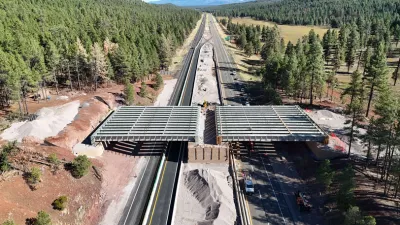
Arizona is quietly becoming a national leader in integrating wildlife crossings into its transportation infrastructure.
According to a Pew analysis, "The state has undertaken numerous wildlife connectivity studies, including Arizona’s Wildlife Linkages Assessment, research on reducing wildlife-vehicle collisions on state Route 260, and the state Department of Transportation’s Arizona Statewide Wildlife-Vehicle Conflict Study, which prioritizes highway collision hot spots and identifies potential mitigation solutions."
The state has completed multiple wildlife crossing projects including bighorn sheep overpasses on Highway 93 and elk crossings on Route 260, which have reduced wildlife-vehicle collisions by over 90%. "These investments demonstrate how coordinated planning can simultaneously deliver safety, economic, and conservation benefits." It is also working on several new projects, such as the Interstate 17 Willard Springs Wildlife Overpass just south of Flagstaff, Arizona.
FULL STORY: Arizona Builds on Leadership With Wildlife Crossings


Colorado creates wildlife crossings fund
Residents will have the option to add $5 to their car registration to fund infrastructure that prevents wildlife-vehicle collisions.
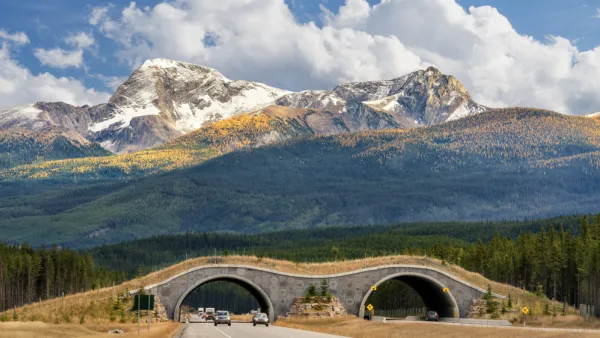
Wildlife Crossings as Key Infrastructure
Animal-vehicle collisions cause billions in property damage, hundreds of human deaths, and dramatic losses in animal populations every year. Monitoring migration and building for animals can make roads safer for everyone.
Texas AI study links disparate data sets to identify dangerous road segments
A new study combines multiple data sources to assess roadway risks.

Planetizen Federal Action Tracker
A weekly monitor of how Trump’s orders and actions are impacting planners and planning in America.

The state-sanctioned urbicide of Austin
People don’t kill cities. Freeways do.

US to reduce Colorado River water deliveries to Mexico
A new Colorado Treaty amendment reduces Mexico’s Colorado River water allocation by 250,000 acre feet.

5 New England states march closer to 800 megawatt wind energy project
Securing federal approval for the project may be complicated under the Trump administration, which has historically been hostile towards domestic wind power.

Baltimore to break ground on $50 million Transit Priority Project
The project will bring faster bus trips, safer streets and better bike connections to Baltimore.

Airbnb launches $250 million 'last-dollar financing' housing accelerator, makes first investment in Austin
The company will put $6.4 million towards affordable housing development in Texas’ capital.

FREE Course: Walkable City 1: Why Walkability?
After describing his path towards focusing on walkability as the essence of good planning, Jeff Speck marches through his five principal reasons for making more walkable places.
Reinventing Malls: Planning Alchemy—Turning Gray Fields Into Gold
The course focuses on the opportunities and imperatives that shape reinvention of mall sites.

Eagle County Government
Harvard University Graduate School of Design
Nashville Planning Department
The Architects Foundation
University of Cincinnati Online
The Pocatello Development Authority
The Urban Renewal Agency of the City of Pocatello
Journal of the American Planning Association