Almost half of new multifamily projects in 2024 relied on a density bonus.


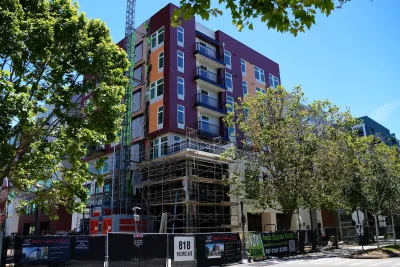
Of the multiple new California laws aimed at increasing housing production, the state's density bonus is creating the most new housing units, according to a report from Circulate Planning & Policy.
As Tessa Balc explains in a Times of San Diego article, "The law, which lets developers exceed density and other development restrictions if they reserve some units for low-income tenants, wasn’t always as powerful as it is now. State lawmakers have bolstered it multiple times in recent years — and many of those reforms came from San Diego lawmakers."
Since a series of changes made the benefit more lucrative to developers in 2020, the policy has become the state's most widely used housing development tool. "In 2024, nearly half of new California townhouses or apartments were in projects that relied on the density bonus — and 78% of homes in projects of 100% low-income housing."
Before AB 2345, a 2020 law that increased the density bonus from 35% to 50% for a higher share of low-income units, fewer than 20% of multifamily projects used a density bonus. After the law was passed, that number jumped to 47% in 2024.
FULL STORY: Developers use California’s ‘density bonus’ law far more than higher-profile YIMBY bills


LA delays state housing mandate with 'low-rise ordinance'
The new ordinance allows the city to delay implementing SB 79, a state law requiring more density near transit.

San Diego wants to limit upzoning law to just 16% of transit-adjacent parcels
The city's planning director says some areas are unfit for immediate upzoning due to a lack of resources or hazards such as wildfire risk.
Five simple zoning changes that any city can make to increase housing affordability
Zoning for more affordable housing is not rocket science, says Donald Elliot, author of "An Even Better Way to Zone." Here’s his five-step guide to getting started.

Planetizen Federal Action Tracker
A weekly monitor of how Trump’s orders and actions are impacting planners and planning in America.

The state-sanctioned urbicide of Austin
People don’t kill cities. Freeways do.

US to reduce Colorado River water deliveries to Mexico
A new Colorado Treaty amendment reduces Mexico’s Colorado River water allocation by 250,000 acre feet.

5 New England states march closer to 800 megawatt wind energy project
Securing federal approval for the project may be complicated under the Trump administration, which has historically been hostile towards domestic wind power.

Baltimore to break ground on $50 million Transit Priority Project
The project will bring faster bus trips, safer streets and better bike connections to Baltimore.

Airbnb launches $250 million 'last-dollar financing' housing accelerator, makes first investment in Austin
The company will put $6.4 million towards affordable housing development in Texas’ capital.

FREE Course: Walkable City 1: Why Walkability?
After describing his path towards focusing on walkability as the essence of good planning, Jeff Speck marches through his five principal reasons for making more walkable places.
Reinventing Malls: Planning Alchemy—Turning Gray Fields Into Gold
The course focuses on the opportunities and imperatives that shape reinvention of mall sites.

Eagle County Government
Harvard University Graduate School of Design
Nashville Planning Department
The Architects Foundation
University of Cincinnati Online
The Pocatello Development Authority
The Urban Renewal Agency of the City of Pocatello
Journal of the American Planning Association