New infrastructure in neighborhoods that have borne the brunt of seasonal floods is making them safer — and more expensive.


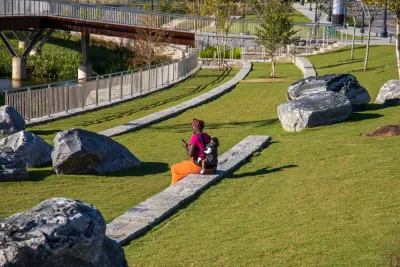
Residents in some of Atlanta’s historically Black neighborhoods say they are being displaced by rising costs driven in part by new city efforts to protect these areas from flooding.
As Adam Mahoney explains in an article for Capital B, “A Capital B analysis of ZIP‑code‑level data shows that in three historically Black ZIP codes, flood‑fix projects have produced a “triple burden”: a loss of Black residents, soaring living costs, and aggressive buyouts and use of eminent domain.”
According to the analysis, one in five Black residents in these zip codes have left since flood control projects began. Some are working to create community land trusts and other mechanisms that would prevent displacement and bring flood mitigation to the areas that need it most.
As environmental scientist Darryl Haddock explains, infrastructure in Atlanta is tied to race and class. “The water infrastructure went first to white business districts and surrounding white areas before going to where Black people traditionally lived in low‑lying, swampy areas.”
Now, efforts to improve that infrastructure must address historic inequities or risk reinforcing them, Haddock says. When the city supported the construction of Centennial Yards in an area formerly known as the Gulch, there was no money earmarked for mitigating the stormwater that would subsequently flow into nearby residential neighborhoods.
Read the full story: The Black Mecca’s Climate Plan Is Costing Black Atlanta Residents Their Homes

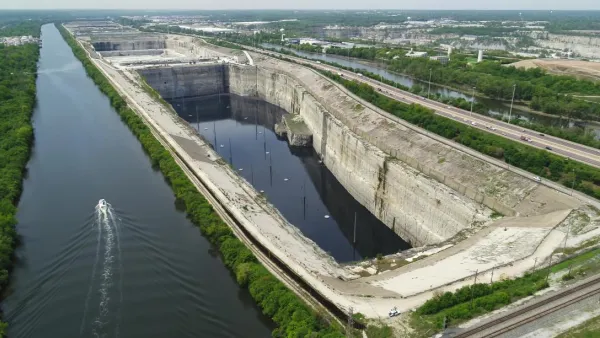
Chicago's underground flood control system is almost full
The system known as Deep Tunnel has never filled much more than halfway, but the cumulative effect of recent rains is putting suburban communities at risk of flooding.
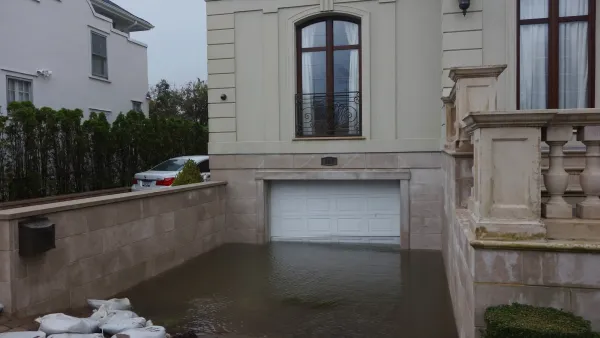
Over 500 NYC ‘Blue Zones’ at Risk of More Destructive Floods
High-risk flood zones cover roughly 20% of the city’s land.
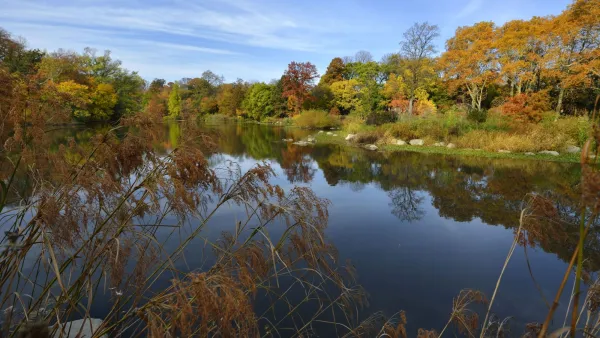
NYC’s Prospect Park is Getting a $68 Million ‘Bluebelt’
The city plans to upgrade the park’s drainage infrastructure to channel more stormwater into its lake and other drainage ponds and reduce flooding risk.

Planetizen Federal Action Tracker
A weekly monitor of how Trump’s orders and actions are impacting planners and planning in America.

California plans to bury El Niño’s downpour
If the state plays its cards right, it may be able to store a billion acre-feet of El Niño’s water in aquifers.

Chicago breaks ground on $3 billion megadevelopment
The new neighborhood, titled Foundry Park, will one day host 3,700 residences.

Satanic place names
From streams and lakes to valleys and canyons, I mapped more than 1,000 places named after the Devil.

California High-Speed Rail Authority CEO resigns after $600,000 scandal
Under Ian Choudri, the authority used taxpayer dollars to fund first class flights and trips to nightclubs.

Want to study the Missouri River? Soon, you may need unanimous approval from 10 states
Legislation would require 10 governors’ permission to study or build projects moving water outside the basin.

FREE Course: Walkable City 1: Why Walkability?
After describing his path towards focusing on walkability as the essence of good planning, Jeff Speck marches through his five principal reasons for making more walkable places.
Reinventing Malls: Planning Alchemy—Turning Gray Fields Into Gold
The course focuses on the opportunities and imperatives that shape reinvention of mall sites.

City of Rosemead
Rutgers University, Edward J. Bloustein School of Planning and Public Policy
One Hundred Miles
Hunter College, City University of New York (CUNY)
The Architects Foundation
University of Cincinnati Online
City of Cambridge
Montrose County
The Pocatello Development Authority