Miami’s port is one of the world’s busiest cruise ship terminals.


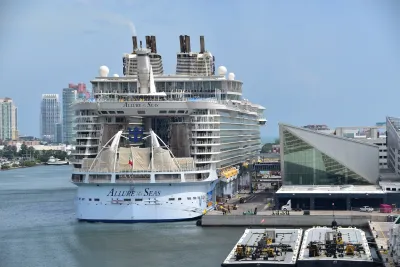
The Miami-Dade County Transportation Planning Organization (TPO) is considering a new non-stop train service that would ease traffic between Miami International Airport and Port Miami, one of the world’s busiest cruise ship terminals that receives over 8.5 million passengers every year.
As Larry Seward explains for CBS News, “The project comes with a significant price tag, estimated to cost $600 million to $800 million for capital expenses and between $9 million and $15 million annually to operate, the TPO research noted.”
The new train would require a 9-mile extension of an existing people mover track or, for a higher-capacity option, a 10-mile track extension and a new bridge over the Intracoastal Waterway.
FULL STORY: Miami-Dade transportation officials are considering building a non-stop train from the airport to Port Miami

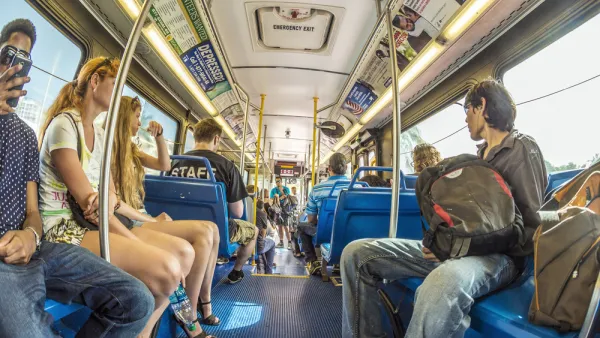
To Fight Climate Change, Support Public Transit
Electric cars may garner a lot of attention these days, but significantly reducing carbon emissions and urban congestion means investing in high-quality mass transit.
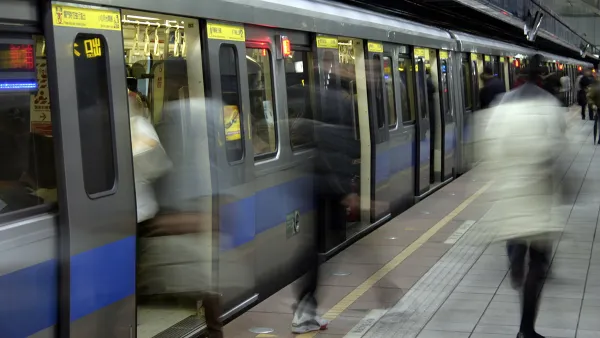
Transit Ridership Should Worry Americans More
Ridership declines mean falling revenues for transit agencies, and could be the beginning of a cycle of service cuts and fare increases leading to yet more ridership declines.
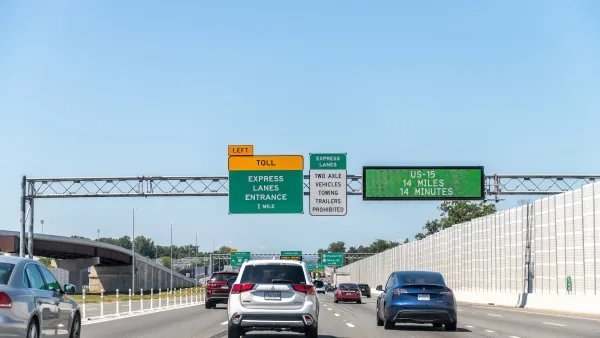
Congestion Costing Reality Check, Part 2: A congestion costing critique
There are good reasons to be skeptical of highway industry claims that traffic congestion is a growing problem. Their analysis is often incomplete and biased. Let’s pull back the curtain on some major congestion cost studies.

Planetizen Federal Action Tracker
A weekly monitor of how Trump’s orders and actions are impacting planners and planning in America.

The state-sanctioned urbicide of Austin
People don’t kill cities. Freeways do.

US to reduce Colorado River water deliveries to Mexico
A new Colorado Treaty amendment reduces Mexico’s Colorado River water allocation by 250,000 acre feet.

Mamdani overhauls NYC's Vision Zero plan with 100 new policy goals
The overhaul aims to reduce traffic deaths and make streets safer for pedestrians, cyclists and drivers through lower speed limits, new safety infrastructure and more.

Amtrak not solely to blame for New Jersey commuter rail's unreliability, report finds
A new study from the Garden State Initiative found that NJ Transit’s budget grew 20% across a 4 year period, but reliability declined significantly over the same period.

EPA erases limits on planet-warming pollution from power plants
Under Monday’s plan, power plants would still have some limits on how much mercury, arsenic and other contaminants they can emit.

FREE Course: Walkable City 1: Why Walkability?
After describing his path towards focusing on walkability as the essence of good planning, Jeff Speck marches through his five principal reasons for making more walkable places.
Reinventing Malls: Planning Alchemy—Turning Gray Fields Into Gold
The course focuses on the opportunities and imperatives that shape reinvention of mall sites.

Eagle County Government
Harvard University Graduate School of Design
Nashville Planning Department
The Architects Foundation
University of Cincinnati Online
The Pocatello Development Authority
The Urban Renewal Agency of the City of Pocatello
Journal of the American Planning Association