Research warns that the rise of AI is making some of the country’s most economically successful cities vulnerable to AI-driven decline.


According to an article by Juan Vasquez in WebProNews, “a new geography of economic vulnerability is forming in the United States, and it doesn’t look anything like the old one.”
As Vasquez explains, artificial intelligence threatens to upend the economies not of Midwestern factory towns, but that of “white-collar, digitally connected metro areas that were supposed to be the winners of the knowledge economy.”
These newly vulnerable regions are what researchers from Tufts University are calling “Wired Belts,” areas that could be vulnerable to AI-driven displacement. According to the researchers, “The states most at risk read like a roll call of American economic success: Washington, D.C., sits at the very top of the vulnerability index, followed by states like New Jersey, Maryland, Massachusetts, Connecticut, and Virginia. California, home to Silicon Valley, ranks high as well.”
The comparison with the Rust Belt is more than just a turn of phrase, Vasquez notes. It is a warning to take the challenges and opportunities of the rise of data centers and AI seriously — “before the map of AI vulnerability becomes a map of economic decline.”
FULL STORY: America’s ‘Wired Belts’ Are the New Rust Belts — And AI Is Drawing the Map

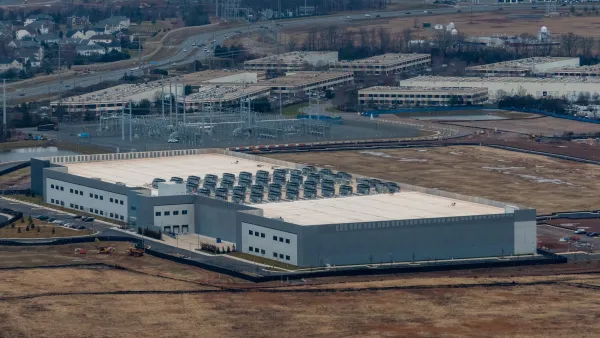
Data center developer offers over $4M per acre to buy out homeowners
Data center builders are outbidding home builders for land, prompting concerns about competition with housing.
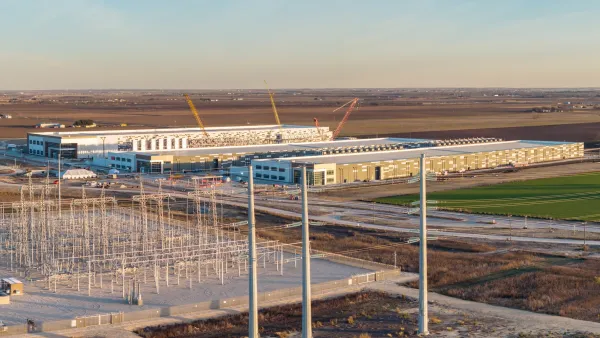
Texas bars data centers from raising utility costs for residents
Gov. Abbott is calling on the state's utility regulator to take steps to reduce energy costs for consumers and ensure data center operators pay for any added costs.
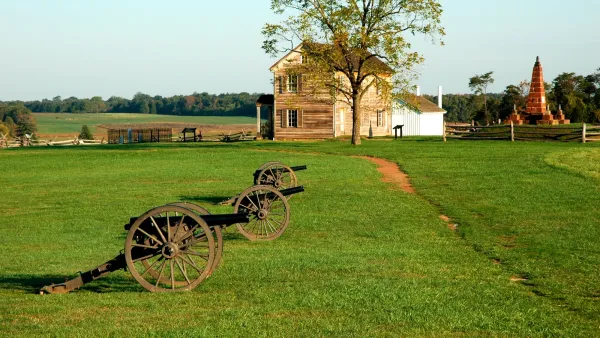
Virginia officials end support for proposed data center next to Civil War battlefield
The proposal for a 2,100-acre site in Prince William County has been in dispute for years.

Planetizen Federal Action Tracker
A weekly monitor of how Trump’s orders and actions are impacting planners and planning in America.

The state-sanctioned urbicide of Austin
People don’t kill cities. Freeways do.

US to reduce Colorado River water deliveries to Mexico
A new Colorado Treaty amendment reduces Mexico’s Colorado River water allocation by 250,000 acre feet.

5 New England states march closer to 800 megawatt wind energy project
Securing federal approval for the project may be complicated under the Trump administration, which has historically been hostile towards domestic wind power.

Baltimore to break ground on $50 million Transit Priority Project
The project will bring faster bus trips, safer streets and better bike connections to Baltimore.

Airbnb launches $250 million 'last-dollar financing' housing accelerator, makes first investment in Austin
The company will put $6.4 million towards affordable housing development in Texas’ capital.

FREE Course: Walkable City 1: Why Walkability?
After describing his path towards focusing on walkability as the essence of good planning, Jeff Speck marches through his five principal reasons for making more walkable places.
Reinventing Malls: Planning Alchemy—Turning Gray Fields Into Gold
The course focuses on the opportunities and imperatives that shape reinvention of mall sites.

Eagle County Government
Harvard University Graduate School of Design
Nashville Planning Department
The Architects Foundation
University of Cincinnati Online
The Pocatello Development Authority
The Urban Renewal Agency of the City of Pocatello
Journal of the American Planning Association