Service providers say they haven’t been told how their clients can access free or reduced fares after the agency starts charging again this summer.


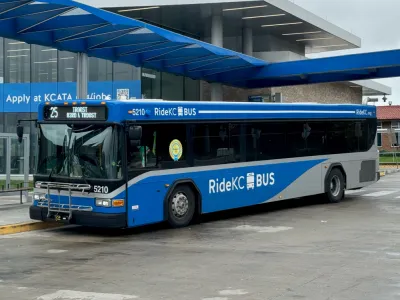
The Kansas City Area Transportation Authority will start charging fares for bus rides in June, but riders who should qualify for continued free fares say they haven’t heard anything about how to get free rides, reports Savannah Hawley-Bates for KCUR.
According to Hawley-Bates, “KCUR spoke to multiple social service agencies whose clients rely on buses, and they say they haven’t heard anything from officials about what functionally free fare will look like.”
Kansas City eliminated bus fares in 2020, but the funds that helped support the program have run out. “In its 2026-27 budget, Kansas City has earmarked $165,000 for bus fare for its employees, but nothing for citywide fare subsidies.” Service agencies who work with low-income residents warn that people who rely on transit could suffer under the new fare system.
According to KCATA, the agency is working on a plan, but “couldn’t begin working on the functionally free system until it had its fare policy and related technology in place.” The city’s streetcar, which is not operated by KCATA, will remain free.
FULL STORY: Kansas City transit agency promised free bus fare for people who need it. There's still no plan

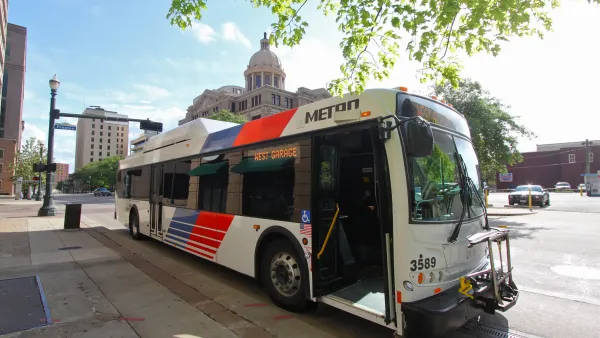
Houston Will Not Be a Fare-Free Transit City
In case anyone was getting carried away with the idea of fare-free transit, the Metropolitan Transit Authority of Harris County has some cold water to pour on the conversation.
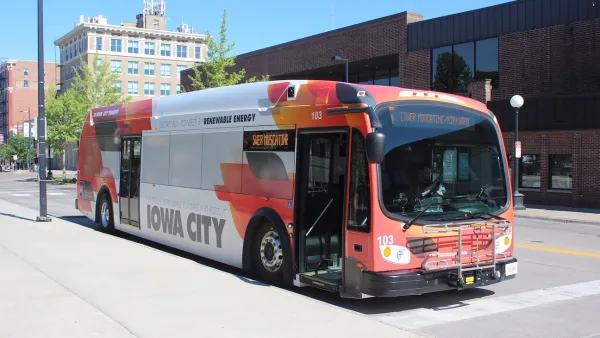
Iowa City's free bus program made ridership spike by 68%. Now, it could go away.
The bus system gained roughly 700,000 new riders since it launched free service in 2023.
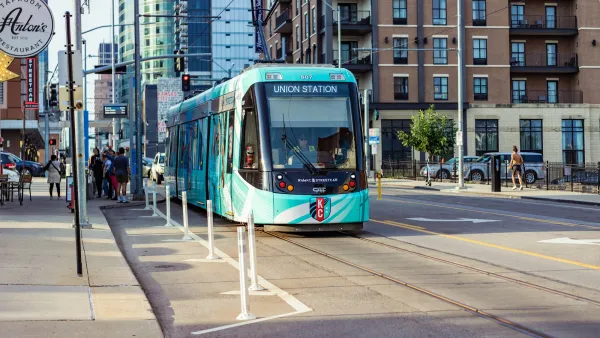
Kansas City Announces Another New, Fare-Free Streetcar Line
The once-derided transit system continues to add new lines as ridership grows.

Planetizen Federal Action Tracker
A weekly monitor of how Trump’s orders and actions are impacting planners and planning in America.

The state-sanctioned urbicide of Austin
People don’t kill cities. Freeways do.

US to reduce Colorado River water deliveries to Mexico
A new Colorado Treaty amendment reduces Mexico’s Colorado River water allocation by 250,000 acre feet.

5 New England states march closer to 800 megawatt wind energy project
Securing federal approval for the project may be complicated under the Trump administration, which has historically been hostile towards domestic wind power.

Baltimore to break ground on $50 million Transit Priority Project
The project will bring faster bus trips, safer streets and better bike connections to Baltimore.

Airbnb launches $250 million 'last-dollar financing' housing accelerator, makes first investment in Austin
The company will put $6.4 million towards affordable housing development in Texas’ capital.

FREE Course: Walkable City 1: Why Walkability?
After describing his path towards focusing on walkability as the essence of good planning, Jeff Speck marches through his five principal reasons for making more walkable places.
Reinventing Malls: Planning Alchemy—Turning Gray Fields Into Gold
The course focuses on the opportunities and imperatives that shape reinvention of mall sites.


Eagle County Government
Harvard University Graduate School of Design
Nashville Planning Department
The Architects Foundation
University of Cincinnati Online
The Pocatello Development Authority
The Urban Renewal Agency of the City of Pocatello
Journal of the American Planning Association