An analysis from APTA shows the rippling positive impacts of transit funding.


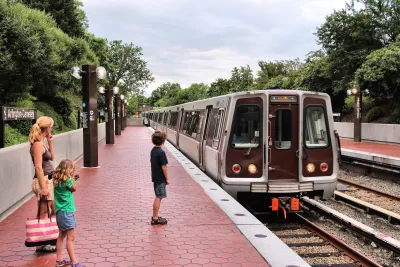
A new analysis from the American Public Transportation Association (APTA) highlights the economic impact of public transit investment.
According to an article by Noah Kolenda and Brandon Lewis in Mass Transit, “The report comes as a supplement to APTA’s Surface Transportation Authorization Recommendations, which it began pursuing last year. The recommendations urge Congress and the Trump Administration to build upon current investment made in public transit and passenger rail through the existing surface transportation authorization bill—the Infrastructure Investments and Jobs Act (IIJA)—by providing $138 billion for public transit and $130 billion for passenger rail over the next five years.”
The analysis finds that every $1 billion invested in public transit yields 41,400 jobs, $251 million in tax revenue, and “$3.6 billion of value is realized in improved access to jobs and healthcare, reduced congestion and lower household transportation costs.”
According to other APTA research, “nearly 80% of federal public transit funds flow to the private sector, providing support for American manufacturing and family-wage jobs. APTA has also released updated bus manufacturing and rail car manufacturing schematics breaking down how federal investments in public transit support 3,000 suppliers in more than 1,700 communities in all 50 states.”
APTA recommends a $30 billion increase in federal funding from IIJA levels in the next surface transportation law.


The U.S. Lags in High-Quality Transit Investment
While other countries are boosting investment in their light and heavy rail systems, transit projects in U.S. cities have slowed, signaling diminished commitment to transit expansion.

Atlanta Suburbs Reconsidering Public Transit
A sweeping set of bill approved by the State legislature could pave the way for a "transformational" investment in public transit throughout the Atlanta region.
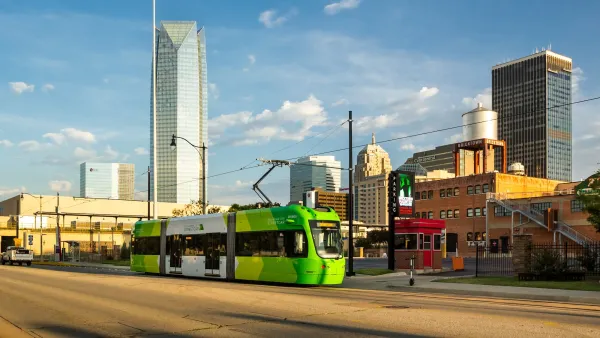
Oklahoma City bets on transit
The city's mayor is urging residents to support a new sales tax that would fund transit expansion in the growing city.

Planetizen Federal Action Tracker
A weekly monitor of how Trump’s orders and actions are impacting planners and planning in America.

The state-sanctioned urbicide of Austin
People don’t kill cities. Freeways do.

US to reduce Colorado River water deliveries to Mexico
A new Colorado Treaty amendment reduces Mexico’s Colorado River water allocation by 250,000 acre feet.

Mamdani overhauls NYC's Vision Zero plan with 100 new policy goals
The overhaul aims to reduce traffic deaths and make streets safer for pedestrians, cyclists and drivers through lower speed limits, new safety infrastructure and more.

Amtrak not solely to blame for New Jersey commuter rail's unreliability, report finds
A new study from the Garden State Initiative found that NJ Transit’s budget grew 20% across a 4 year period, but reliability declined significantly over the same period.

EPA erases limits on planet-warming pollution from power plants
Under Monday’s plan, power plants would still have some limits on how much mercury, arsenic and other contaminants they can emit.

FREE Course: Walkable City 1: Why Walkability?
After describing his path towards focusing on walkability as the essence of good planning, Jeff Speck marches through his five principal reasons for making more walkable places.
Reinventing Malls: Planning Alchemy—Turning Gray Fields Into Gold
The course focuses on the opportunities and imperatives that shape reinvention of mall sites.

Eagle County Government
Harvard University Graduate School of Design
Nashville Planning Department
The Architects Foundation
University of Cincinnati Online
The Pocatello Development Authority
The Urban Renewal Agency of the City of Pocatello
Journal of the American Planning Association