The agencies are allowed to ban riders who are accused of violent or threatening behavior.


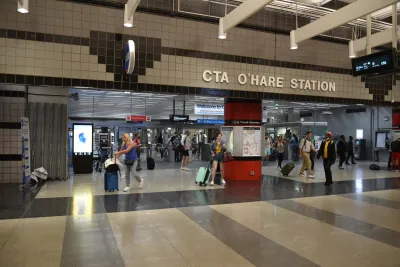
An analysis by the Chicago Tribune reveals that a little-known program that allows transit agencies to ban riders has overwhelmingly been used against Black and Latino riders.
According to an article by Talia Soglin in Chicago Tribune, “The mass transit suspension program was made possible by a 2023 change in state law that allows the CTA, along with commuter rail system Metra and suburban bus agency Pace, to suspend riders accused of violence or threatening behavior on their systems.” The CTA suspended 40 people in 2024 and 2025, of whom 90 percent were Black and 10 percent were Hispanic. By contrast, just 27 percent of the agency’s riders are Black. On Metra, roughly two-thirds of suspensions involved Black riders.
According to Matthew Hendrickson, a spokesperson for the public defenders’ office, “We hope this analysis will lead transit agencies to review their policies and procedures related to these suspensions, including whether the administrative hearing process is being fairly adjudicated.” The agencies say “The only factor used to determine whether to move to suspend a rider is whether they have committed an act subject to suspension.”
FULL STORY: A little-known program allows CTA and Metra to suspend riders. Most of them are Black.

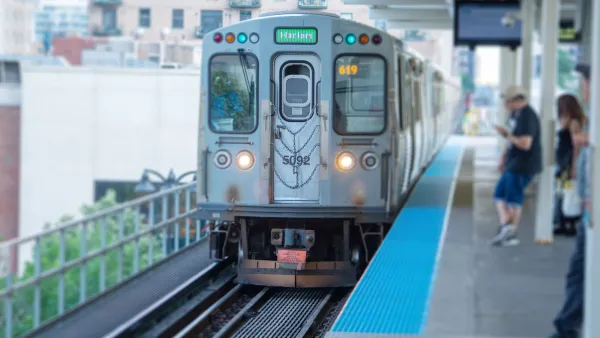
Chicago Transit Authority to Boost Policing Hours by 75%
In December, federal officials tasked the CTA to develop an enhanced security plan or risk losing federal funding.
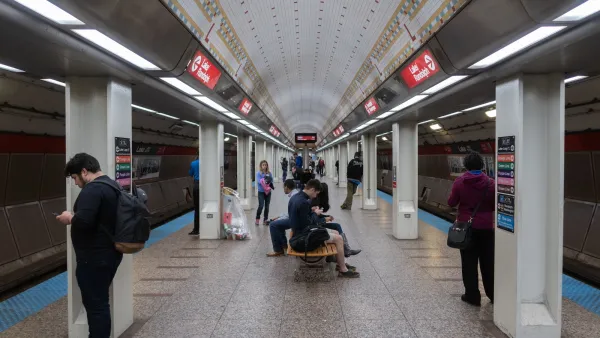
FTA Rejects Chicago’s Transit Safety Plan
The Trump administration is threatening to pull funding from Chicago transit, citing a failure to ‘measurably’ improve safety.
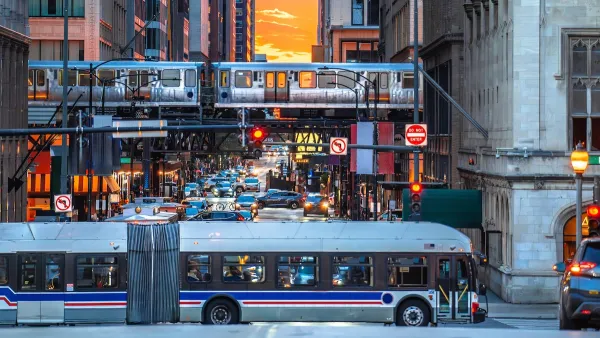
Chicago Transit Agencies on Brink of Major Crisis
Without additional funding, regional transit agencies will be forced to cut services by 40 percent.

Planetizen Federal Action Tracker
A weekly monitor of how Trump’s orders and actions are impacting planners and planning in America.

The state-sanctioned urbicide of Austin
People don’t kill cities. Freeways do.

US to reduce Colorado River water deliveries to Mexico
A new Colorado Treaty amendment reduces Mexico’s Colorado River water allocation by 250,000 acre feet.

5 New England states march closer to 800 megawatt wind energy project
Securing federal approval for the project may be complicated under the Trump administration, which has historically been hostile towards domestic wind power.

Baltimore to break ground on $50 million Transit Priority Project
The project will bring faster bus trips, safer streets and better bike connections to Baltimore.

Airbnb launches $250 million 'last-dollar financing' housing accelerator, makes first investment in Austin
The company will put $6.4 million towards affordable housing development in Texas’ capital.

FREE Course: Walkable City 1: Why Walkability?
After describing his path towards focusing on walkability as the essence of good planning, Jeff Speck marches through his five principal reasons for making more walkable places.
Reinventing Malls: Planning Alchemy—Turning Gray Fields Into Gold
The course focuses on the opportunities and imperatives that shape reinvention of mall sites.

Eagle County Government
Harvard University Graduate School of Design
Nashville Planning Department
The Architects Foundation
University of Cincinnati Online
The Pocatello Development Authority
The Urban Renewal Agency of the City of Pocatello
Journal of the American Planning Association