New housing permits fell sharply for both single-family homes and multifamily buildings after the city enacted a tax on property sales over $5 million.


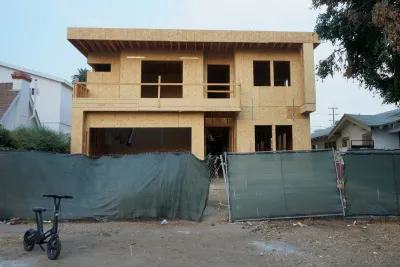
A research brief from UCLA’s Anderson Review asserts that a 2023 “mansion tax” designed to bring in revenue for affordable housing has likely backfired.
According to an analysis of the tax’s effects, development of alternative dwelling units fell by 70 percent, while multifamily construction permits dropped by 27 percent. “Overall construction permits in the city fell 40%, a decline that includes a 45% drop in permits for single-family homes of any value.”
The study accounted for factors other than the tax by comparing data for the city of Los Angeles with other L.A. County cities, where permitting did not decline as precipitously. The analysis thus suggests that “the tax itself, rather than a broad decline in the real estate market, is responsible for the city’s construction drop-off.”
The tax, formally known as the United to House L.A. Real Property Transfer Tax, applies to all real estate sales of $5 million or more. Developers seem to have adopted strategies to skirt the tax such as lowering prices to just below $5 million or moving projects just outside the city of L.A.
FULL STORY: LA’s Mansion Tax, Intended to Aid Affordable Housing, May Have Backfired

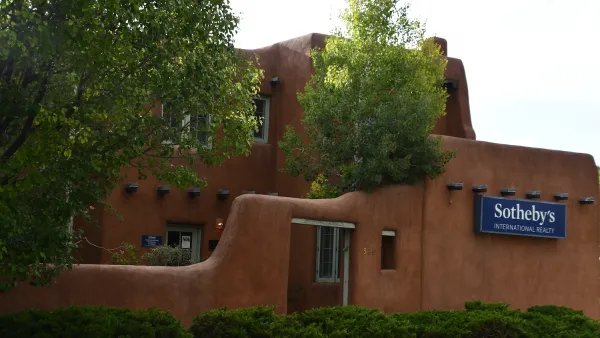
Santa Fe Collects First Payments From Tax on Million-Dollar Homes
The 3% tax on home sales of $1 million or more has elicited a lawsuit and backlash from local realty groups.

LA ‘Mansion Tax’ Yielding Less Revenue Than Predicted
The tax on property sales above $5 million has brought in less revenue last year than experts projected, but the measure could still become a significant contributor to affordable housing funds.
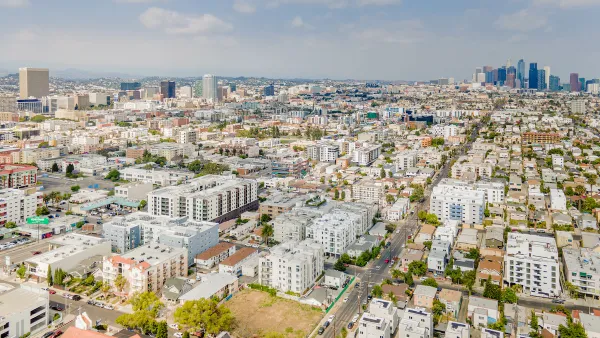
New Los Angeles Rent Relief Program Targets Pandemic Debt
The program prioritizes the lowest-income tenants who accrued debt during the early part of the pandemic.

Planetizen Federal Action Tracker
A weekly monitor of how Trump’s orders and actions are impacting planners and planning in America.

The state-sanctioned urbicide of Austin
People don’t kill cities. Freeways do.

US to reduce Colorado River water deliveries to Mexico
A new Colorado Treaty amendment reduces Mexico’s Colorado River water allocation by 250,000 acre feet.

5 New England states march closer to 800 megawatt wind energy project
Securing federal approval for the project may be complicated under the Trump administration, which has historically been hostile towards domestic wind power.

Baltimore to break ground on $50 million Transit Priority Project
The project will bring faster bus trips, safer streets and better bike connections to Baltimore.

Airbnb launches $250 million 'last-dollar financing' housing accelerator, makes first investment in Austin
The company will put $6.4 million towards affordable housing development in Texas’ capital.

FREE Course: Walkable City 1: Why Walkability?
After describing his path towards focusing on walkability as the essence of good planning, Jeff Speck marches through his five principal reasons for making more walkable places.
Reinventing Malls: Planning Alchemy—Turning Gray Fields Into Gold
The course focuses on the opportunities and imperatives that shape reinvention of mall sites.

Eagle County Government
Harvard University Graduate School of Design
Nashville Planning Department
The Architects Foundation
University of Cincinnati Online
The Pocatello Development Authority
The Urban Renewal Agency of the City of Pocatello
Journal of the American Planning Association