Before President Trump took up the cause, Atlanta-area municipalities sounded the alarm on institutional housing investors.


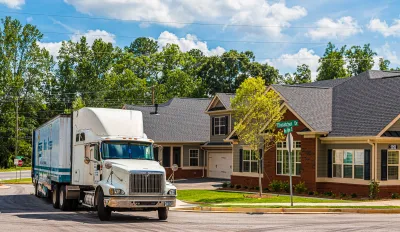
Local governments in the Atlanta area are legislating against corporate landlords as part of a growing call to regulate real estate investment that critics say drive up the cost of housing for everyday buyers and renters.
As Michael Sasso and Kriston Capps explain in Bloomberg CityLab, institutional investors hold just around 3 percent of residential properties nationwide. But their concentration in some markets, where these properties make up as much as 50 percent of homes, makes them a problem. “A 2023 study by Brian An of the Georgia Institute of Technology looked at the Atlanta area specifically, finding that heavy investor purchases led to the loss of $4.9 billion in home equity – more than two-thirds of it among Black households.”
In Paulding, County, Georgia, local leaders called for a 180-day moratorium on new build-to-rent subdivisions in 2021, adding some exceptions later. But overall, bans on investor-owned rentals are rare. “Some communities have tried a quota-based approach. North of Atlanta, the affluent town of Alpharetta aims to have at least 68% of housing owner-occupied.” At the state level, 19 republican senators introduced a bill that would prevent businesses from buying an interest in more than 500 residential units. After President Trump’s purported attack on institutional investors, action could come from the federal level too.
FULL STORY: Atlanta Is Challenging Big Corporate Landlords Without Waiting on Trump

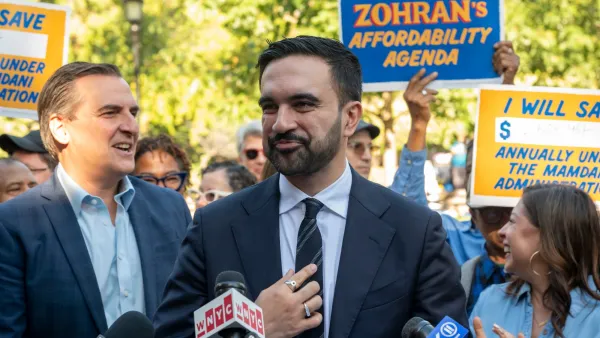
NYC Mayor Mamdani Backs Down on Expanded Rental Assistance Program, Citing $7 Billion Deficit
The new mayor had promised to expand the CityFHEPS rent assistance program to an additional 47,000 households.
How Housing as a Financial Product Harms Communities
Institutional buyers who treat housing as an investment product become disconnected from the impacts of higher rents, displacement, and housing instability.
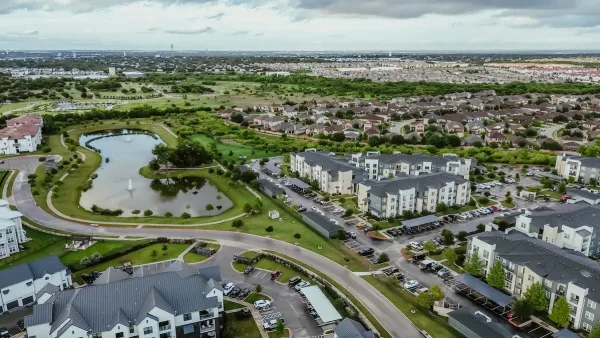
Rents Rose Between December and January
After dropping to a three-year low, U.S. rent costs grew in many major cities.

Planetizen Federal Action Tracker
A weekly monitor of how Trump’s orders and actions are impacting planners and planning in America.

The state-sanctioned urbicide of Austin
People don’t kill cities. Freeways do.

US to reduce Colorado River water deliveries to Mexico
A new Colorado Treaty amendment reduces Mexico’s Colorado River water allocation by 250,000 acre feet.

5 New England states march closer to 800 megawatt wind energy project
Securing federal approval for the project may be complicated under the Trump administration, which has historically been hostile towards domestic wind power.

Baltimore to break ground on $50 million Transit Priority Project
The project will bring faster bus trips, safer streets and better bike connections to Baltimore.

Airbnb launches $250 million 'last-dollar financing' housing accelerator, makes first investment in Austin
The company will put $6.4 million towards affordable housing development in Texas’ capital.

FREE Course: Walkable City 1: Why Walkability?
After describing his path towards focusing on walkability as the essence of good planning, Jeff Speck marches through his five principal reasons for making more walkable places.
Reinventing Malls: Planning Alchemy—Turning Gray Fields Into Gold
The course focuses on the opportunities and imperatives that shape reinvention of mall sites.

Eagle County Government
Harvard University Graduate School of Design
Nashville Planning Department
The Architects Foundation
University of Cincinnati Online
The Pocatello Development Authority
The Urban Renewal Agency of the City of Pocatello
Journal of the American Planning Association