The city would give up majority control of the regional transit system for the first time in its 40-year history.


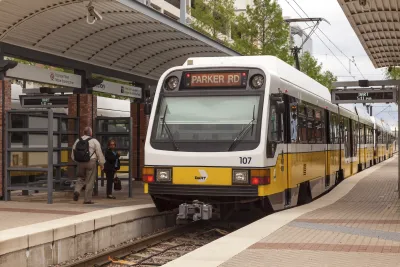
The Dallas City Council voted to reduce the city’s power in the governance framework for Dallas Area Rapid Transit (DART) in a bid to prevent surrounding suburbs from exiting the transit system, reports Everton Bailey Jr. in The Dallas Morning News.
The vote marks the first time the city of Dallas has had less than majority control on the DART board since the agency was created over 40 years ago. “The plan also would guarantee each of DART’s 13 member cities at least one board seat, replacing a structure that now gives only Dallas, Irving, Garland and Plano dedicated single-city representation, and would likely expand the current 15-member board.”
The proposal requires approval from the Texas State Legislature. If approved, the plan could prevent six member cities from finalizing special ballot measures that would ask voters if they want to exist the DART system. “Meanwhile, the North Central Texas Council of Governments’ Regional Transportation Council is expected to weigh proposed changes to DART funding Thursday, adding another layer to a regional debate that now hinges on whether compromise can outpace secession.”
FULL STORY: Dallas votes to give up DART majority in bid to keep suburbs in system

Texas State Bills to Defund Dallas Transit Die
DART would have seen a 30% service cut, $230M annual losses had the bills survived.
Texas State Bills Could Kill Transit Funding in Dallas, Austin
State lawmakers could pull funding from the state’s largest transit agency and the ambitious Project Connect, a voter-approved transit project in Austin.
Dallas Transit Officials to Meet With City Leaders in Mediation
Some cities in the Dallas area want to reduce their contributions to the regional transit system.

Planetizen Federal Action Tracker
A weekly monitor of how Trump’s orders and actions are impacting planners and planning in America.

The state-sanctioned urbicide of Austin
People don’t kill cities. Freeways do.

US to reduce Colorado River water deliveries to Mexico
A new Colorado Treaty amendment reduces Mexico’s Colorado River water allocation by 250,000 acre feet.

5 New England states march closer to 800 megawatt wind energy project
Securing federal approval for the project may be complicated under the Trump administration, which has historically been hostile towards domestic wind power.

Baltimore to break ground on $50 million Transit Priority Project
The project will bring faster bus trips, safer streets and better bike connections to Baltimore.

Airbnb launches $250 million 'last-dollar financing' housing accelerator, makes first investment in Austin
The company will put $6.4 million towards affordable housing development in Texas’ capital.

FREE Course: Walkable City 1: Why Walkability?
After describing his path towards focusing on walkability as the essence of good planning, Jeff Speck marches through his five principal reasons for making more walkable places.
Reinventing Malls: Planning Alchemy—Turning Gray Fields Into Gold
The course focuses on the opportunities and imperatives that shape reinvention of mall sites.

Eagle County Government
Harvard University Graduate School of Design
Nashville Planning Department
The Architects Foundation
University of Cincinnati Online
The Pocatello Development Authority
The Urban Renewal Agency of the City of Pocatello
Journal of the American Planning Association