The council is tasked with creating a design guidebook to align with Trump’s preference for neoclassical architecture.


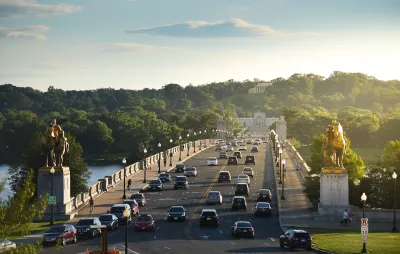
The U.S. Department of Transportation’s new Beautifying Transportation Infrastructure Council could dramatically reshape the look and design of American transportation infrastructure, writes Nate Berg in Fast Company.
According to Berg:
Though the council was created to serve an advisory role with no decision-making or funding authority, it currently has two major agenda items that could form the basis of a widespread makeover of American transportation infrastructure.
The council’s first task is a national design competition “seeking innovative thinking around transportation infrastructure design.” The second is creating a design guidebook with aesthetic recommendations for federal transportation projects tentatively titled “Beauty and Transportation.”
The announcement of the council states that its preferences will align with those laid out in President Trump’s “Making Federal Architecture Beautiful Again” executive order, which “defines the traditional and classical architecture of ancient Athens and Rome as the basis of a preferred architectural style for federal buildings.”
According to council chair and president of the National Civic Art Society Justin Shubow, USDOT has outlined design principles including that “transportation infrastructure should be designed to uplift and inspire the human spirit and lend prestige to the nation,” and that it “should foster a sense of place and inspire national and community pride in a way that builds upon the past.”
FULL STORY: The DOT’s new beautification council could Trumpify U.S. transportation infrastructure


New USDOT safety strategy highlights enforcement, embraces autonomous cars
The new National Roadway Safety Strategy emphasizes safety technology and enforcement and promises to further crack down on immigrant truck drivers with illicitly obtained licenses.
USDOT will stop enforcing a key civil rights law
The agency will no longer enforce Title VI, eliminating disparate impact protections for federally protected groups.
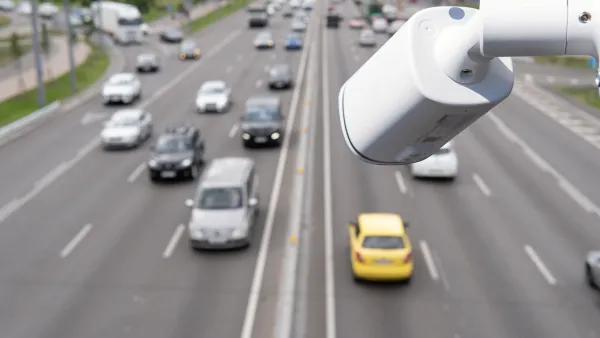
USDOT Blocks Federal Funding for Traffic Cameras
Applicants to the Safe Streets and Roads for All grant program will not be allowed to use funds for automated traffic enforcement.

The state-sanctioned urbicide of Austin
People don’t kill cities. Freeways do.

US to reduce Colorado River water deliveries to Mexico
A new Colorado Treaty amendment reduces Mexico’s Colorado River water allocation by 250,000 acre feet.

New Jersey’s second-largest city bans standalone data centers
Jersey City will continue to allow co-location facilities, such as those meant for research institutions that store their own data.

Amtrak not solely to blame for New Jersey commuter rail's unreliability, report finds
A new study from the Garden State Initiative found that NJ Transit’s budget grew 20% across a 4 year period, but reliability declined significantly over the same period.

EPA erases limits on planet-warming pollution from power plants
Under Monday’s plan, power plants would still have some limits on how much mercury, arsenic and other contaminants they can emit.

Phoenix announces new on-demand transit service, more frequent RAPID buses
Both new services will launch in October, and are part of Phoenix's Project Effective Access Solutions for Easing Congestion.

FREE Course: Walkable City 1: Why Walkability?
After describing his path towards focusing on walkability as the essence of good planning, Jeff Speck marches through his five principal reasons for making more walkable places.
Reinventing Malls: Planning Alchemy—Turning Gray Fields Into Gold
The course focuses on the opportunities and imperatives that shape reinvention of mall sites.

Eagle County Government
Harvard University Graduate School of Design
Nashville Planning Department
The Architects Foundation
University of Cincinnati Online
The Pocatello Development Authority
The Urban Renewal Agency of the City of Pocatello
Journal of the American Planning Association