Large houses built with green building methods may be more environmentally damaging than smaller houses that are less green.


Fifty years ago an average 4.2 people lived in an average 1,100 square foot house. Today it is 2.3 people in 2,150 square feet. But while the homes may be more efficient, they are still using more and more energy, as the green features are overwhelmed by the greater overall energy requirements of the larger house.The article goes on to give several examples of large green houses, why we are building them, and some of the alternatives.[Note: Salon is a subscription site, and non-subscribers may have to look at some advertizing to read the complete article.]
Thanks to Ken Firestone
Read the full story: Great big green monster mansions


Planetizen Federal Action Tracker
A weekly monitor of how Trump’s orders and actions are impacting planners and planning in America.

‘Going backwards:’ Baltimore mayor, students rally against state's transit funding plan
Maryland's proposed six-year plan provides no funding for Baltimore’s BMORE bus program and reduces its road maintenance funding.
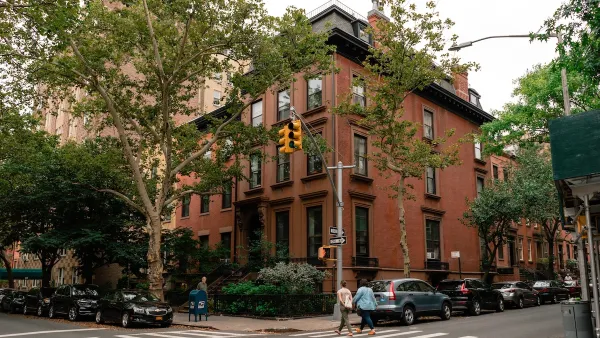
Mamdani sent nearly 6,000 pied-à-terre tax warnings to homes that didn’t qualify
A judge has ordered the administration to cancel thousands of pied-à-terre tax notices after it sent 35% of them erroneously.

Newsom vetoes high-speed rail supervision bill after agency receives condemnatory audit
The audit found the CHSRA approved almost $600,000 in unallowable travel expenses.

Nation sees first electric plane-boat hybrid take off in public demo
The Viceroy Seaglider can fly at speeds of 180mph for up to 180 miles.

One of nation’s poorest counties to receive $6 billion data center
The developers estimate the project will create 200 permanent jobs and 1,000 temporary construction jobs.

FREE Course: Walkable City 1: Why Walkability?
After describing his path towards focusing on walkability as the essence of good planning, Jeff Speck marches through his five principal reasons for making more walkable places.
Reinventing Malls: Planning Alchemy—Turning Gray Fields Into Gold
The course focuses on the opportunities and imperatives that shape reinvention of mall sites.

City of Thousand Oaks
City of Wisconsin Rapids
Harvard University Graduate School of Design
The Architects Foundation
University of Cincinnati Online
Northern Illinois Transit Authority (NITA)
The Pocatello Development Authority
The Urban Renewal Agency of the City of Pocatello