The state has one of the nation’s highest concentrations of registered historic sites — and some face destruction from flooding.


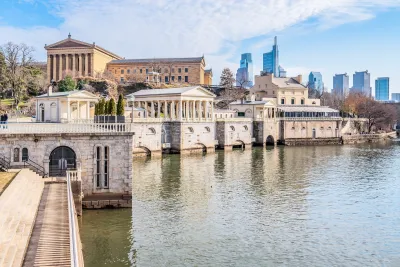
Some of Philadelphia’s 65 National Historic Landmarks are in danger of being destroyed by floods, warns Kiley Bense in Inside Climate News.
“Because they were built directly on waterways, some of these places are uniquely vulnerable. As climate change intensifies and makes severe weather more frequent, that danger is reaching new heights,” Bense explains.
Seri Worden, senior director of preservation programs at the National Trust for Historic Preservation, says climate adaptation is a “critical, absolute need” for many historical sites, such as Philadelphia’s Fairmount Water Works, an interpretive center housed in a 200-year-old structure.
At the Water Works, preservationists have laid out a three-phase plan to protect the site from future flooding that includes exhibits hung on winches or installed on wheels so they can be moved during an emergency and exhibits made of steel and other durable materials. “This site was once a symbol of humanity’s ability to harness nature’s power and bend its will to our own. In the unpredictable age of climate change, its stewards have had to reckon with the limits of that vision.”
FULL STORY: With Waters Rising, Pennsylvania’s Historical Treasures Must ‘Adapt or Collapse’

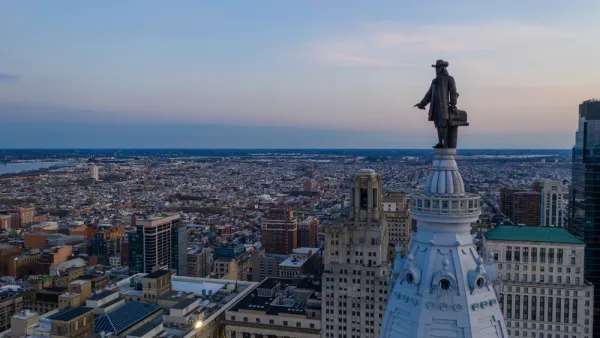
'Demodelphia' Hiring More Preservationists
To protect more historic properties from rampant demolition, Philadelphia is staffing up its historic preservation department.
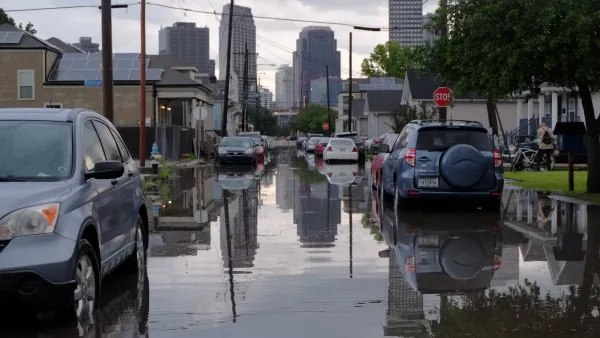
Study: New Orleans sea level rise is at 'point of no return'
Research shows that the city could be surrounded by water by the end of this century.
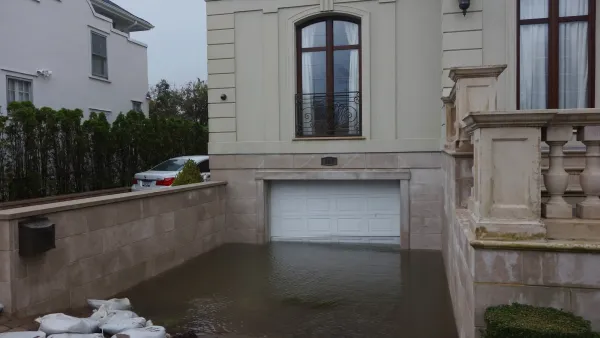
Over 500 NYC ‘Blue Zones’ at Risk of More Destructive Floods
High-risk flood zones cover roughly 20% of the city’s land.

The state-sanctioned urbicide of Austin
People don’t kill cities. Freeways do.

US to reduce Colorado River water deliveries to Mexico
A new Colorado Treaty amendment reduces Mexico’s Colorado River water allocation by 250,000 acre feet.

New Jersey’s second-largest city bans standalone data centers
Jersey City will continue to allow co-location facilities, such as those meant for research institutions that store their own data.

Amtrak not solely to blame for New Jersey commuter rail's unreliability, report finds
A new study from the Garden State Initiative found that NJ Transit’s budget grew 20% across a 4 year period, but reliability declined significantly over the same period.

EPA erases limits on planet-warming pollution from power plants
Under Monday’s plan, power plants would still have some limits on how much mercury, arsenic and other contaminants they can emit.

Phoenix announces new on-demand transit service, more frequent RAPID buses
Both new services will launch in October, and are part of Phoenix's Project Effective Access Solutions for Easing Congestion.

FREE Course: Walkable City 1: Why Walkability?
After describing his path towards focusing on walkability as the essence of good planning, Jeff Speck marches through his five principal reasons for making more walkable places.
Reinventing Malls: Planning Alchemy—Turning Gray Fields Into Gold
The course focuses on the opportunities and imperatives that shape reinvention of mall sites.

Eagle County Government
Harvard University Graduate School of Design
Nashville Planning Department
The Architects Foundation
University of Cincinnati Online
The Pocatello Development Authority
The Urban Renewal Agency of the City of Pocatello
Journal of the American Planning Association