The agency will no longer quantify the monetary gains from health benefits from curbing air pollution.


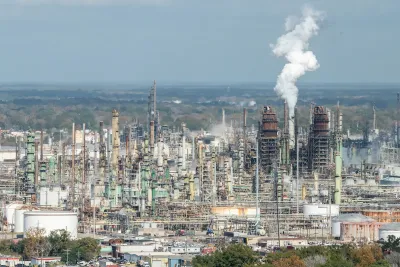
The Environmental Protection Agency will no longer calculate the health benefits of reducing air pollution when justifying clean air rules, reports Maxine Joselow for The New York Times. “Under President Trump, the E.P.A. plans to stop tallying gains from the health benefits caused by curbing two of the most widespread deadly air pollutants, fine particulate matter and ozone, when regulating industry, according to internal agency emails and documents reviewed by The New York Times.”
The change is a major reversal for the agency, whose core mission is to protect human health and the environment. “The change could make it easier to repeal limits on these pollutants from coal-burning power plants, oil refineries, steel mills and other industrial facilities across the country, the emails and documents show.”
Now, the Trump administration says the EPA will only estimate the costs to businesses of complying with clean air rules. “Carolyn Holran, an E.P.A. spokeswoman, said in an email that the agency was still weighing the health effects of PM2.5 and ozone, but wouldn’t be assigning them a dollar value in cost-benefit analyses.”
The change comes on the heels of other actions at the EPA aimed at dismantling environmental regulations. “In May, the White House ordered agencies to stop considering the economic damage caused by climate change when crafting regulations, except in cases where it is “plainly required” by law.”
Read the full story: E.P.A. to Stop Considering Lives Saved When Setting Rules on Air Pollution
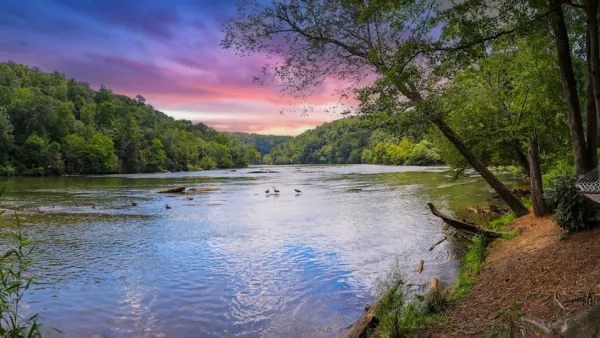
Comment: EPA Cuts will Send Atlanta Back to Eye-burning Ozone, Lung-damaging Smog, and Raw Sewage in the Chattahoochee River
A veteran political journalist takes stock of the hard-earned ground Georgia stands to lose with slashed environmental protection.
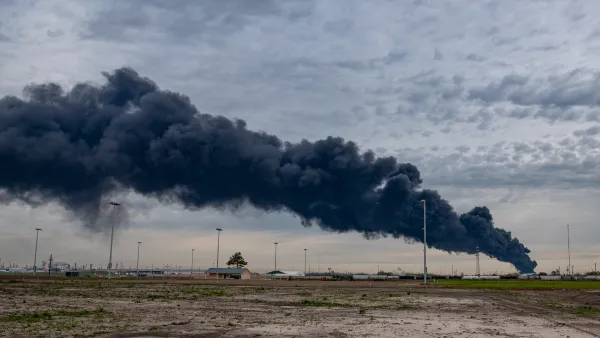
EPA Grant Will Fund Air Pollution Tracking in Houston
The city wants to monitor air quality and measure cancer-causing emissions near two petrochemical plants, one of which announced plans for expansion last year.
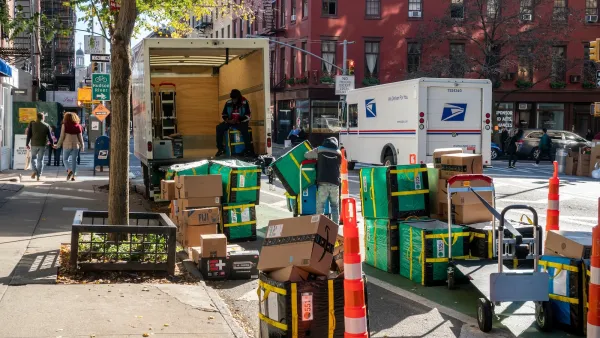
Report: 75% of NYC warehouses are in 'disadvantaged communities'
Low-income New Yorkers are 1.2 times more likely to live within half a mile of a warehouse.

Desperate measures: Advocates weigh draining Lake Powell to fill Colorado River
Draining the reservoir could reduce evaporation losses by a couple hundred thousand acre-feet.

Eastern Nebraska is running out of electricity
Data centers and electrification are straining eastern Nebraska’s grid, throttling economic development.

Malls are becoming the midtowns of the future
Mall and office park redevelopments are a generational opportunity to create new nodes of urbanity.

One Kentucky town’s secret to affordable housing
The Smoketown Community Land Trust has already built seven affordable homes for community members.

Houston gains petal-shaped cooling infrastructure to make streets more ‘delightful’
The city has installed the pavilions along 15 blocks in Houston.

After years of opposition to light rail, this L.A. city wants a $200 million station
Cerritos officials want the Southeast Gateway Line, a planned 14.5-mile light rail route through Los Angeles County, to stop in their city.

FREE Course: Walkable City 1: Why Walkability?
After describing his path towards focusing on walkability as the essence of good planning, Jeff Speck marches through his five principal reasons for making more walkable places.
Reinventing Malls: Planning Alchemy—Turning Gray Fields Into Gold
The course focuses on the opportunities and imperatives that shape reinvention of mall sites.

City of Rosemead
Rutgers University, Edward J. Bloustein School of Planning and Public Policy
One Hundred Miles
University of Michigan School for Environment and Sustainability (SEAS)
Hunter College, City University of New York (CUNY)
The Architects Foundation
City of Cambridge
Montrose County
The Pocatello Development Authority