Elsewhere in the state, Amtrak’s new Borealis line is exceeding ridership predictions.


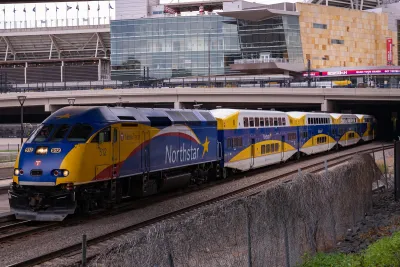
The Northstar commuter rail line ran its last route on January 4 after years of declining ridership, reports Nathaniel Minor in the Minnesota Star Tribune. Although the 40-mile line was initially meant to connect Minneapolis to St. Cloud, it never made it as far as the latter.
While some rail advocates worry this spells the start of a troubling trend, other train services in the state, such as the Borealis line between St. Paul and Chicago, are seeing much more success. The Borealis line exceeded ridership projections in its first year with over 200,000 boardings as of April 30, 2025.
“Metro Transit officials, meanwhile, have characterized Northstar’s demise as a ‘transition’ to more frequent and flexible bus service.” Instead of just four round trips during weekdays, the new replacement buses will run as often as every 30 minutes at rush hours. amounting to 10 times as many trips per week.
FULL STORY: Minnesota’s Northstar rail line, which never met its potential or expectations, winds down service

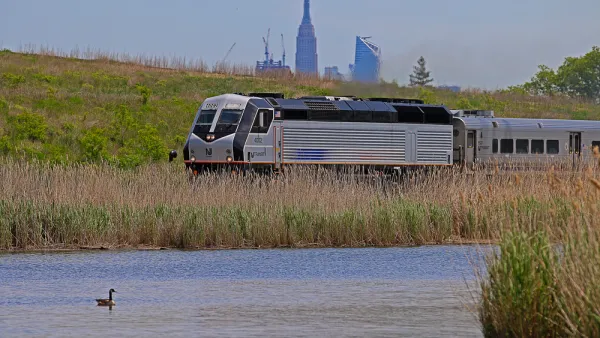
The High Cost of Adapting Commuter Rail for the Post-COVID Future
U.S. commuter rail systems, primarily designed to bring workers to and from central business districts, must adapt to serve a broader population as the traditional workday changes.

Despite 47% growth in ridership, Caltrain could close a third of its stations
Riders can currently travel up to 79 miles between San Francisco and Gilroy, California.

Mamdani Budget Funds Queensway, Dimming Hope for Reactivated Long Island Rail
Supporters of a proposed rail extension say building the elevated park as proposed would make it harder to bring trains back to this part of Queens.

Planetizen Federal Action Tracker
A weekly monitor of how Trump’s orders and actions are impacting planners and planning in America.

The state-sanctioned urbicide of Austin
People don’t kill cities. Freeways do.

US to reduce Colorado River water deliveries to Mexico
A new Colorado Treaty amendment reduces Mexico’s Colorado River water allocation by 250,000 acre feet.

5 New England states march closer to 800 megawatt wind energy project
Securing federal approval for the project may be complicated under the Trump administration, which has historically been hostile towards domestic wind power.

Baltimore to break ground on $50 million Transit Priority Project
The project will bring faster bus trips, safer streets and better bike connections to Baltimore.

Airbnb launches $250 million 'last-dollar financing' housing accelerator, makes first investment in Austin
The company will put $6.4 million towards affordable housing development in Texas’ capital.

FREE Course: Walkable City 1: Why Walkability?
After describing his path towards focusing on walkability as the essence of good planning, Jeff Speck marches through his five principal reasons for making more walkable places.
Reinventing Malls: Planning Alchemy—Turning Gray Fields Into Gold
The course focuses on the opportunities and imperatives that shape reinvention of mall sites.

_(cropped).jpg)
Eagle County Government
Harvard University Graduate School of Design
Nashville Planning Department
The Architects Foundation
University of Cincinnati Online
The Pocatello Development Authority
The Urban Renewal Agency of the City of Pocatello
Journal of the American Planning Association